Two recent road projects have been turning heads in the construction industry, and they have something interesting in common.
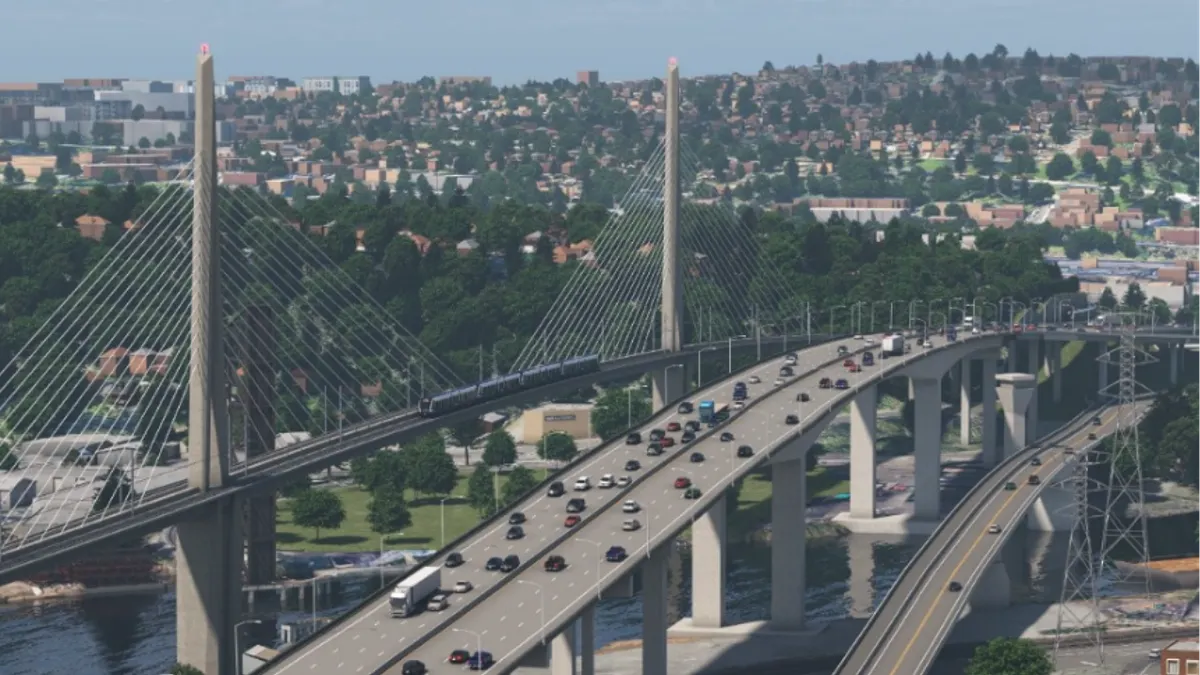
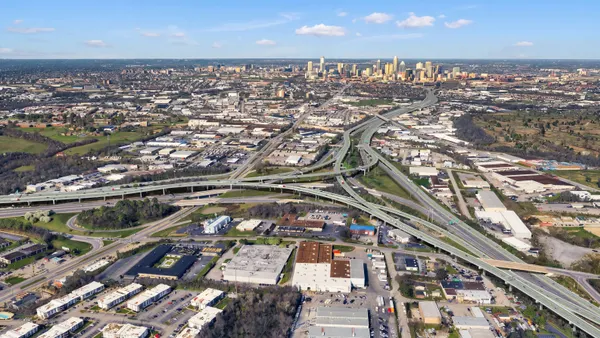
Both the $9.2 billion Interstate 24 Southeast Choice Lanes project in Tennessee and the $4.6 billion state Route 400 Express Lanes in Georgia use concessions, which allow a consortium in a public-private partnership to benefit from future use fees, such as revenue from tolls.
In exchange, the consortium puts forward a significant amount of cash to design, build, operate and maintain the roadways. For contractors, being a part of a consortium can potentially give them stable work and revenue for decades.
For example, in the case of the Georgia state Route 400 project, the consortium is Peach Partners, comprising Acciona Concessions, ACS Infrastructure and Meridiam, which will deliver and maintain the project under a 56-year public-private partnership. The consortium is providing a $3.8 billion concession fee to the state’s DOT to help fund other roadway projects as part of the P3 to design, build, operate and maintain the express lanes, per the U.S. DOT.
J.P. Villamizar, head of advisory for Newport Beach, California-based GISI Consulting Group, said the two projects stand out as models for how infrastructure projects can pivot from a fixed-cost sink for governments to revenue producing ventures for project stakeholders.
Here, Villamizar talks with Construction Dive about how concessions projects benefit builders, whether small- to mid-sized firms are priced out of the option and what risks contractors need to be aware of when pursuing this option.
Editor’s note: This interview has been edited for brevity and clarity.
CONSTRUCTION DIVE: These two P3s that revolve around project participants collecting concession fees are in the news. How do these types of projects work from a builder’s perspective?
J.P. VILLAMIZAR: It doesn't change the construction strategy or the sequencing.
What changes is that they are part of a consortium that includes legal, finance, construction, design, all into a single entity that is investing in this long-term asset and performing all of those duties within that consortium. So the construction sequencing, the phasing, none of that changes.
These are both multibillion dollar projects. Are smaller contractors constrained when it comes to entering these types of concession agreements?
It's going to be very difficult for one single entity to invest in a program and have the scalability from an execution perspective, but then also from a capital perspective to go and invest in a program like this.
I do feel that, for these large types of infrastructures, you have to have a consortium of entities that bring different values for that team.
Now, can it be done for small- or mid-sized builders?
I think what's happening with the Tennessee I-24 Choice Lanes and the Georgia SR 400 projects is that the entire industry is looking at both of these right now to see how the model is going to work and if it's going to be successful.
I think the industry and states are going to look at different types of projects that don't have to be the mega-billion dollar projects, they could be the medium or smaller size, and use this alternative commercial model to fund their particular project. That would allow smaller or medium-sized firms to invest in those.
What other kinds of projects do you anticipate?
We're seeing a lot of interest in the aviation sector as far as terminal expansions or mega expansion. We're actually helping a particular client with that aspect right now.
Roads, aviation, highway expansions, rail. I think there's quite a bit of programs that can leverage this type of commercial model.
For contractors, in what scenarios would it make sense to be part of a consortium seeking a concession project?
On the contractor side, you're looking at an opportunity that you will be involved in for decades. You're going to be involved in the design, build, maintenance and operation duties for 30 to 50 years.

If you look at Tennessee and why that corridor investment makes sense, the population is growing. There’s a lot of economic development being developed around the infrastructure. There’s a huge need for mobility improvements.
When you look at all that and you start doing the financial models and the potential return, it could be a win-win for both the public interest and for the consortium.
What challenges or risks do builders need to be aware of in these types of concession projects?
We're talking about a significant amount of capital.
We just finished a project for a private investor that was part of a consortium for an aviation program. They were focused on the investment of the capital for their owners and what the return is going to be, but what they have to really focus on is, they're not the technical experts delivering the project.
So the investors will do the due diligence and hire or contract or partner with a technical advisor to ensure that that investment is going to be viable, both from a constructability perspective and from a budgetary perspective. Those are the items that the contractors have to really focus on.
Anything else contractors should consider?
Monetizing risk.
It's important for both the agency and the consortium to have a transparent, clear discussion on the cost of those potential risks and where they could be. And if you have that discussion up front on both sides, that's when a project is going to be successful.
There's definitely a lot of areas that a consortium needs to focus on from public interest and support, including permitting, utilities, right of way and long lead items. Most importantly on a concession like this, is the right revenue model over the long term of the program. That’s where the real return is going to be there for them.
There's a lot of caveats that go into it from a contractor's side if they're going to make an investment like this.