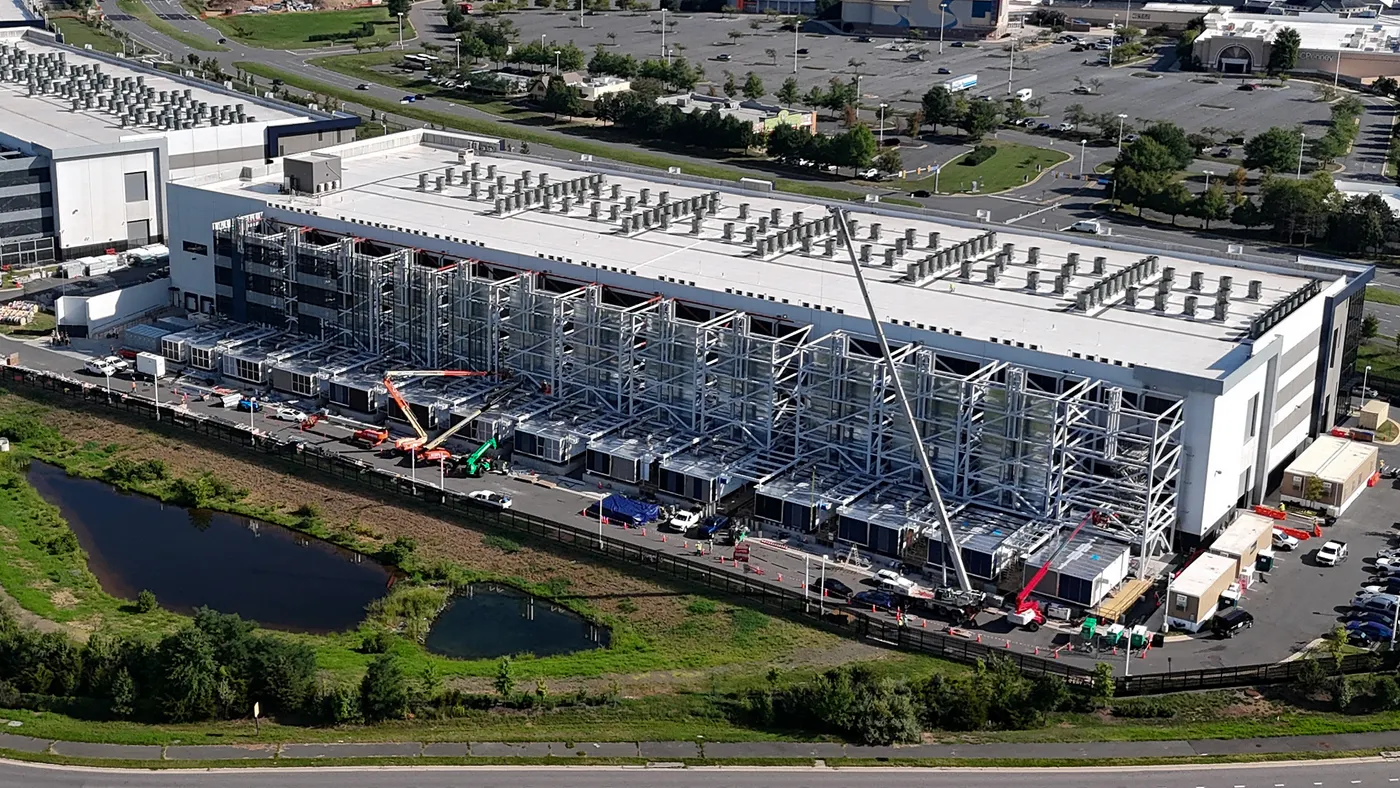
Even as data centers entered the crosshairs of state moratoriums and public pushback in 2026, the number of planned and operating projects nearly tripled between March and August, according to a Construction Dive analysis of data from market intelligence company Cleanview.
The sector has been propping up nonresidential construction activity for the majority of the year, according to Anirban Basu, ABC chief economist. Behind the surge are billions of dollars in commitments from some of the world’s largest tech companies. For example, J.P. Morgan estimates that large hyperscalers will invest a combined $697 billion in data center capital expenditures in 2026.
Hyperscalers Meta, Amazon, Google and Microsoft initially leaped in with billions of dollars in investments to spur the artificial intelligence boom. But it wasn’t long before other data center colocation developers also jumped on board.
Here, Construction Dive analyzes data from Cleanview to explore the boom’s major players and construction hot spots. Tech giants Microsoft and Amazon lead the pack, with other major firms such as Google and Stack Infrastructure planning scores of their own projects.
Microsoft leads data center developers in planned projects as of March 16, 2026
Contractors identify power, state restrictions as key headwinds
But as the scale of the buildout grows, turning proposed data centers into completed projects has become more difficult.
Power ranks as one of the biggest hurdles. Just a couple of years ago, a 100-megawatt data center would have ranked among the largest projects on the market. Today, projects over 1,000 megawatts are setting the benchmark, David Guarino, head of global data center and tower research at Green Street, a Newport, California-based commercial real estate data provider, told Construction Dive in April.
Below, the map details the states bringing on the most data center construction projects. Virginia ranks as the capital of data center development, followed by strong activity in the South, namely Texas and Georgia, and Midwestern states, such as Ohio and Indiana.
Planned data centers by state
State restrictions rank as another project headwind, Trent Cotney, partner at law firm Adams & Reese, previously told Construction Dive after recently implemented regulations. For contractors, that has made site selection a top priority when pursuing these awards.
For instance, builders now want to see dependable power and clear permitting requirements before taking these projects on, Michael Beadle, senior vice president of operations at Minneapolis-based Ryan Cos., told Construction Dive.
“The success of a project is tied to securing a site with access to a significant amount of reliable power, which requires strategic and lengthy relationships with utility partners,” said Beadle. “An ideal site must also have an ample amount of land in case of future expansion, a viable cooling strategy and a favorable regulatory environment.”
The supply chain has struggled to keep pace as well.
Switchgear, transformers and generators, all major components in a data center build, are running extended lead times, said Brennan Church, director of engineering, procurement and construction at Hut 8, a Miami-based data center developer. That, coupled with an already stretched labor market, often slows the pace of data center construction, he previously told Construction Dive.
“The biggest bottleneck we are seeing is on long-lead electrical equipment … often at 40 to 60-plus weeks,” Church said. “A shell can be completed and mechanically roughed in, but if the gear isn’t onsite, you’re not energizing.”
How that affects momentum can be seen below, which ranks the top 25 states by planned work.
Virginia leads data center project surge
Nevertheless, contractors continue to indicate data center work has a solid runway. In fact, data center activity has only strengthened over the course of 2026, as shown below:
US live data center projects almost tripled from March to August
Methodology
Cleanview identified data centers from state environmental permits, data center developer and hyperscaler websites, investor presentations, SEC filings and local news stories. The status and operating year columns are updated based on satellite analysis and press releases. Construction Dive received individual project-level data from Cleanview for the March data and sourced August data from Cleanview's public website. The March data includes 37 projects that were expected to come online in 2025 and whose current operational status is unknown. Construction Dive was not able to confirm how such projects are classified in the August data by press time.