Some of the most important decisions on a data center construction project happen long before shovels hit the ground, said Lara Poloni, president at Dallas-based AECOM.
And money alone won’t get the projects built, she said.
Data center developers, for example, need to determine whether a potential site has access to reliable power and water. Permitting and community concerns should be hammered out before teams show up on the site.
The complexity of these builds also requires “specialized expertise”, said Poloni. These decisions have pushed owners to seek advice much earlier in the development process, a trend Poloni thinks will grow over the next decade.
Here, Poloni talks with Construction Dive about data centers, project risk and construction opportunities.
Editor’s note: The following has been edited for brevity and clarity.
CONSTRUCTION DIVE: Where are you seeing the strongest opportunities?
LARA POLONI: What’s particularly encouraging about the growth we are seeing in our record backlog and in our pipeline is that it’s broad-based.
We see growth opportunities across all our key markets of transportation, water, environment, energy and facilities, both in the U.S. and internationally.

It’s also notable how interconnected these opportunities have become. Data center growth, for example, is driving investment in power generation, transmission, water systems, transportation infrastructure and environmental services.
The focus today is more on execution. Across the industry, owners are navigating increasingly ambitious projects that require certainty around permitting, schedules, resources and stakeholder alignment. The ability to anticipate challenges and manage complexity is becoming a major differentiator.
What is top of mind to ensure data center construction projects go smoothly?
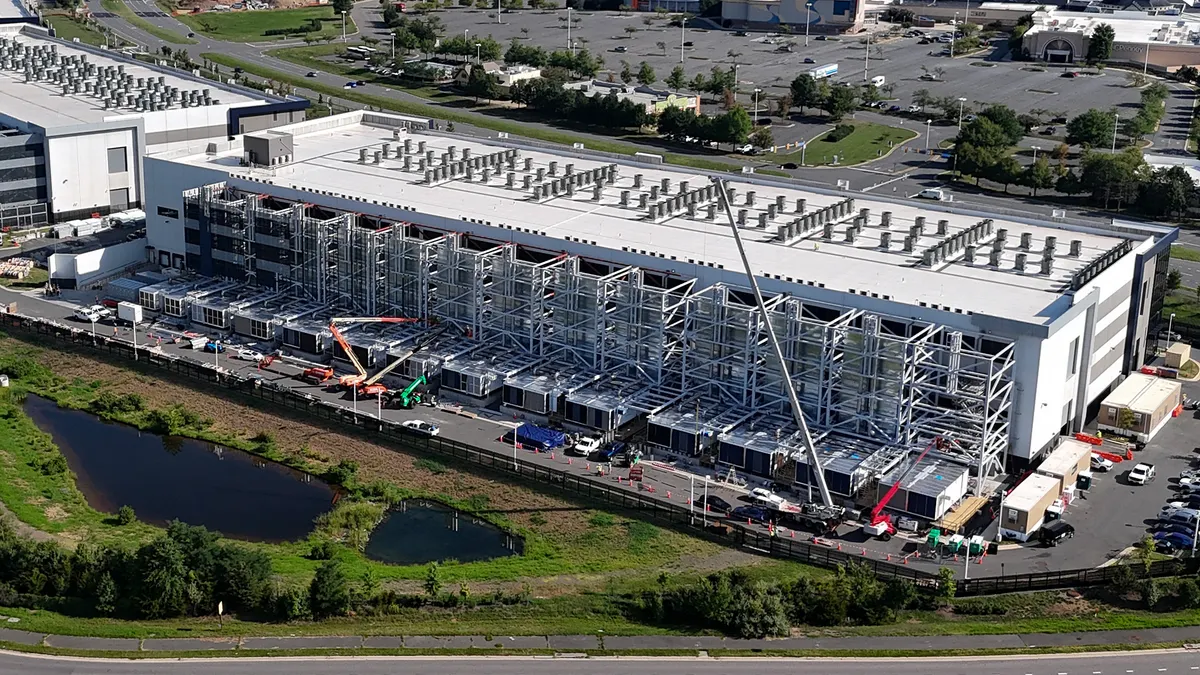
Today’s data centers should be viewed as complex infrastructure ecosystems, not simply buildings.
Demand for data center capacity is accelerating at an unprecedented pace, but the real challenge is ensuring that the land, power, water, permitting and supporting infrastructure are in place to bring these projects online at the pace the market requires.
The projects that move most successfully are the ones that solve these interconnected challenges together from the very beginning. That means bringing together strategic advisory, environmental planning, permitting, utility coordination, engineering and program management. That allows decisions around site selection, infrastructure requirements and delivery strategy to be made with the full picture in mind.
At this scale and pace, integration is increasingly a prerequisite.
Is workforce availability on these projects becoming a bigger constraint?
As projects become larger and more technically demanding, the industry’s challenge is having access to the right expertise at the right time.
That is why we’ve been investing at record levels in talent development, leadership programs and technical excellence over the past several years. We are also investing in technology and innovation that expand what our people can accomplish and create more capacity for our teams to focus on higher-value work and to solve our clients’ greatest challenges.
Our Think and Act Globally strategy is another important advantage. The most specialized expertise is not always where a project happens to be. By connecting our people and capabilities across regions and markets, we can assemble multidisciplinary teams around the needs of a project and wherever demand is strongest.
How has the way you evaluate project risk changed over the past several years?
Going back to 2020, we have been very intentional about creating a higher-margin, lower-risk professional services business. That included selling or exiting businesses and markets that did not align with our strategy, no longer pursuing self-perform at-risk construction and stepping away from certain contract structures with asymmetric risk profiles.
We no longer pursue design-build contracts in our construction management business and, other than two projects referenced on our third quarter earnings call, have no other design-build projects in our construction management backlog or portfolio.
We also fundamentally changed how we evaluate risk. The evaluation extends well beyond traditional contractual and commercial considerations to factors such as permitting, stakeholder requirements, resource availability and infrastructure dependencies.
Any other trends you are keeping close tabs on?
One trend that deserves greater attention is the growing focus on permitting and project delivery reform.
Governments are recognizing that funding is only part of the equation. The ability to actually move projects forward matters just as much. We are seeing greater attention on accelerating approvals, streamlining permitting processes and removing barriers that can delay critical investment. Those efforts have the potential to unlock value and meaningfully improve outcomes across many sectors.
Clients are seeking advice much earlier in the lifecycle of major projects and programs. Decisions made well before design or construction begins can have an outsized impact on cost, schedule, risk and outcomes. That is driving greater demand for strategic advisory and program management capabilities that help clients make those decisions with greater confidence.