This article is one in a series of conversations with women leaders in the construction industry. Click here for past discussions.
Ann Caruso knows the nuts and bolts of construction.
Growing up in a family that owned a hardware store, Caruso went to work at a construction-focused law firm before earning her law degree. While still in school, she joined New York City-based general contractor Cross Management in 2004.
She took the reins as the company’s CEO in 2022, helping transform it into a national construction management firm while negotiating its strategic partnership with Shimizu last year, when the Japan-based construction giant took a 51% stake in the firm.
Today, Caruso helps oversee the company’s operations, strategic direction and long-term growth as it focuses on commercial interiors, building repositioning and retail construction.
Here, Caruso talks with Construction Dive about the evolution of the office market since the pandemic, a 300,000-square-foot job at Hudson Yards and the relationships that underpin the projects her firm builds.
Editor’s note: The following has been edited for brevity and clarity.
CONSTRUCTION DIVE: Cross Management focuses on interior work, often in office or retail settings. How has that market been performing in recent years?
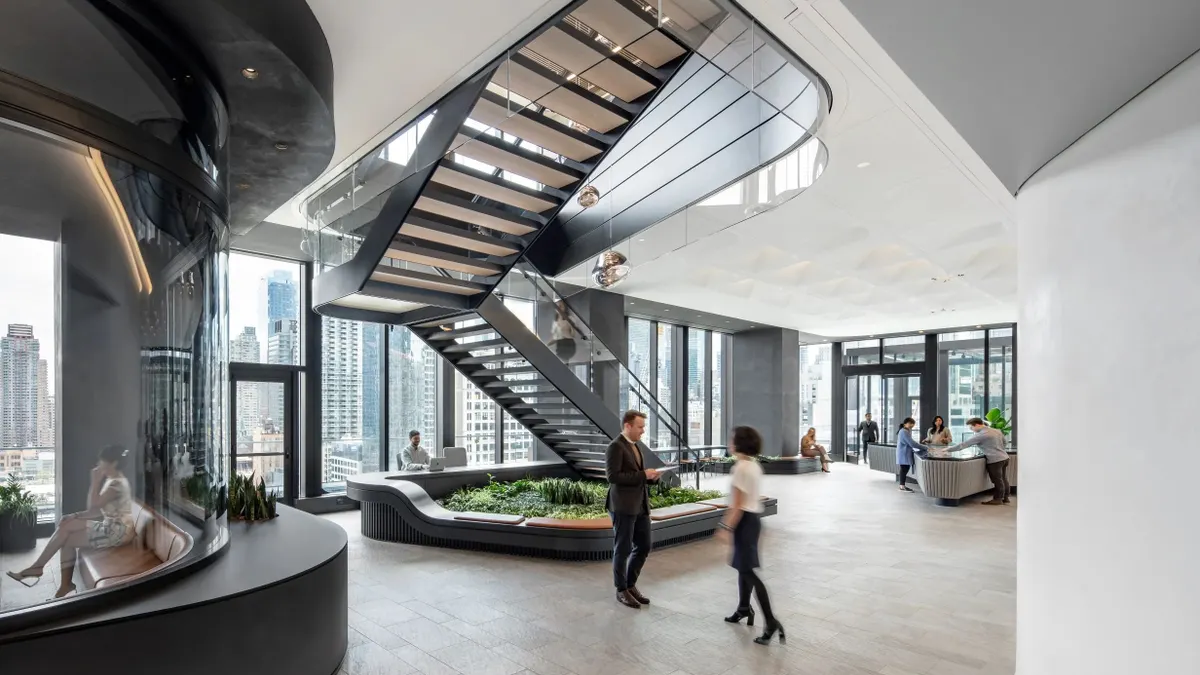
ANN CARUSO: The market has evolved quite a bit over the past several years. The pandemic changed the way many companies think about their workplaces, and we're still seeing that play out today. While some organizations have reduced their footprint, others are investing in higher-quality spaces that support collaboration, culture and productivity.
What hasn't changed is the need for thoughtful, well-executed construction. Clients expect flexibility, speed and value, and they rely on their construction partners to help them navigate changing workplace strategies. The work may look different from 10 years ago, but the importance of quality and strong relationships remains the same.
What’s your construction origin story?
I've spent more than 20 years with Cross Management, which has given me the opportunity to grow alongside the company through economic cycles, changes in the workplace, and significant milestones, including becoming part of the Shimizu family. A global giant, Shimizu is one of the largest in the world and part of Japan's Big Five in construction.
What has kept me here is the people and the relationships. Construction is ultimately a people business. I've had the opportunity to work with great clients, design teams, trade partners and colleagues over the years, and seeing those relationships grow over time is one of the most rewarding parts of the job.
Why did you choose a career in construction?
I didn't necessarily set out to build a career in construction, but looking back, it was always around me. My parents owned a hardware store, and before law school, I worked at a law firm that focused on construction and insurance defense.
What kept me here is that no two days are ever the same. I enjoy solving problems, working with people, and figuring out how to move projects forward. Even after all these years, I'm still learning something new.
What is some of the work you're proudest of and why?
I've been fortunate to work on a number of projects throughout my career, but one that stands out is our work with Point72. It was an over 300,000-square-foot project within a new Hudson Yards development that required a tremendous amount of planning and coordination, along with meticulous attention to architectural detail across multiple floors. It's representative of the type of work we do every day, and seeing our team deliver a project like that successfully is something I'll always be proud of.
That said, I don't tend to measure success by a single project. Construction is a business where everyone can point to a finished space. What matters more to me is whether the client would hire us again.
The projects I'm proudest of are the ones that lead to long-term relationships. A beautifully finished space is important, but when a client comes back years later and asks you to help with their next project, that's the ultimate measure of success. It means you've earned their trust, not just completed a project.
What does it mean to you to be a woman in construction?
I've spent most of my career focused on doing my job well rather than focusing on being one of the few women in the room. At the same time, I recognize that visibility matters.
What means the most to me is helping demonstrate that success in this industry comes from knowledge, preparation, hard work and building strong relationships. If my experience helps encourage other women to see construction as a place where they can build successful and rewarding careers, I'm proud of that.
How has being a woman in construction changed during your career? Where do you see that shift going now?
When I started my career, there were far fewer women in leadership positions and project roles than there are today. The industry has made meaningful progress, and it's encouraging to see more women entering every aspect of the business.
I think the conversation has evolved as well. It's no longer just about representation. It's about creating opportunities for advancement, leadership and long-term success. I expect that progress to continue because our industry benefits when it attracts talented people with different perspectives and experiences.
What is your advice to other women in construction today, particularly those just getting started?
Don't be intimidated by what you don't know. Construction is an industry where everyone is learning every day.
Ask questions, find good mentors, be willing to take on challenges and don't be afraid to speak up. Credibility comes from preparation, hard work and follow-through. If you do those things consistently, people notice.
It's also important to remember that there are many paths to success in this industry. Stay curious, keep learning and be open to opportunities that may not have been part of your original plan.
What guides you in your job today?
One thing I've learned throughout my career is that construction is fundamentally about trust. Projects are built by people, and the strongest outcomes come from strong relationships among clients, design teams, trade partners and construction professionals.
While the industry continues to evolve, the importance of trust, collaboration and delivering on your commitments never changes. Those principles have shaped my career, and I believe they'll continue to shape the future of our industry.