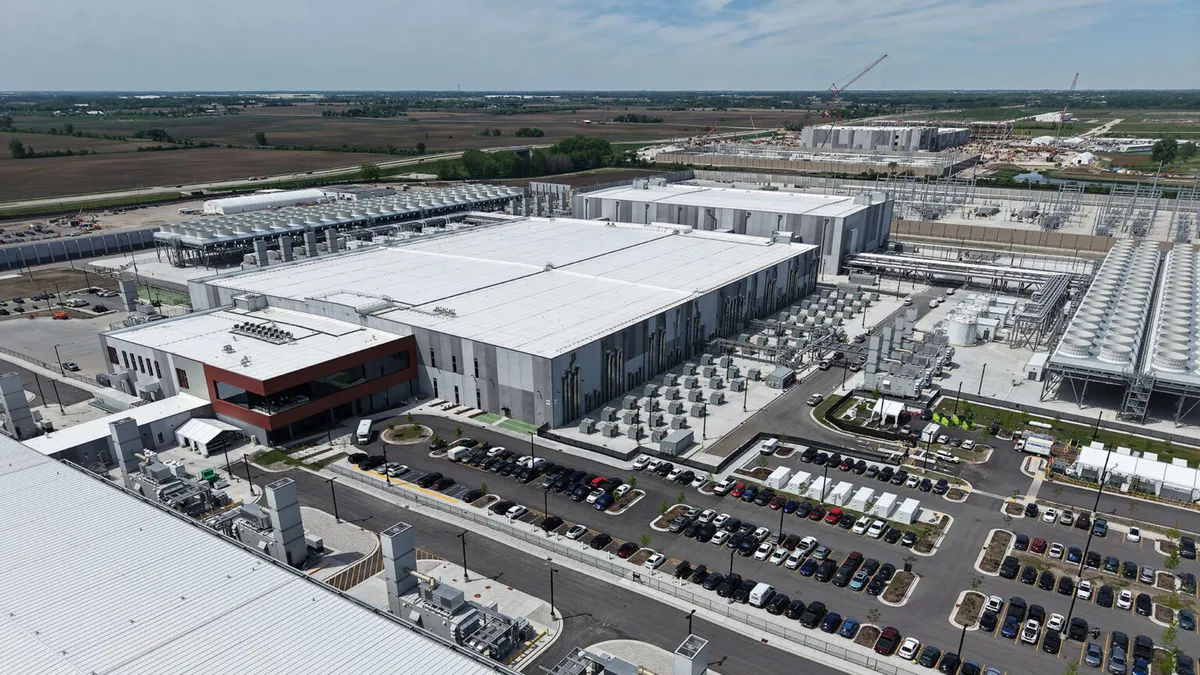
More scrutiny around data centers hasn’t stopped contractors from moving forward with plans to build.
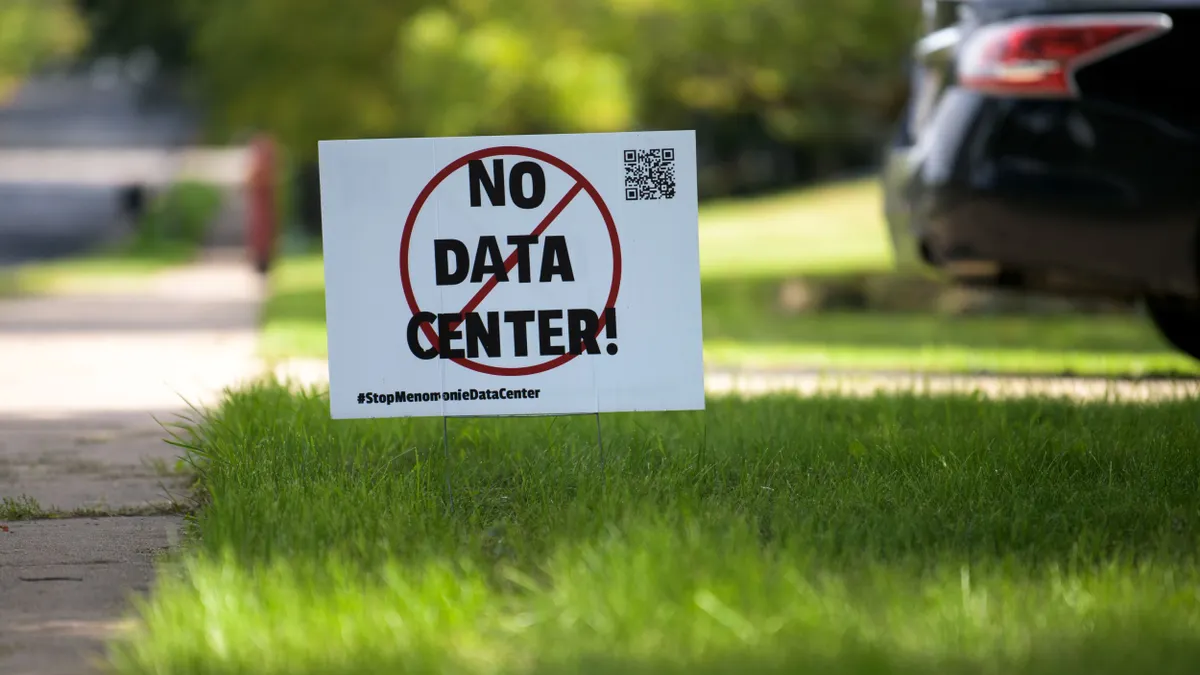
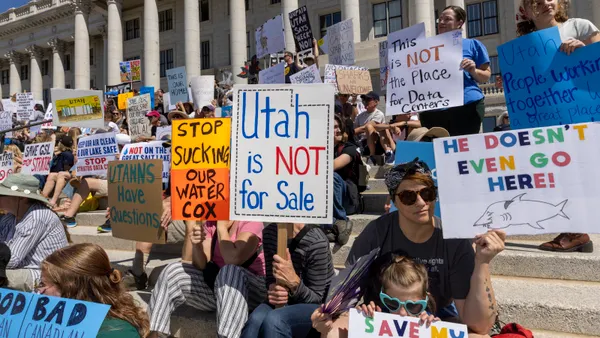
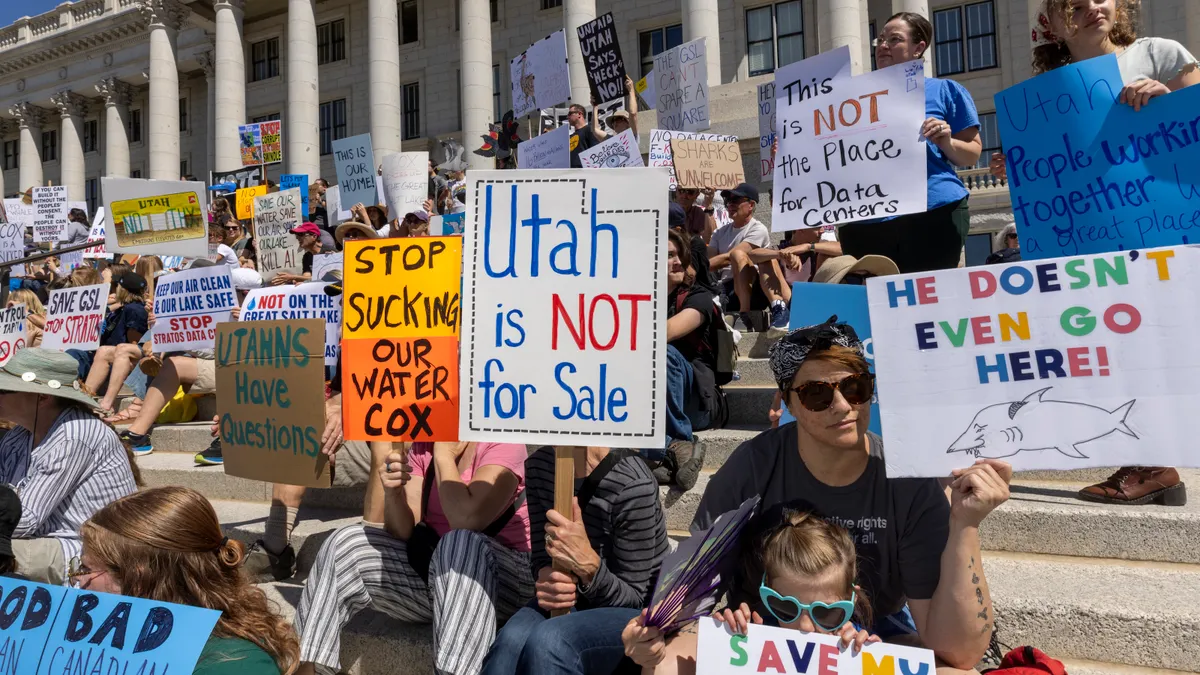
New restrictions and growing community opposition in the U.S. are adding complexity to data center development. Concerns around power and water from local residents and public officials are rising alongside the incredible pace of construction spending on these projects.
But contractors with awards in the sector aren’t sounding the alarms yet. In fact, though a number of contractors say they are putting more attention toward addressing community pushback on projects, demand for these builds hasn’t waned.
“We are seeing increased scrutiny in some marks, particularly around power availability, water usage, land use and the overall community impact of large-scale data center developments,” said Chris Teddy, national director of mission critical at JE Dunn Construction, a data center builder. “That doesn't necessarily stop projects from moving forward, but it can extend timelines and add complexity during the planning and entitlement phases.”
Impacts of data center executive orders on construction
Virginia Gov. Abigail Spanberger signed an executive order in September that, among other measures, bars projects with anticipated peak demand of at least 25 megawatts from receiving state assistance through expedited permitting and site development programs. The order also directs state agencies to address issues such as noise, emissions, water use, electricity demand and other impacts over the next several months.
Before that, Pennsylvania Gov. Josh Shapiro signed an executive order in August on energy affordability and environmental protection. The order also gives local communities a greater role in the development process.
Texas Gov. Greg Abbott directed the Texas Commission on Environmental Quality to halt all permits sought by data centers until the Electric Reliability Council of Texas completes its audit, according to a Sept. 21 news release. In the Lone Star State, data centers must cover all electrical infrastructure costs and not use water needed by local communities, according to the release.
Those changes are getting contractors’ attention. Nevertheless, they haven’t shaken HITT Contracting CEO Kim Roy’s confidence.
The Falls Church, Virginia-based general contractor has built data centers for more than 25 years and invested heavily in the sector as demand accelerated, Roy told Construction Dive. Asked whether community opposition or state restrictions are affecting HITT’s construction schedules, Roy said she hasn’t seen it reach that point.
“I don’t see it,” said Roy. “I mean, at that point, it’s just listening and addressing the concern. It really doesn’t affect our build schedule.”
HITT will be keeping tabs on what comes out of Virginia’s executive order, she said, though she added the move is an early-stage development that has not affected active projects.
“Our team is watching it closely, but it doesn’t have any real effect on anything currently under construction,” said Roy. “As a company, we’re always going to comply with laws and regulations. But again, I think that there is a path to smart construction that the political and development teams can work together on.”
More work before the construction phase
Local opposition and state restrictions tend to affect projects more before construction crews arrive at the site.
For example, JE Dunn has seen clients become more strategic about site selection, Teddy said. Along with proper access to power, developers are also increasingly prioritizing the receptiveness of jurisdictions and communities before finalizing an investment to a region.
In some cases, poor reception can steer clients toward another market where better support exists for the project, said Teddy. Despite those hurdles, demand for data center construction continues to skyrocket at an “unprecedented pace,” he said.
Tactical planning
At the same time, builders aren’t ignoring the growing public sentiment against the projects.
“General contractors thrive on predictability,” Teddy told Construction Dive. “When permitting requirements continue to evolve or community concerns significantly delay approvals, it becomes more difficult to manage labor resources, lock in subcontractor commitments.”
For that reason, the preconstruction phase of a data center build is critical to maintain the project budget, according to Greg Werner, senior vice president at Minneapolis-based Mortenson. Werner said the contractor is spending more time at the front of projects to field community concerns.
“The best time to address local questions is before they become project constraints,” said Werner. “For a general contractor, community concerns and permitting requirements become more consequential when they begin to affect schedule certainty or the customer’s ability to make timely decisions.”
To avoid this issue, Werner said conversations about a project should include these community concerns, in addition to the buildout details of the data center facility. Those talks should then play a role in infrastructure and design decisions, he said.
Change the pitch to communities
Some criticisms around data centers have leaned on outdated assumptions, Roy told Construction Dive.
For example, cooling technology has evolved from facility-level chillers to closed-loop systems that can cool equipment at the rack level, she said. That process uses substantially less water than older designs.
“I think it’s important that the industry puts out the correct information on what does the current state look like and the evolution of that,” she said. “I’d like that to catch up and have that transparency for the communities to understand the benefits too, the tax benefits.”
Werner similarly said closed-loop cooling systems rank as one way newer projects can respond to water consumption concerns. He also agreed developers and builders need to be specific about workforce investments and how new power infrastructure will affect the local grid.
“Community commitments should identify benefits such as workforce training, sustained demand for skilled trades, support for local suppliers and tax revenue that can fund public education, emergency services, roads and municipal infrastructure,” Werner told Construction Dive. “Power planning should show how customers are supporting new generation and funding necessary grid improvements rather than simply adding demand to the existing grid.”
In addition to the benefits of a data center once operational, contractors also should carefully manage the effects of an active construction site on the community, such as road closures and noise.
“You have to be an active listener,” Roy told Construction Dive. “What’s the issue, and let’s address it.”