This feature is part of “The Dotted Line” series, which takes an in-depth look at the complex legal landscape of the construction industry. To view the entire series, click here.
Before the first shovel hits the ground on a data center project, contractors already need to juggle labor shortages and high material costs. They may now also have to prepare for another type of construction risk.
The jobsite is ready, but community pushback against data center construction increasingly means the project is not.
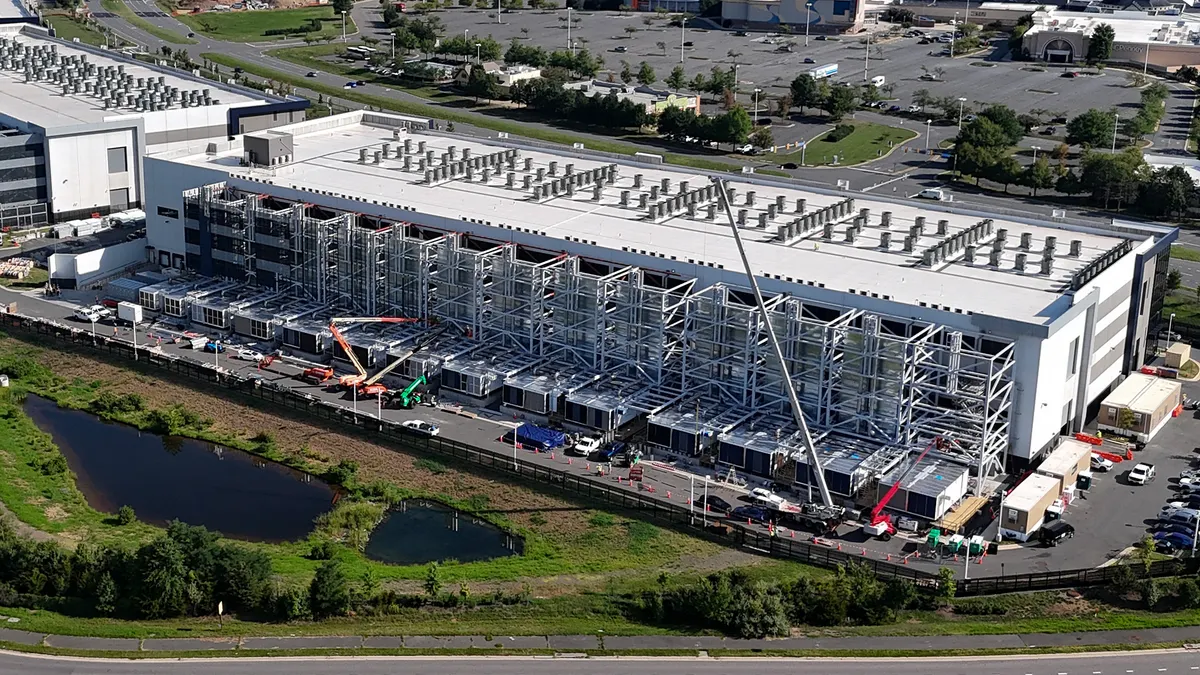
At least 75 data center projects worth roughly $130 billion hit delays or outright construction blocks during the first quarter of 2026, according to a recent report from Data Center Watch. That level nearly matched the total number of projects disrupted during all of 2025.
“The biggest contractor risk isn’t necessarily the project gets canceled. It’s that the project gets delayed long enough that all the assumptions underlying the contractor’s price and schedule become obsolete,” Mark Carter, a partner in the Buchalter law firm’s Atlanta office, told Construction Dive. “Contractors can manage just about anything if they know what they’re dealing with.”

Though contractors won’t have much in their toolbox to prevent community pushback on a project, construction attorneys agree there are steps firms can take to prepare for potential roadblocks during the approval process.
Delays on the jobsite
Community opposition to a project can take many forms, including permit appeals, zoning challenges, environmental reviews, utility approval delays, lawsuits, political pressure and temporary construction moratoriums, said Carter.
In other words, even if a project has all the fundamentals to proceed, progress can still stall for months. Those delays can then create a host of downstream issues for contractors.
For example, a halt could cause labor crews to be reassigned somewhere else, or equipment to sit idle, said Carter. Additionally, pricing assumptions and project schedules may need to be completely reworked since materials for data center facilities, especially electrical equipment, tend to have long lead times, he said.
“[Contractors] can’t eliminate community opposition risk, but there are things they can do to avoid becoming the insurer of that risk,” said Carter. “The industry seems to be recognizing that entitlement challenges, utility constraints and community opposition aren’t just remote possibilities; they’re actually foreseeable risks that should be addressed up front.”
Key construction contract protections
Because contractors don’t control approvals or community relations, attorneys stress that the best chance to manage risk comes before inking a construction contract.
That starts with understanding exactly where a project stands in the approval process. Contractors need to know whether litigation or appeals are pending, or if environmental reviews or utility commitments have been obtained, said Viktor Pregel, attorney at Greenstein DeLorme & Luchs, a Washington, D.C.-based law firm.

“A contractor has the most leverage to mitigate community opposition risks before the construction contract is signed and shovels hit the dirt,” Pregel told Construction Dive. “Contractors should make sure that the definition of force majeure in the construction contract includes local public protests, community-led injunctions, citizen-initiated zoning lawsuits and municipal construction moratoriums in order to shift the risk to the owner, rather than the contactor.”
Pregel added contracts should also address cost and liability management. Next, even when contracts do provide protections for these kinds of project interruptions, contractors still need to ensure they have detailed records to recover costs, said Tom Curran, an attorney in the New York office of law firm Duane Morris.
“Contractors will be well advised, for instance, in preconstruction and early construction, when these interruptions would likely occur, to really keep on top of their documentation, because they will have contracts to cover the work that is accomplished right up to the point of any interruption,” said Curran. “A lot of contractors, particularly with data centers and particularly in the current atmosphere, are really on top of that, and they’re smart to be so.”

Additionally, contractors may face difficult staffing decisions if projects hit roadblocks. Some owners may even agree to help cover the cost of key field personnel retention in order to be ready once construction resumes, said Curran.
Pregel added contractors should also negotiate reimbursement for ongoing costs incurred during a shutdown. That includes expenses around trailer and crane rentals, site security, demobilization, remobilization and retention, he said.
“It’s important to contractors that they have a contractual right to be reimbursed,” said Pregel. “There are ongoing operational costs that don’t go away during a pause … which should be reimbursed by the project owner.”
Attorneys say those legal and contractual considerations are becoming a more routine part of data center project planning. The focus should ramp up even more as opposition to data center construction spreads, said Carter.
“The data center boom isn’t really changing the fundamentals of construction risk allocation; it’s exposing just how important those fundamentals really are,” said Carter. “The projects that are going to perform best will be the ones where the parties identify the risks early and clearly decide who is responsible for them before construction starts.”
Data center construction boom continues
Not every dispute on data center projects results in a work stoppage, however, noted Curran. Instead, there’s more focus on the impacts of these projects on communities.
“What I’ve seen is an increasing concern about taxation on local grids, particularly rural grids that are not ready for the increase in energy demand,” Curran told Construction Dive. “But the owners and developers of the data centers are really on top of this. They’re actively looking at solutions because they don’t want them imposed by governments if they can avoid it.”
Construction economists noted while demand for data centers is impressive, community pushback and infrastructure constraints around power and water are “headwinds that will continue to intensify in the coming months,” said Juan Arias, national director of U.S. industrial analytics at CoStar. That should drive more investment into related infrastructure, he said.
“With the size and scope of these projects, and these increased risks to the schedule, contract drafting is becoming a lot more sophisticated,” said Carter. “There’s a lot of attention to long lead procurement risks, a lot of attention to escalation provisions, utility delay risks, suspension rights, owner-directed resequency, extended overhead recovery, that kind of thing. Owners and contractors are becoming a lot more focused on the schedule resilience.”