Robots are gaining steam in the construction industry, with two announcements this week highlighting the demand for these solutions on jobsites.
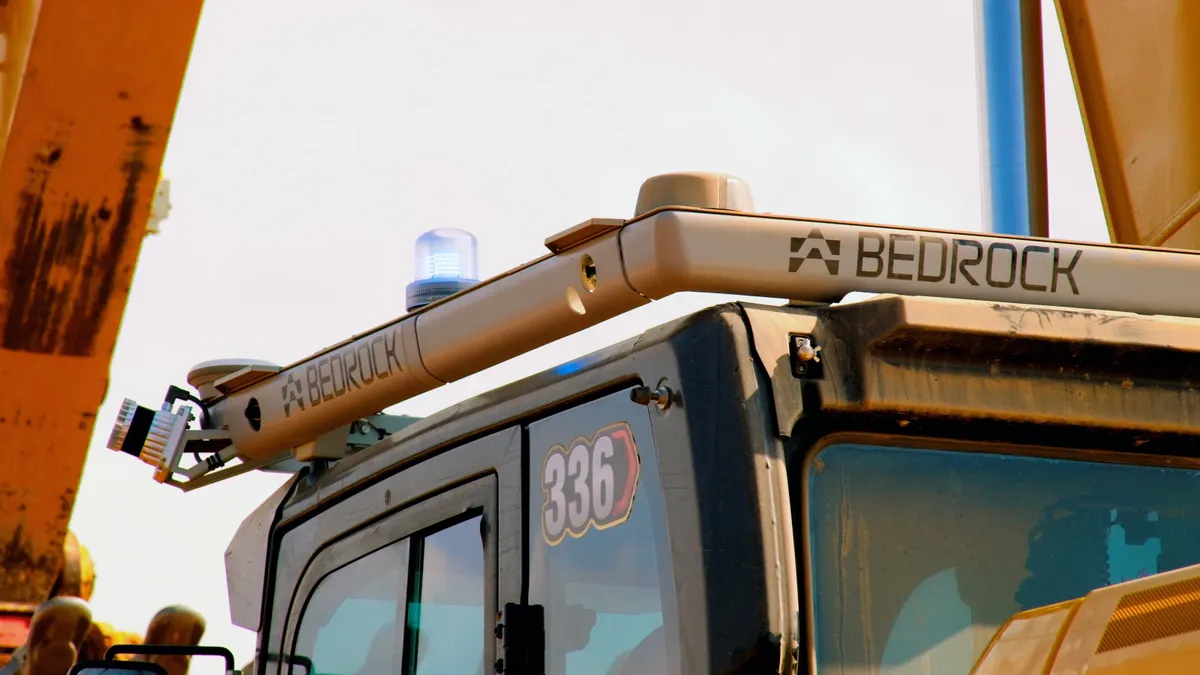
On Monday, global investment behemoth SoftBank threw its weight behind Gravis Robotics in a $200 million Series A funding round. That same day, Bedrock Robotics, founded by alumni from robotaxi firm Waymo, announced its machines were doing work on real jobsites for established contractors, including Sundt Construction and Zachry Construction.
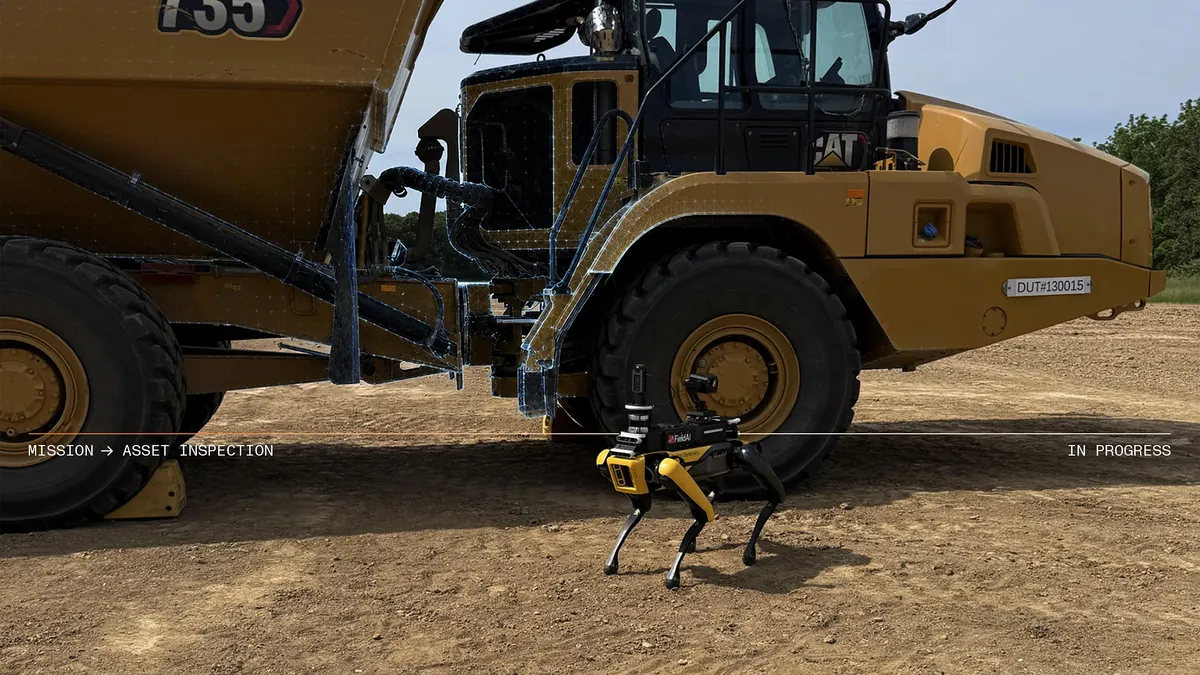
Those are only the latest developments in the sector. Last year, “robot brain” maker FieldAI raised $405 million across two consecutive funding rounds. And Bedrock’s latest jobsite announcement followed its February funding news, where it raised $270 million in a Series B round.
The focus on robots in construction demonstrates not only a desire from legacy investors to pursue automation in the sector, but the need of contractors to find labor — human or otherwise — to complete jobs. As Bedrock CEO Boris Sofman told Construction Dive earlier this week, “We are seeing increasing projects with millions of cubic yards of earth to be moved.”
Indeed, those twin factors have now led these three construction robotics firms — Bedrock, Gravis and FieldAI — to raise nearly $1 billion in combined funding, which has come from tech and venture investing stalwarts. Chipmaking giant Nvidia invested in FieldAI along with Microsoft founder Bill Gates, while Nvidia’s venture capital firm, Nventures, invested in Bedrock with real estate firm Tishman Speyer.
Meanwhile, with its investment in Gravis, SoftBank said it was committed to the concept of physical AI — or the tech that allows machines to perform complicated actions in the real world, the exact application contractors need.
A growing phenomenon
Historically, the appetite and interest in robotics has grown larger than builders’ actual usage. Last year, contractors expressed optimism for the use of robotics in the field, while actual adoption did not keep up, according to BuiltWorlds’ 2025 Equipment & Robotics Benchmarking report.
But in the 2026 iteration of that same report, the Chicago-based research firm found a sharp increase. The firm found, among surveyed contractors, that some level of use in robotics grew 45% year-over-year while the pilot-only group nearly tripled, per the study.
Despite the latest news about their use in the sector, robotics are still at an early stage in construction, said Daniel Ahmoye, a partner at consulting firm McKinsey.
“There's been a huge amount of advancements in robotics overall, and I think the industry is waking up to seeing construction as a next frontier to where value could be created,” Ahmoye told Construction Dive.
Indeed, McKinsey published a report in October that noted builders should begin to plan for the advent of robotics on construction sites. While this week’s robotics news focused on leveraging existing machines on jobsites, including heavy equipment, McKinsey pointed specifically to humanoid robots as a potential solution for the growing labor crisis in the trades.
Getting it done
Of course, hurdles exist. Most prominent is the data crisis in construction, as builders have historically struggled to utilize the vast amounts of proprietary data that exist in their files. It will ultimately be data that feeds the machines doing the work.
For those professionals who use good data to fuel robotics, they will see positive results, according to panelists at the New York Build conference in March. For those who don’t, issues will crop up. Vincent Poon, VDC department manager at Structure Tone, a New York City-based general contractor, summed it up succinctly with a tried-and-true saw for tech adoption in general.
“Garbage in, garbage out,” Poon said.
Yet, just as an apprentice can help a master tradesworker by completing smaller or simpler tasks on a jobsite, Ahmoye highlighted that contractors have already deployed more diminutive robots for that kind of work. Think of Dusty Robotics, for example, which offers a small robot that automates layout on the jobsite. Or perhaps Canvas, which makes a specialized robot that helps with the drywall process.
“I think we've seen a lot of positive experimentation around the smaller robots that are doing the blueprinting, drilling, painting, bricklaying, things like that, where it's a repetitive task,” Ahmoye said. “It has a form factor that is able to move around a site in a controlled environment.”
Ahmoye predicted that those who adopt construction robotics will fall into two camps — firms that fully specialize in one trade, such as electrical or mechanical work, or a fully-integrated EPC contractor that can oversee and own the entire chain of work.
“The middle players who don't really have either one of those things are going to be challenged,” Ahmoye said.
However, that doesn’t mean those mid-sized contractors are doomed when it comes to robotics adoption. They need, he said, to be more intentional about their choices in using the tech.
“Those contractors are going to be much less likely to invest in the development, but more likely to adopt the technology when it bears fruit in terms of capabilities, the functionality, etc.,” Ahmoye said.