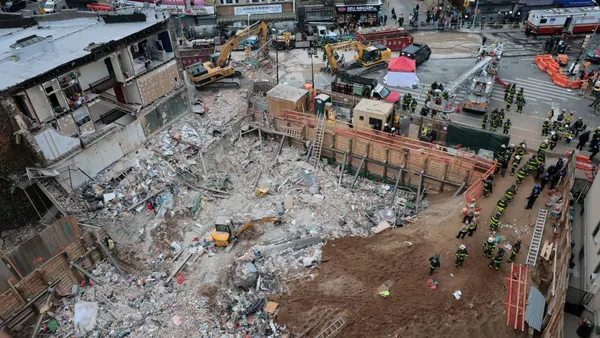


Construction at the Brooklyn, New York, jobsite that caused the fatal building collapse Wednesday had previously violated a stop-work order from the New York City Department of Buildings.
The collapse killed eight people, including two construction workers, New York City Mayor Zohran Mamdani said during a press conference Thursday. Eighteen more were injured.
On March 20, the agency filed a stop-work order and a violation on the site during project demolition when inspectors found inadequate overhead protection for some of the surrounding properties in the Flatbush neighborhood, DOB shared with Construction Dive via email.
When inspectors followed up on April 23, they found demolition work had resumed, the DOB said, resulting in another violation. On May 8, the DOB lifted the order as a result of the project team correcting the violating conditions.
Following the collapse, Mamdani vowed to hold any responsible parties accountable.
“There are five main entities involved with this construction site who are associated with approximately 100 other sites across the city. Our Department of Buildings is commencing sweeps of those sites today,” Mamdani said. “And I will just underline: if there is anyone or any entity operating in this city that bears responsibility for what happened, we will hold them fully accountable.”
The DOB has issued another stop-work order as a result of Wednesday’s collapse. The order said the jobsite had “unsafe construction operations causing” the collapse.
Permits reviewed by Construction Dive filed for the project list Robert Fischman of W6 Facility X as the owner and Cheng-Yi Lin Architecture as the architect of record. Fischman and Cheng-Yi Lin Architecture could not be reached for comment by the time of publication.
Construction in close quarters
Experts emphasized to Construction Dive that intensive building work in the crowded city is commonplace.
Joe DiPompeo, president of New Jersey-based civil engineering firm Structural Workshop, said he could see that supportive excavation had been installed next to a large hole adjacent to the site. That’s a necessary practice, particularly in the Big Apple, which he said is mostly “tight buildings one on top of the other.”
“There’s nothing unusual about digging a hole next to a 100-year old brownstone townhouse in the city,” DiPompeo said.
He dismissed speculation that crews performing excavation work may have directly damaged the neighboring building.
“People that aren’t used to dense urban construction are jumping on this. ‘They were digging next door,’” DiPompeo said. “But what they were doing here, there’s probably 500 other sites in the city that got the same thing going on.”
That said, DiPompeo also underscored the value of proper shoring support in a dense construction environment.
“If the supportive excavation, the soil bracing were to fail or not do what it was supposed to do, the building that fell into the hole would fall into the hole exactly the way it did,” he told Construction Dive.
Timothy Hegarty, construction lawyer and partner at Zetlin & De Chiara, said New York City’s robust building codes exist for a reason.
“We’ve got new construction frequently that takes place inches from century-old buildings, so the margin of error can be extraordinarily small,” Hegarty said. The good news, Hegarty said, is tragedies like Wednesday’s are uncommon on account of the due diligence builders typically apply to these jobs.
Continued recovery
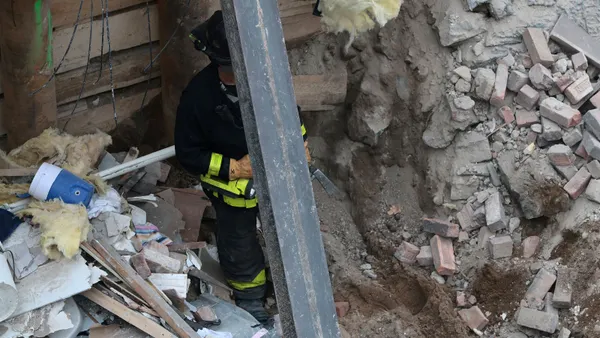
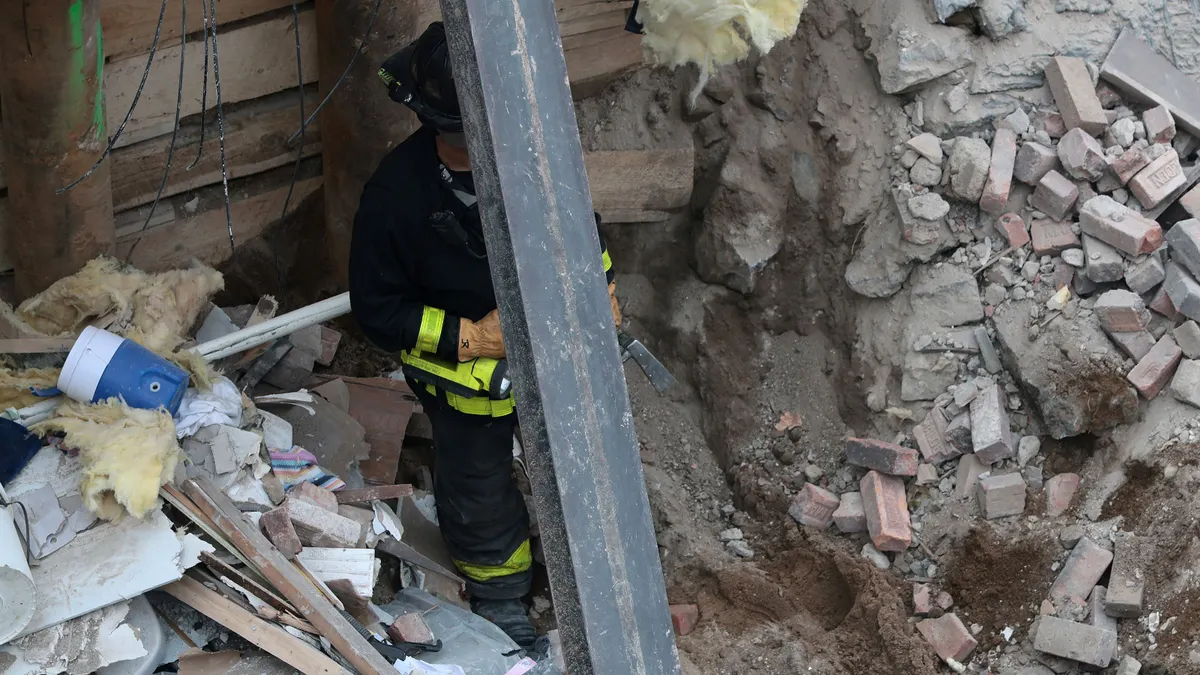
The Fire Department of New York remains in a search and rescue mode, said Commissioner Lillian Bonsignore during Thursday’s press conference.
Mamdani took time to thank the first responders, but also noted the bravery of building crews caught in the initial collapse.
“Construction workers who had only barely survived themselves turned back and dug victims out of the rubble,” Mamdani said during Thursday’s press conference. “People are alive today because of their heroism yesterday.”