Summer is in full swing, but for the construction industry, a fall deadline is already circled in red.
Congress has until Sept. 30 to renew the nation’s transportation bill as the current $1.2 trillion Infrastructure Investment and Jobs Act approaches the end of its authorization period.
The bill is key for the construction industry, as infrastructure projects have helped offset weakness in several private construction segments for much of this year. Outside of the data center construction boom, economists say the public infrastructure sector remains one of the only stalwarts of reliable construction activity.
An Associated General Contractors of America poll found 78% of American voters want Congress to pass Build America 250, the name of the new transportation reauthorization bill. The July 2 poll surveyed more than 10,000 voters across the country, in partnership with Morning Consult.
But any delay or legislative detours over a new transportation bill in the coming months could inject heightened uncertainty into the future of the infrastructure construction sector, said AGC CEO Jeffrey Shoaf.
“They don’t have a lot of time to pass it if they’re going to pass it,” said Shoaf during a July 2 media briefing. “Congress seems to always follow the path of least resistance. They can’t just get away with forgetting about this. They can’t get away without addressing such an important cog in our economic growth in the country.”
The multiyear federal bill provides about 80% of funding for major transportation projects, said Shoaf. Without that money, contractors across the country would be forced to shelve work.
“If federal funding is reduced or fails to keep pace with growth and inflation, our projects will be postponed,” said Lynn Hansen, CEO of Crowder Constructors, a Charlotte, North Carolina-based general contractor, during the briefing. “Construction employment will be put at risk.”
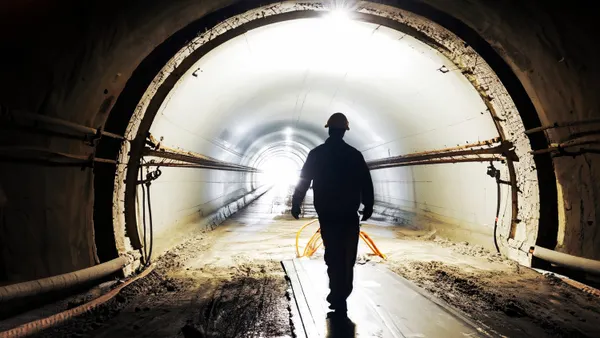
Some notable multibillion-dollar infrastructure projects in the sector include the Gateway Development Commission’s $16 billion Hudson Tunnel Project in New York and New Jersey and the Chicago Transit Authority’s $2.1 billion Red and Purple Line modernization. Both projects recently won court victories where a judge ordered the U.S. DOT to restore financing after President Donald Trump’s administration withheld funds for work.
While the IIJA’s pending sunset adds urgency to the situation for contractors, it also won’t turn the funding tap off completely.
For example, even if Congress fails to pass a bill before the Sept. 30 deadline, funding that’s already authorized under the IIJA will continue to flow, said Associated Contractors and Builders Chief Economist Anirban Basu.
“There are a handful of other construction segments that are performing reasonably well in terms of triggering demand for contractor services, and a lot of this relates to the IIJA,” said Basu during a July 8 economic update webinar. “The money is still there to be spent. That money will last us perhaps into the early 2030s, so there’s that.”
Nevertheless, Basu agrees a new transportation bill is key to preserve infrastructure construction momentum and offset private construction weakness elsewhere.
“Some of these publicly financed segments are holding up okay, but basically on the private side, as far as I can tell, it is data centers and energy,” said Basu. “There’s not much else that’s flying high right now.”