Dive Brief:
- Nonresidential construction spending fell 3.8% over the past 12 months through May, according to an analysis by the Associated Builders and Contractors of U.S. Census Bureau data.
- Private nonresidential spending slipped 0.3% month over month in May and is down 6.6% in the last 12 months. The sector has dropped for seven consecutive months, said Anirban Basu, ABC chief economist, in the release. That weakness largely stems from the ongoing decline in manufacturing-related construction spending, he said.
- On a more positive note, spending on public nonresidential projects ticked up 0.4% month over month in May, though the level is just slightly up 0.3% over the past 12 months through May, according to the report.
Dive Insight:
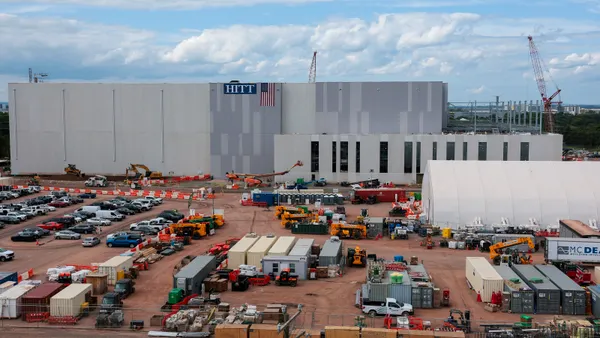
Data center work continues to power the majority of growth around construction spending, said Basu.
“For now, momentum remains largely concentrated in the data center segment,” said Basu. “Those fortunate enough to have data center work have significantly longer backlogs than those that do not.”
ABC said contractors with data center contracts have an average backlog of 11.6 months, about three months longer than for firms without that type of work. Outside of data centers, however, Basu noted spending on private projects has been somewhat muted for much of this year.
“Warehouse construction spending, which appeared to stabilize at the start of 2026, has now fallen for three consecutive months and is down 8.5% year over year,” said Basu. “The general office category remains in a state of freefall, down 11.9% since May 2025.”

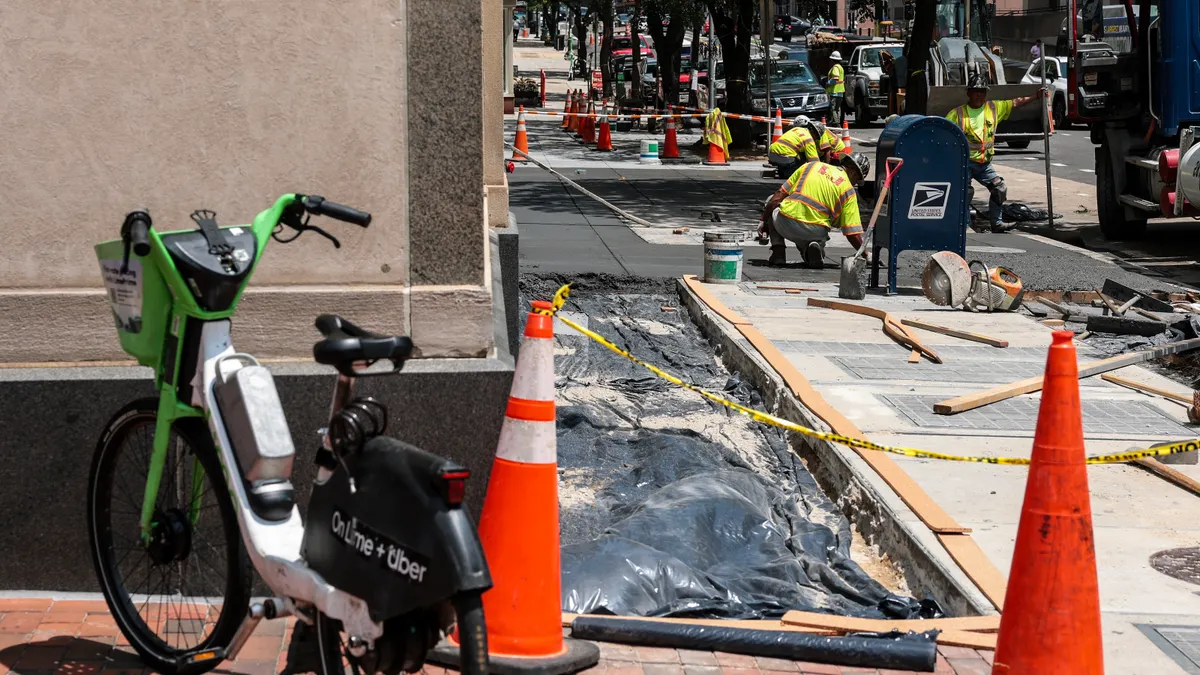
Public construction spending on the other hand, such as for highways or water infrastructure, has fared a bit better this year, according to a report from the Associated General Contractors of America.
For that reason, AGC officials urged Congress and the White House to pass a new highway and transportation bill before the current law expires on Sept. 30, in order to keep that momentum healthy.
“Highway construction is one of the strongest segments of the construction market,” said Ken Simonson, AGC chief economist, in the release. “Infrastructure investment is offsetting weakness in several private segments.”