


Pennsylvania received a ‘C-’ grade on its 2026 infrastructure report card issued by the American Society Civil Engineers’ Pennsylvania State Council on Nov. 17.
ASCE’s report cards measure several categories of civil work and infrastructure at both the state and federal level. A ‘C-’ grade indicates current infrastructure is meeting needs but is insufficient for growth or withstanding stressors such as extreme weather. More than 56 civil engineers from across the state volunteered to collect and analyze data.
Pennsylvania has some of the oldest infrastructure assets in the nation, according to the report card, which serve dense populations across diverse landscapes. That combination can create strain on the public systems. Meanwhile, experienced civil engineers are retiring and fewer workers entering the field won’t be enough to cover the labor gap, per ASCE.
Transportation a mixed bag
Pennsylvania’s aviation and rail categories “fared well,” ASCE’s report said, due to private investment that expanded capacity to accommodate increased demand. Modernization projects, such as the new Pittsburgh International Airport terminal and terminal expansions at Lehigh Valley International Airport, have enhanced efficiency, per ASCE.
Pennsylvania has the fourth-largest rail network in the nation, according to ASCE. In 2022, rail lines moved approximately 170 million tons of freight, a figure which is growing. The rail network will undergo expansion and modernization with over $21 billion in capital projects planned through 2045. Amtrak ridership in the state is expected to increase 21% between fiscal years 2025 and 2029.
Roads and bridges, however, earned worse marks. Over 27% of state-owned roads are rated in poor condition as congestion continues to slow traffic. The number of bridges in poor condition has improved from 13.8% in 2022 to 12.1% in 2025. However, that figure is still higher than the national average of 6.8%.
Act 89, a state law enacted in 2013, provided a revenue boost of approximately $2.4 billion annually for more than 3,800 projects, ASCE said. Still, PennDOT’s Transportation Revenue Options Commission predicts a statewide transportation funding gap that could reach $12.6 billion by 2030.
Finally, transit received the lowest grade in the report: a ‘D-’, down from a ‘D’ in 2022. ASCE pointed to a $10 billion funding gap for the Southeastern Pennsylvania Transportation Authority’s state-of-good-repair backlog and more than $2 billion in deferred capital needs for Pittsburgh Regional Transit.
Pennsylvania’s 2026 ASCE report card
| Grade | Categories |
|---|---|
| B- | Aviation, Energy, Hazardous waste |
| C+ | Ports, Rail |
| C | Dams, Levees |
| C- | Broadband, Inland waterways, Public parks, Roads |
| D+ | Bridges |
| D | Drinking water, Schools, Stormwater, Wastewater |
| D- | Transit |
Water projects need upgrades
Drinking water, stormwater and wastewater each received a ‘D.’ The state’s drinking water systems face $24.3 billion in maintenance and rehabilitation needs and have the nation’s fourth-highest concentrations of lead service lines.
Stormwater systems also see a multibillion-dollar gap: $7.4 billion in required upgrades, per ASCE. Much of the state’s stormwater infrastructure predates modern design standards established in 2006, and about $2 billion in stormwater assets have reached the end of their useful life, ASCE said.
Aging assets, regulatory requirements and growing capital needs mean Pennsylvania faces an estimated $9.6 billion wastewater infrastructure funding gap.
Energy a bright spot
Energy was tied for the highest grade in the report with a ‘B-’, and well above the national ‘D+’ mark.
Pennsylvania is one of the nation’s leading energy producers: It exported 87 million megawatt-hours of electricity in 2024 and supplied nearly 20% of U.S. natural gas production, ASCE said. The state is the second-largest nuclear power producer in the nation and is among the top three coal producers, giving it a diverse energy portfolio.
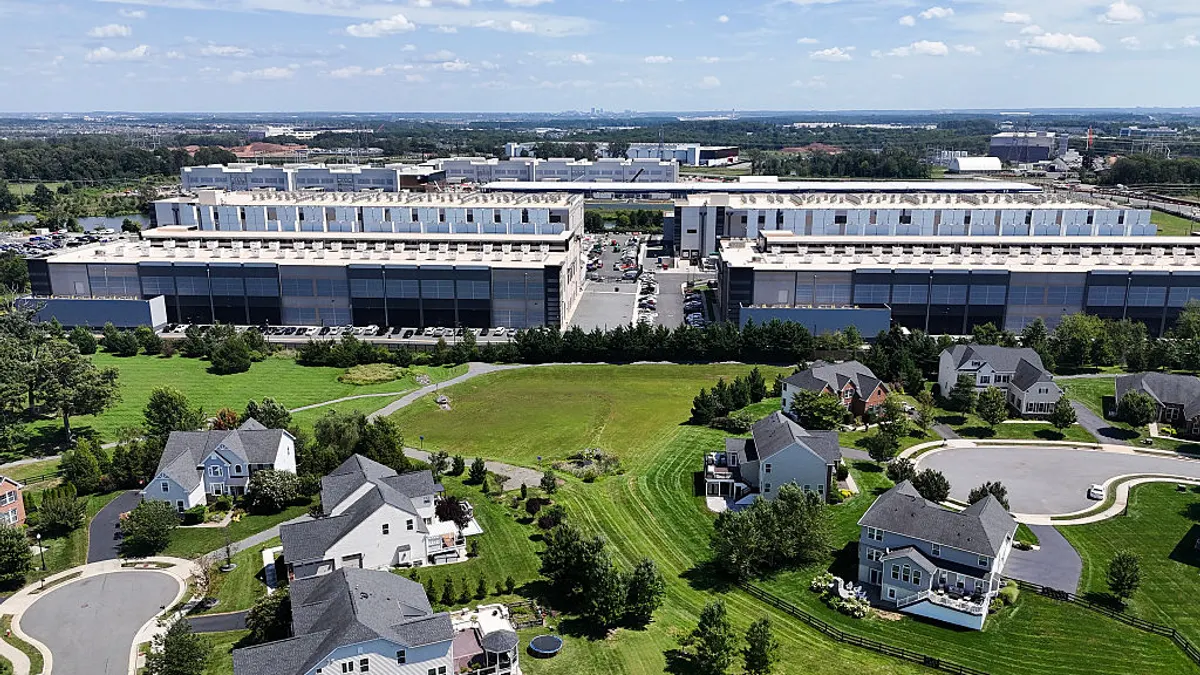
As utilities invest $1.6 billion in maintenance and grid improvement projects to enhance reliability, the emergence of data centers marks a shift in electricity demand. ASCE says Pennsylvania’s position as a major electricity exporter, its cool climate, access to cooling water and land near existing generation make it attractive for those builds.
National context
U.S. infrastructure as a whole earned a grade of ‘C’ in 2025, the most recent nationwide scoring, which means Pennsylvania placed below the national benchmark. The state’s ‘C-’ grade tied it with New York.
The Infrastructure Investment and Jobs Act poured over $22 billion in funding to more than 1,200 projects in Pennsylvania, ASCE said.
“A ‘C-’ grade is not what we strive for in the engineering community, but several categories achieved our goal of reaching the ‘B’ range due to proactive investments and tools that made project delivery more efficient,” Justin Komp, chair of the 2026 Report Card for Pennsylvania’s Infrastructure, said in the release announcing the score. “These successes are proof that when we prioritize infrastructure, we have the skills and the tools to create systems that support families and business for years to come.”