
The increase in megaprojects across our core markets has arrived as forecasted. Many are leveraging new delivery approaches, including prefabrication, that will shape how projects are built in the future.
At DPR, we believe “who we build is as important as what we build.” What’s most exciting for our teams is how these projects are developing the next generation of construction leaders by opening up new career opportunities for administrative and skilled craft professionals. At the same time, the industry is creating new pathways into construction careers with workforce development programs.
It’s a great moment for the people who are working on exciting and complex projects that are changing our industry, our communities and the world.
Big projects, bigger opportunities
Megaprojects underway today represent unprecedented scale in nonresidential construction, often matching the volume of a local office or even the revenue of an entire operating region.
That scale is creating new opportunities for project leaders to take on responsibilities that might otherwise take years to experience. It allows talented individuals to apply their knowledge and grow their skills at a pace and scale that hasn’t traditionally been possible.
At DPR, nearly 6,500 employees serve in administrative roles, primarily in project management, field leadership and support. More than 850 of them have chosen to work on megaprojects, either locally or through our mobility program, which enables teammates to work in new places around the county.
For example, Madeline Ziser, one of our project managers, transitioned from working on projects in the San Francisco Bay Area to a data center project in rural Texas.
“Choosing to join the project has stretched my boundaries in all the right ways,” Ziser said. “I was able to take a role that otherwise may not have been available to me, or at least, not yet in my career. My personal development feels likes it’s on the same fast pace as the project schedule.”
A new era of opportunity in the skilled trades
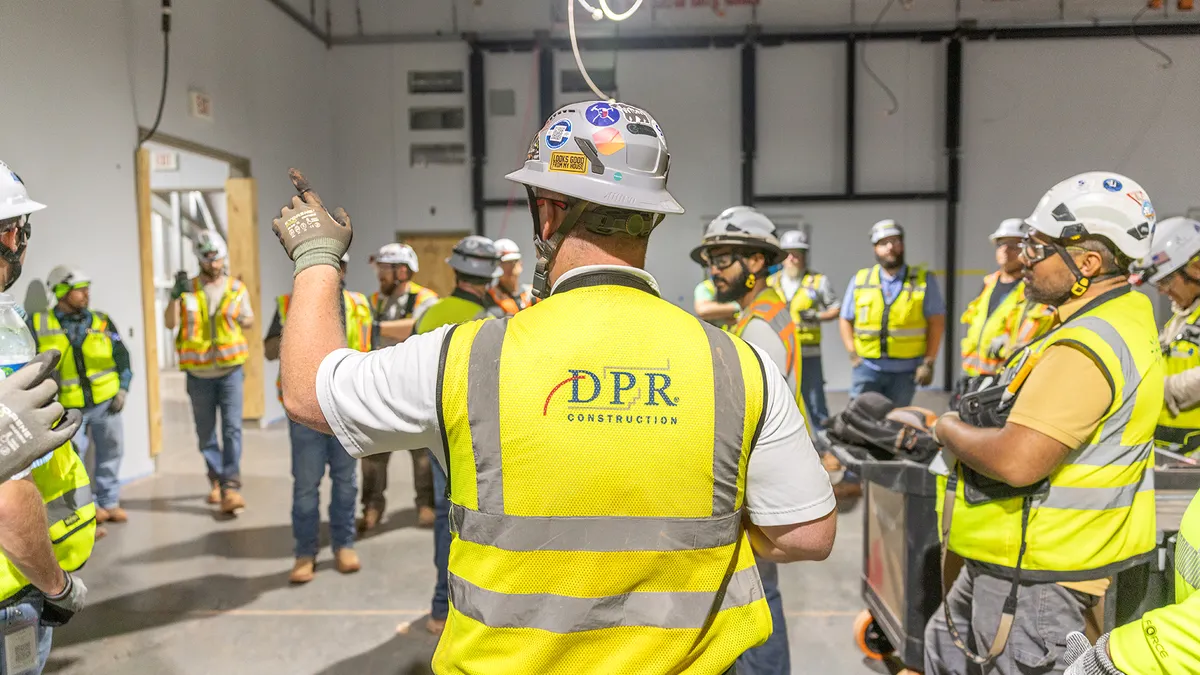
While opportunities are expanding on the administrative side, the impact is even greater for craft professionals. Megaprojects require significant craft workforce capacity—often exceeding 6,000 skilled tradespeople at peak.
With that demand comes expanded opportunity to grow across career paths, including foreman, superintendent, safety and beyond.
Joshua Herrera, a General Electrical Foremen, transitioned from the field to a project engineering role while working on a megaproject.
“Working on a megaproject has accelerated my career,” Herrera said. “It gave me the opportunity to demonstrate my skills to a wider group. My experience helped build my confidence that I could step into a new role sooner than I otherwise might have.”
Those sentiments are shared by Superintendent Joshua Phillips: “Serving as superintendent on a hyperscale data center project has been a career-defining opportunity that significantly expanded my leadership and operational experience. It has strengthened my ability to communicate effectively with diverse trade partners, coordinate complex and constantly evolving site logistics and manage critical material deliveries to support uninterrupted production.”
Building the pipeline for what comes next
Megaprojects are also helping reshape career pathways in the trades. As more foremen join the team, we have an opportunity to help grow their leadership and communication skills in DPR’s Foremen Development Program. More than 420 foremen have already taken the week-long course, which is certified by NCCER.
Combined with our new Builder Development Program, our participation in union apprenticeship programs and DPR's in-house NCCER-certified Apprenticeship programs in some markets, these efforts are opening career pathways for new skilled trade professionals.
We’ve long believed the trades offer lifelong careers. Today, those career paths are becoming more diverse and megaprojects are accelerating how quickly individuals can pursue them.
At the same time, project owners are helping expand access to construction careers. In addition to local workforce programs, many are investing in technical education. For example, Meta recently launched America’s Workforce Academy, an initiative we look forward to supporting.
Beyond the build: Lasting impact on talent
Construction is evolving rapidly, often with a focus on technology and delivery methods. Megaprojects add another important dimension: they are reshaping how construction careers are built.
From the office to the field, professionals are seeing megaprojects as a way to follow new career paths as they experiment, innovate, explore and collaborate in new and unexpected ways.
Long after these projects are complete, their impact will endure in the talent they have helped develop. While new technologies have transformed how we build, the megaproject era is transforming what it means to build a career in construction.