Infrastructure giant Ferrovial is no stranger to public-private partnerships.
Last September, Silvia Ruiz, the company’s global head of investor relations, told Construction Dive that P3s would become the “foundation” of the next phase of infrastructure development in the U.S.
Alberto Gonzalez, the head of business development for Cintra, Ferrovial’s infrastructure development arm, had more to share on how the contractor approaches when, where and why to position itself for a P3.
Here, Gonzalez talks with Construction Dive about his outlook on the road and highway construction market in the U.S., what boxes he checks for a P3 project, and how to keep a project stable in an uncertain time.
Editor’s Note: This interview has been edited for brevity and clarity.
CONSTRUCTION DIVE: What are you seeing for the road and highway construction in the U.S. right now?
ALBERTO GONZALEZ: The gap between the needs and the funds available continues to increase. It's hard to cope for different reasons: organization, population growth, inflation, particularly on construction.
The pressures are greater than the relievers, and, in an environment of greater fiscal responsibility, the availability of public funds hasn’t been depleted, but it’s definitely not able to cope with all the needs.
I would expect to continue seeing greater participation of the private sector in the development, at least of critical infrastructure.
We always say that P3s are not available or not suitable for every project, but it's certainly a tool that has to be in the toolbox to try to augment the reach of the public funds and try to cope with those growing demands for infrastructure, particularly in transportation and highways.
How do you determine whether a P3 is right for an infrastructure project?
P3s are more suitable in projects where there's a certain level of complexity, where the private sector can bring ingenuity and more advanced technical solutions.
The other thing is, on critical infrastructure, the ability to accelerate delivery. The way it works, we have to have all the funds available on day one. Then it's a matter of how much can you run to get the project completed, whereas under traditional delivery, projects are subject to the annual budget process. And how much money is the public sector going to be able to allocate to a specific need or a specific region?
We continue to see how traditional delivery projects get delayed, and so I think projects that require greater accountability or that have tighter deadlines are also best candidates for P3s.
When it comes to, particularly toll roads, where there's a component of technical complexity and managing the pricing in order to make the product work at its best, I think that's also a good space for the private sector.
What’s an example?
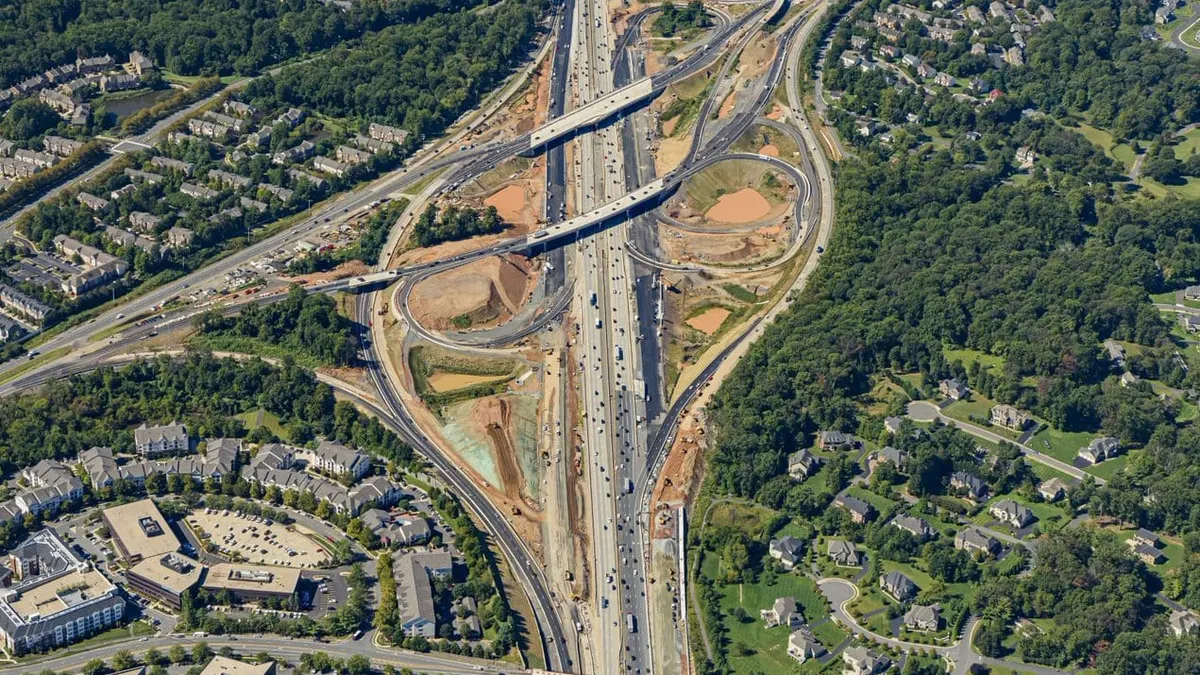
We normally look for urban areas where there's a need for additional capacity within the existing footprint. Maybe a city continues to grow, but there are limited opportunities to build alternative corridors.
Most of our projects are express lanes or managed lanes or choice lanes, which basically is building a toll capacity within an existing corridor. The private sector brings a lot of value on those types of projects. Obviously, we're looking at urban areas that are growing, we have long-term contracts and we need to recover our investment over a long period of time.
We prefer environments where we have economic prosperity and corridors that are a critical piece of the economic backbone in those cities or states, to ensure that traffic is going to be there for the next 30-50 years.
And then, if that’s possible, political stability. We don't want to be subject to the changing whims of politics, and maybe someone trying to make a discretionary decision when we're only in the early stages of our project. Having a stable political environment is very important.
How does Cintra guard against those big disruptions?
The main thing is by targeting critical pieces of infrastructure.
When it’s an asset that is necessary for the economic development of the region, that mitigates that potential risk significantly, because there’s less willingness to mess with a critical piece of infrastructure.
Those projects that are maybe not as important might be more volatile.