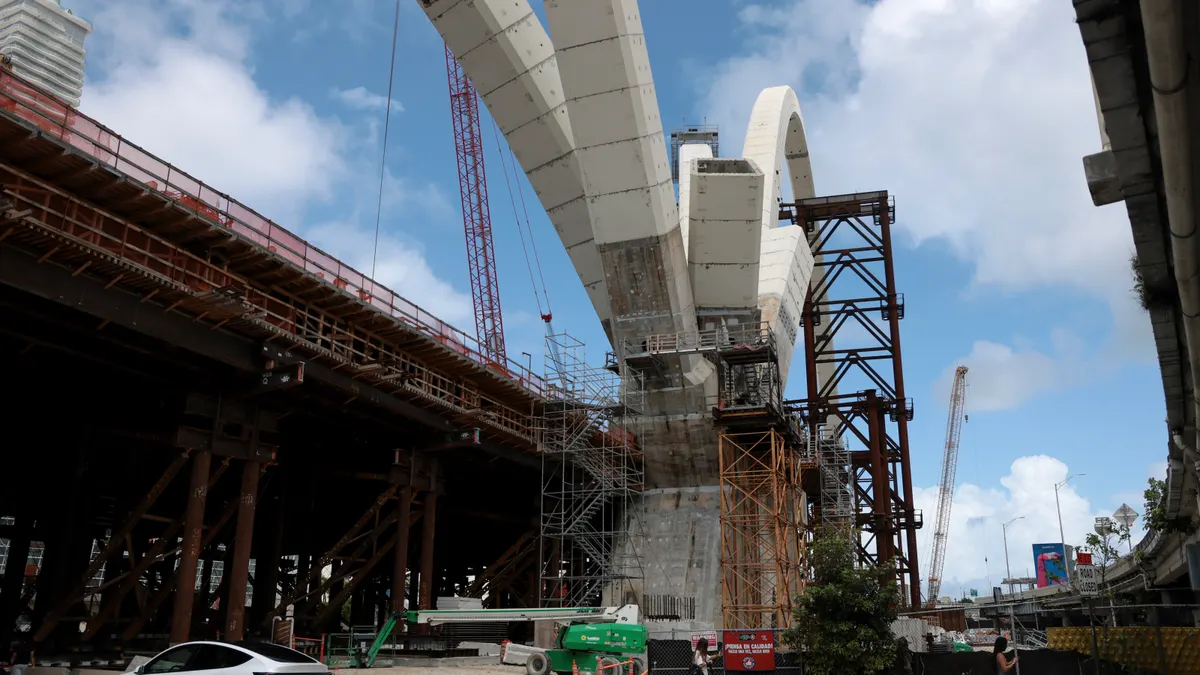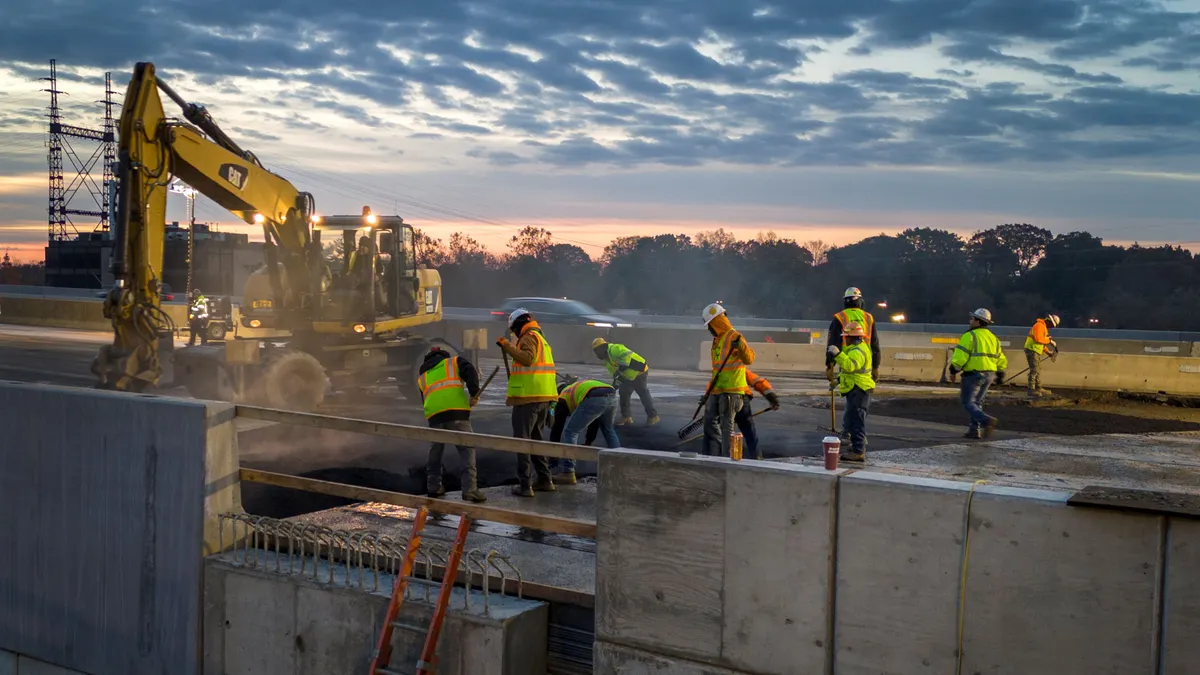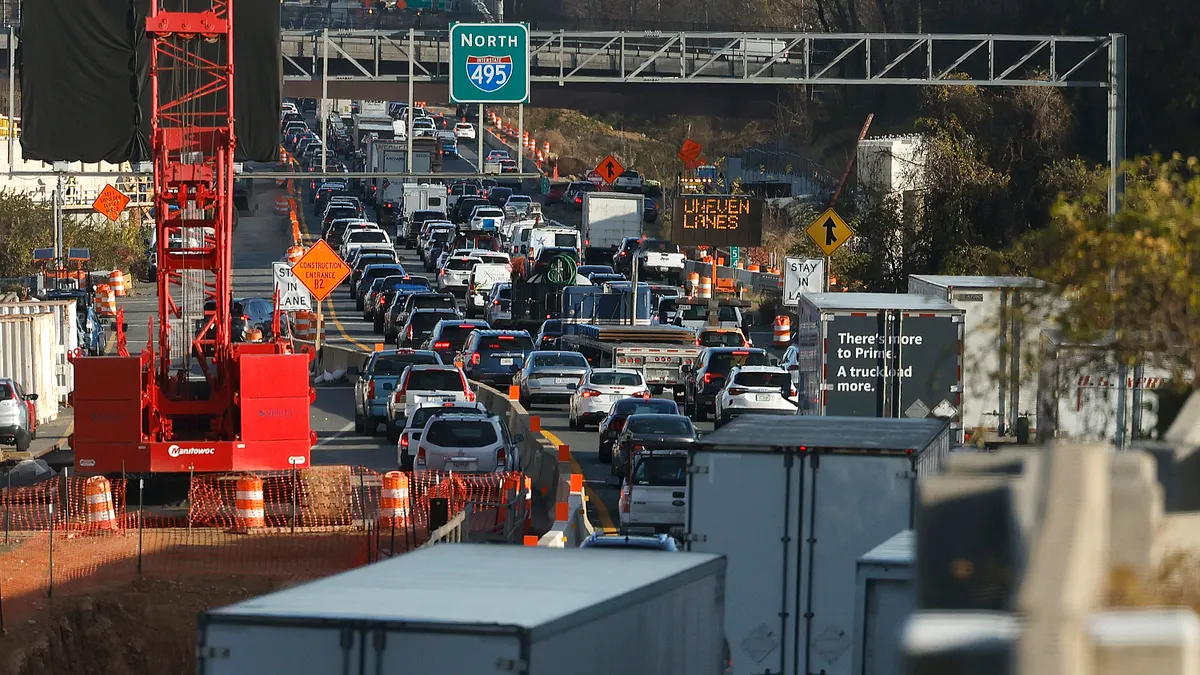
Cars zoom past workers all day on highway improvement projects.
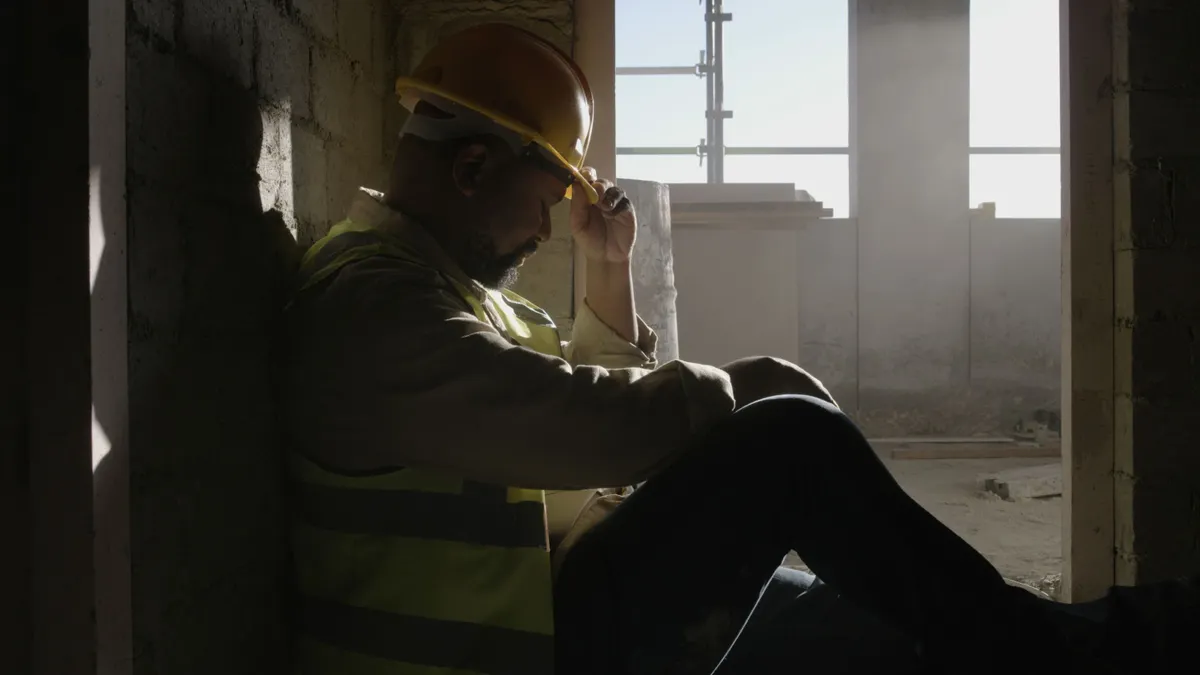
The hazards on these roadside construction sites are so constant that workers may even become somewhat desensitized to that danger over time. That split-second lapse in focus is all it takes for a tragedy to happen.
From 2011 to 2021, struck-by incidents, which occurs when a vehicle, piece of equipment or other object hits a person, accounted for about 1,800 fatalities and more than 167,000 nonfatal injuries, according to the National Institute for Occupational Safety and Health.
But Namgyun Kim, an assistant professor in the department of construction science at Texas A&M University, thinks artificial intelligence can help workers stay alert.
Along with fellow Texas A&M professor Brian Anderson and Yongcheol Lee of Louisiana State University, Kim is studying how workers perceive and respond to these hazards.
Through a series of studies involving virtual reality simulations, brain activity monitoring, field observations and AI-driven augmented reality systems, Kim is looking to improve workers’ attention to hazards, according to a Texas A&M news release.
Here, Kim talks with Construction Dive about AI in construction safety training, the tech’s return on investment and impacts to construction activity over the next few years.
Editor’s note: The following has been edited for brevity and clarity.
CONSTRUCTION DIVE: What’s the biggest misconception contractors have about AI in construction today?
NAMGYUN KIM: One of the biggest misconceptions is that construction is still a low-tech, labor-intensive industry that has changed very little over the years. While construction will always rely on skilled workers, the industry has undergone a remarkable digital transformation over the past few decades.

A major turning point was the adoption of Building Information Modeling, which created digital models that allow architects, engineers, contractors and owners to collaborate using the same information. This has significantly reduced communication errors, improved productivity and enhanced safety throughout a project’s lifecycle, from design and construction to operation and maintenance.
Today, that transformation is accelerating because of advances in AI. It’s becoming a practical tool on construction projects. It can help predict potential hazards before they lead to accidents, monitor jobsite conditions and workers’ risky behaviors in real time and deliver personalized safety training tailored to specific workers, tasks or project conditions.
What’s preventing this technology from becoming standard on jobsites?
I would tell a CEO that VR- and AI-based safety training should not be viewed as an experimental technology anymore.
Researchers have spent more than a decade studying VR-based safety training and many studies have shown that immersive training helps workers recognize hazards and respond more effectively than traditional classroom instruction. Commercial VR training platforms are also widely available today.
However, VR safety training has one important limitation. Most VR programs are built around a fixed set of scenarios. Construction projects, on the other hand, are never exactly the same. Every project has different site conditions, schedules, crews and risks. As a result, a generic VR scenario often cannot capture the unique hazards of a specific project or task.
How does AI help with that challenge?
This is where recent advances in AI are changing the equation. Generative AI can dramatically reduce the time and cost required to create new training scenarios. Instead of relying on a handful of pre-built simulations, companies can develop training that reflects the actual project, the specific work being performed and even the experience level of individual workers. AI can also analyze training data to identify knowledge gaps and recommend follow-up training where it is needed most.
The biggest challenge for CEOs has always been demonstrating return on investment. Safety incidents are relatively rare events, making it difficult to prove that any single training program directly prevented an accident.
We believe the strongest business case is that VR and AI fill critical gaps that traditional methods cannot address, making safety training more project-specific, data-driven and proactive. That is where the greatest return on investment will come from.
Your research focuses on workers becoming desensitized to their surroundings, on a busy highway jobsite, for example. How are you using AI there?
One trend I think deserves more attention is that AI is moving beyond identifying hazards or workers’ unsafe behaviors on jobsites. Increasingly, researchers and industry are using AI to better understand why people make unsafe decisions in the first place.
For example, we know that construction workers can become so familiar with warning signs, alarms or recurring hazards that they gradually stop noticing them, a phenomenon known as “habituation.”
Traditionally, this has been recognized through experience, but it has been very difficult to measure objectively or address systematically. Today, AI and wearable technologies are making it possible to identify these patterns and provide personalized training before they contribute to an accident.
Any other trends you’re keeping tabs on around AI and construction safety?
We are also seeing research focused on understanding how different workers perceive risk. Some workers consistently overlook certain types of hazards, while others respond differently depending on their experience or the task they are performing. AI can help identify these patterns and deliver training that is tailored to the individual rather than assuming everyone learns the same way.
Another exciting direction is using AI to better understand safety culture. By analyzing conversations during toolbox talks or other routine safety meetings, AI may help organizations identify communication gaps, evaluate how safety information is shared and strengthen the overall safety culture across the company.
Ultimately, I believe the next generation of AI in construction safety will be less about replacing people and more about understanding human behavior. If we can better understand how workers perceive risk, we can design training and safety programs that are much more effective than today’s one-size-fits-all approach.