Padraig Reilly is the founder and CEO of Boxcore, a Dublin-based construction safety and workforce data platform. Opinions are the author’s own.
Construction has a margin problem.
Despite delivering some of the world's most complex projects, many contractors continue to operate on thin margins while facing rising labor costs, increasing insurance premiums and growing regulatory requirements. At the same time, the industry continues to lag behind many others when it comes to productivity growth.
Part of the challenge is that many processes remain heavily manual, particularly around safety management.
For decades, safety has often been viewed as a necessary cost of doing business. It is frequently positioned as being in competition with productivity, schedule and commercial performance for project resources and focus.
I believe that mindset is increasingly outdated.
The contractors that will outperform over the next decade will be those that stop viewing safety as a compliance obligation and start treating it as a driver of profitability, productivity and competitive advantage.
The false choice: safety or productivity
Most construction professionals have heard some version of the same argument on site: "We need to keep the job moving."
The implication is often that safety requirements create delays, paperwork and additional administration.
In reality, poorly managed safety processes create far more disruption than effective ones.
Project teams spend countless hours searching for training records, validating certifications, checking documents and confirming whether workers are authorized to perform specific tasks. Many contractors still rely on spreadsheets, paper forms, email chains and disconnected systems to manage critical safety information. That approach creates substantial hidden costs.
The issue is not safety itself. The issue is the inefficient administration surrounding safety.
There is a significant opportunity to improve both productivity and profitability simply by reducing the administrative burden associated with safety management.
Why tech is changing the conversation
Digital platforms can now automate workforce onboarding, training management, site access control, audit preparation and compliance reporting.
Artificial intelligence is accelerating these improvements further.
Rather than requiring teams to manually process large volumes of information, AI-powered systems can help verify documents, extract information, identify compliance gaps and highlight issues that require attention.
The result is not simply improved compliance, but less administration, faster decision-making and better visibility across projects.
Importantly, these benefits only materialize when technology works for frontline teams.I stress this point because construction has never had a technology shortage. It has instead always had an adoption challenge.
Many software deployments fail because they add work rather than removing it. If site teams view a system as another administrative burden, adoption will suffer regardless of how sophisticated the technology may be.
The most successful solutions are those that fit naturally into existing workflows and save people time from day one.
Data centers raise expectations
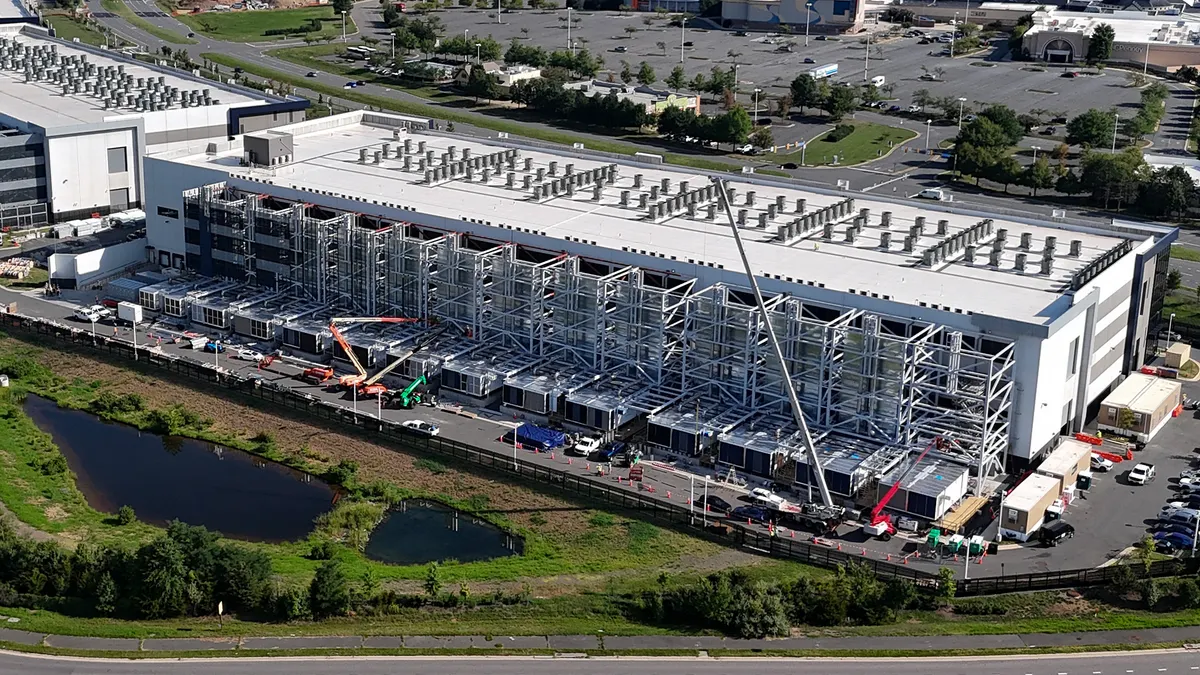
The rapid growth of data center construction is accelerating this trend.
Owners and clients are demanding higher standards of workforce management, compliance and project transparency than ever before.
Large-scale projects often involve hundreds or thousands of workers, extensive training requirements and multiple subcontractors operating simultaneously. Managing this environment through spreadsheets and paper-based systems is becoming increasingly difficult.
Digital-first safety management is quickly moving from a competitive advantage to a minimum expectation.
Contractors pursuing major data center projects will increasingly be expected to demonstrate robust approaches to onboarding, competency management, access control and compliance reporting.
A different way to think about safety
Against the backdrop of construction’s many challenges, contractors need investments that improve compliance, reduce costs and increase productivity simultaneously.
Effective safety management technology can do exactly that. The companies that recognize this shift earliest will spend less time on administration, gain better visibility into their operations and be better positioned to compete for high-value projects.
Most importantly, they will stop viewing safety as a cost center competing against profitability.
Instead, they will recognize it as one of the industry's most underappreciated drivers of margin improvement, operational performance and long-term competitive advantage.