Contractors on the $16 billion Hudson Tunnel project are ready to dig in.
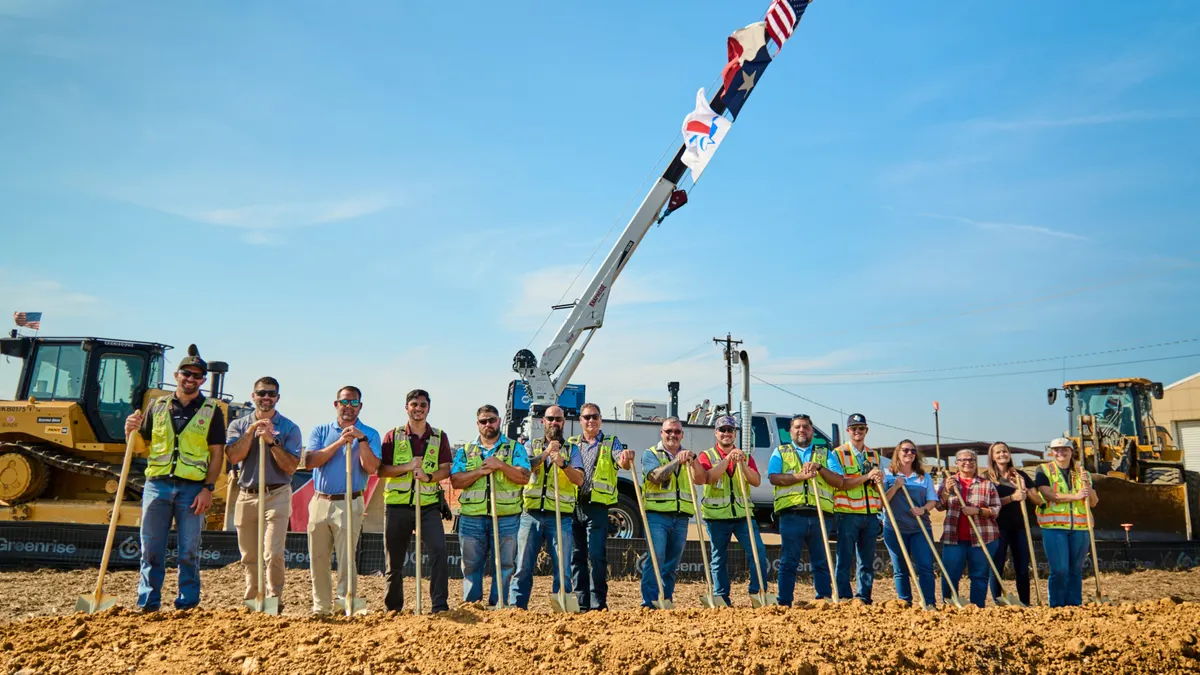
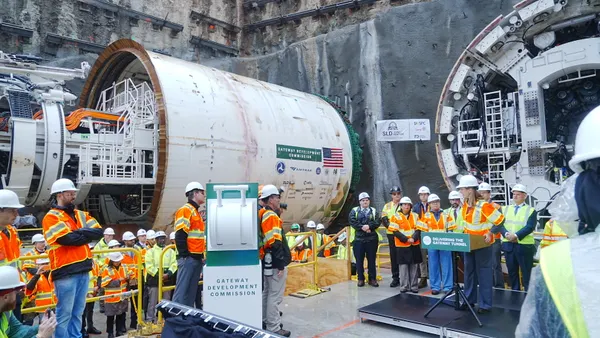
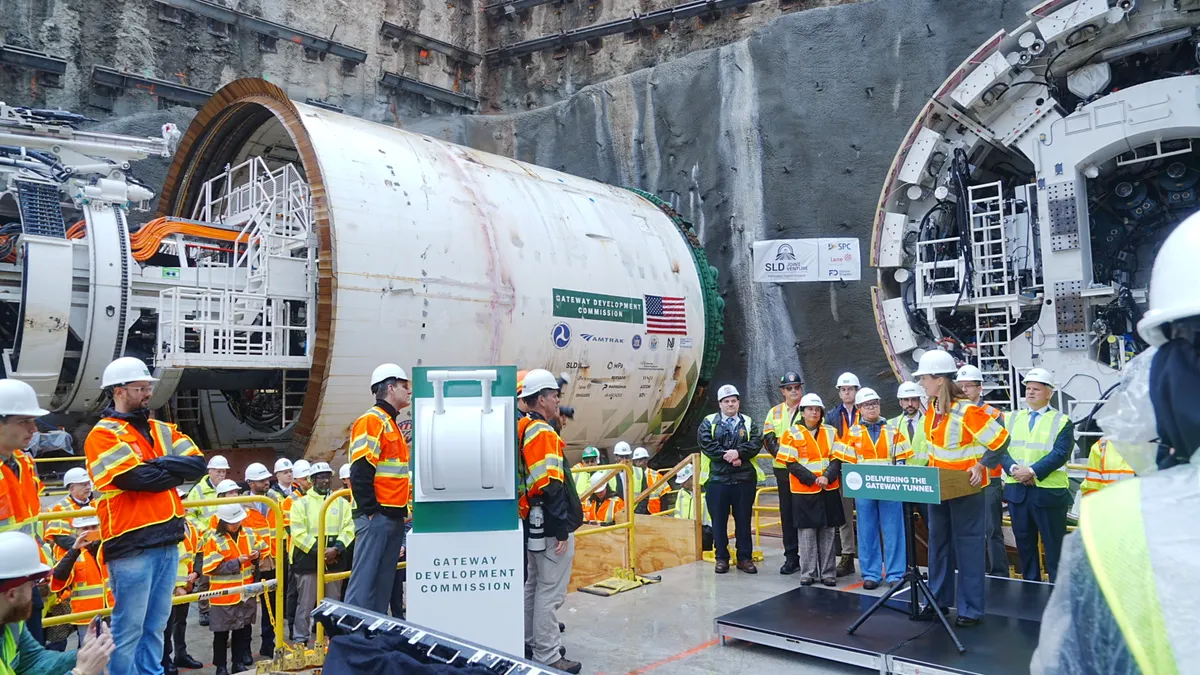
The first set of tunnel boring machines for the massive rail project will soon start to chew through 5,100 feet of rock beneath the Palisades Cliffs in New Jersey, according to a Monday news release from the Gateway Development Commission. Project stakeholders held a ceremonial launch on Monday morning, with the first machine slated to start boring in the coming days, GDC confirmed with Construction Dive.
“It’s been more than a century since a rail tunnel was last dug through these cliffs,” New Jersey Gov. Mikie Sherrill said during the event. “I was asked how many of these boring machines are there in the world, and the answer is this is it. Each one is purpose-built for the specific job at hand.”
A joint venture of Schiavone Construction, Lane Construction and Dragados will complete the first phase of tunnel boring as part of the Palisades Tunnel construction package, according to GDC. In partnership with the commission, the Port Authority of New York and New Jersey will manage the delivery of the construction package.
The machines will bore parallel tubes from the tunnel portal in North Bergen, New Jersey, to the Hudson County Access Shaft on the border of Weehawken and Hoboken, according to the release. The machine’s cutterhead is 28 feet, 8 inches in diameter and the trailing gantry extends roughly 500 feet, according to the GDC. Each machine weighs more than 1,680 tons.
Rotating cutterheads fitted with disc cutters will break the Palisades’ hard rock into chips, which a conveyor belt will then carry out of the tunnel. As the machine moves forward, an erector arm will place precast concrete segments to form the permanent tunnel lining. Hydraulic thrust jacks will brace against the edges of the completed tunnel lining to push the machine forward, according to the release.
“These machines are amazing,” said U.S. Senate Minority Leader Chuck Schumer, D-N.Y., during the event. “They’re certainly not boring.”
A turbulent year
Schumer talked about the construction challenges of the build, as well as other hurdles the project has faced.
“The rock is so hard it only moves 30 feet a day,” Schumer said during the event. “That’s why we can’t let anybody stop it. We have to keep going and going and going till these machines reach the other side of the river.”
Construction resumed earlier this year on the Hudson Tunnel project after a federal funding dispute halted work. A federal judge later barred the Department of Transportation from withholding funds over its disadvantaged business enterprise program.
In April, GDC awarded a $1.29 billion contract to a joint venture of Traylor Bros., Walsh Construction and Skanska for the Manhattan Tunnel Project. The award moved all construction packages required to bore the new tunnel into active construction.
“We’ve taken the Trump administration to court five times to keep this project going, and we’ve won five times,” said Sherrill. “We’re going to keep fighting, even if it requires a few more trips to court.”
Years of work
Getting the machines to this point required nearly three years of construction progress, said Sherrill.
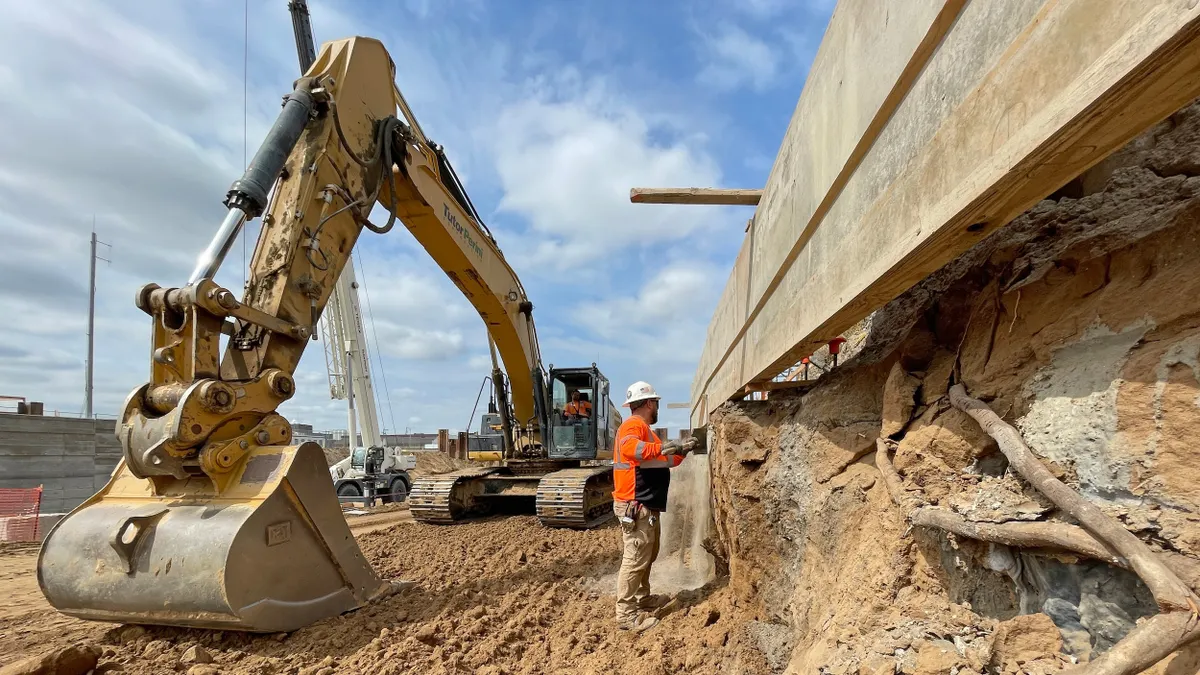
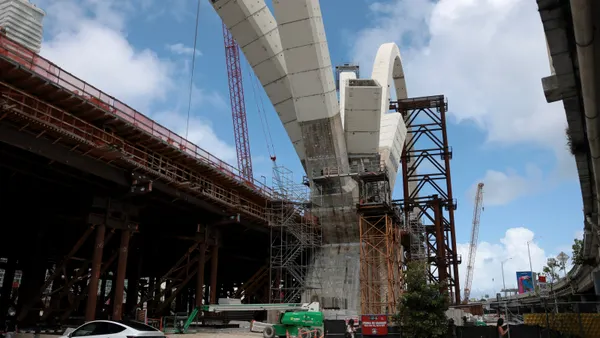
Beginning in late 2023, contractors built a bridge to support a section of Tonnelle Avenue in North Bergen. Teams created space under the highway for the machines’ gantries and excavated the launch box where the tunnel boring machines will start digging, according to the GDC.
The manufacturing of the tunnel boring machines occurred alongside that work and took more than a year. A single machine consists of nearly 100 complex components, according to the release.
“It’s a mechanical marvel,” said Sherrill during the event. “Workers here have spent the past few months reassembling and testing it, so it’s ready for today’s launch.”
Once the first pair of tunnel boring reaches the Hudson County Access Shaft, crews will remove and replace them with a second pair of machines to build the section of the tunnel under the Hudson River, according to the GDC. Once complete, the new two-tube rail tunnel will run between New Jersey and New York.
“We still have a lot of work to do, and knowing some of the politicians in Washington, there are still going to be attempts to slow this project down,” said Sen. Cory Booker, D-N.J., during the event. “But I know, when all is said and done, generations not yet born will benefit from the work that we have done.”