

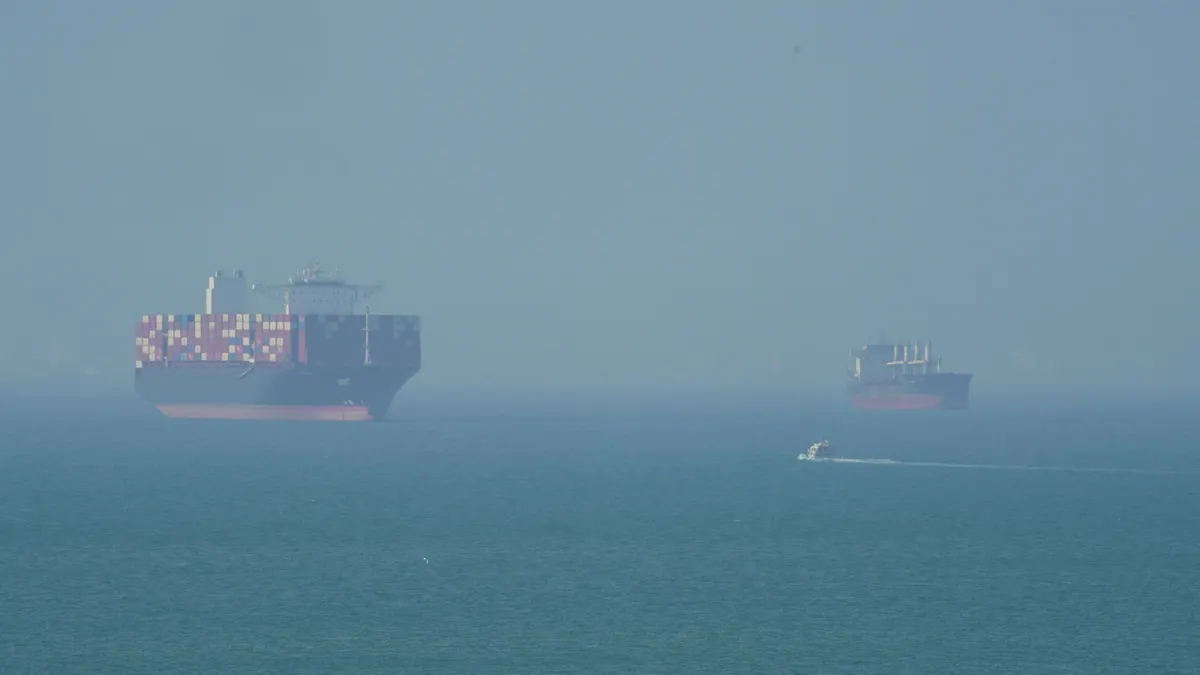
It’s been over two and a half months since the U.S. launched military operations in Iran on Feb. 28. The resulting closure of the Strait of Hormuz has caused gas prices to skyrocket.
When construction firms announced their most recent batch of earnings, they reported on the first three months of 2026; the time period when the war began and costs began to rise.
C-suite executives from publicly traded construction companies acknowledged the headwinds the war has brought, while largely downplaying their impact thus far.
Gas prices’ hit on the bottom line
“During the quarter, oil prices increased due to the conflict in [Iran],” Kyle Larkin, Granite president and CEO said. The firm’s primary oil exposures are liquid asphalt and diesel fuel.
Nonetheless, Larkin said the Watsonville, California-based firm regularly mitigates fuel cost increases by agreeing to fixed price contracts, maintaining physical storage, applying financial hedges and inserting energy surcharges in contracts.
“While we will continue to monitor the market closely, we do not presently expect that the current increases in oil prices will have significant impact to our annual outlook,” Larkin said.
Indeed, Pontus Winqvist, CFO of Sweden-based Skanska, told Construction Dive that the contractor anticipated a prolonged conflict would raise oil prices, in turn elevating costs on asphalt or plastic for piping. He also said Skanska hedges against that risk.
“Part of our exposure is either taken by the subcontractors or by our clients,” he said. “I can’t say that that will make any major difference for profits.”
Impact on work in the Middle East
Other publicly traded contractors reported on the effects the war has had on their work within the Middle East.
Jim Breuer, CEO of Fluor, said company activities in the region around the conflict “continued without interruption” and that the firm has mitigated supply chain constraints there.
Dallas-based AECOM saw more of an impact on the bottom line during the firm’s fiscal second quarter that ended March 31. However, executives said the company has already recovered.
“Underlying cash flow in the second quarter was consistent with our expectations, but was offset by delayed payment timing in the Middle East business as well as longer-than-anticipated claim resolution on certain projects,” said Gaurav Kapoor, AECOM CFO, during the firm’s earnings call. “Importantly, collections in the Middle East have already recovered in the third quarter.”
CEO Troy Rudd indicated he expected work in the Middle East to grow “quite significantly,” but acknowledged it would be difficult to forecast the pace of growth going forward.