Dive Brief:
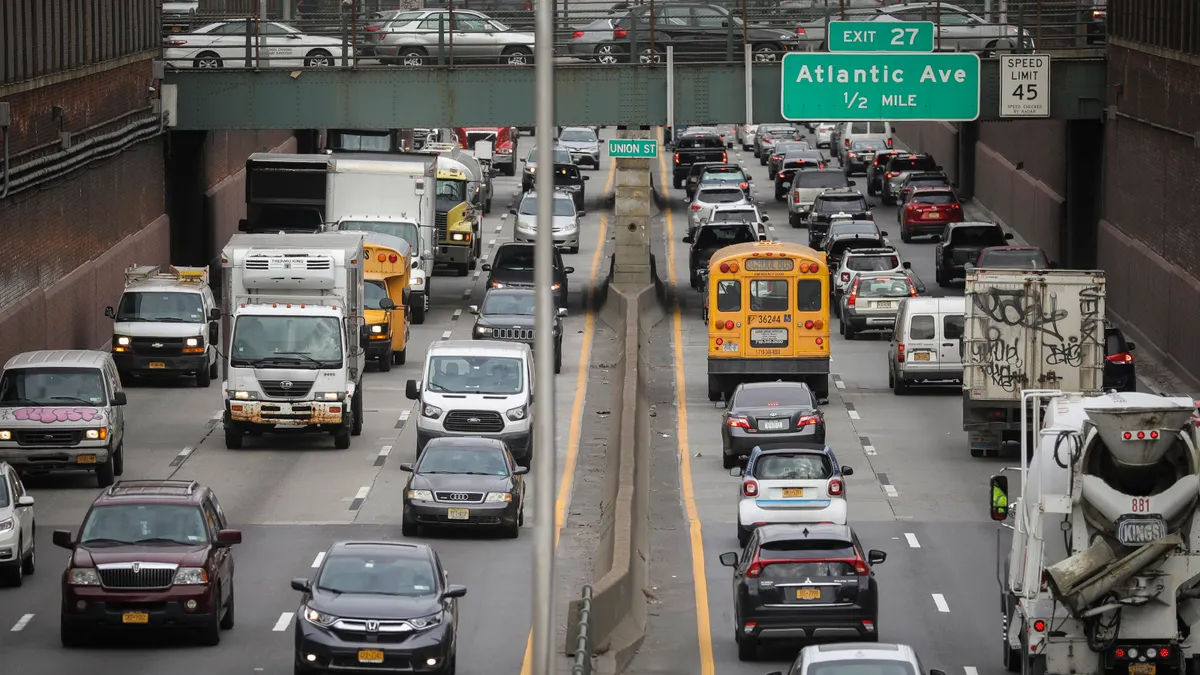
- New York City plans to spend $4 billion to rehabilitate a 1.5-mile section of the Brooklyn-Queens Expressway, according to an Aug. 24 NYC DOT announcement.
- Construction, planned to start in 2030 and last 10 years, will repair aging concrete and the highway’s deteriorating triple-cantilever section between Atlantic Avenue and Sands Street. Crews will install temporary bypass structures for active traffic during construction, according to the release.
- NYC DOT will begin the environmental review process this fall and expects to complete an environmental impact statement in summer 2028, according to the release.
Dive Insight:
Once complete, the rehabilitation project would extend the design life of BQE Central by another 40 years, said Mayor Zohran Mamdani in a video announcement posted on X.
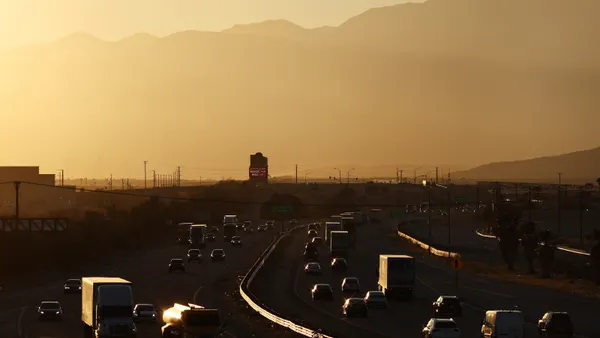
BQE Central, already 20 years over its original lifespan, carries about 130,000 vehicles per day, including 13,000 heavy trucks, Mamdani said in the video. He added each additional year without rehabilitation adds about $160 million in escalation costs for the city.
After the installation of two bypass structures, construction teams will work to improve drainage and railings on the highway. The plan addresses cracked concrete and exposed steel as well.
“We’re going to fix the aging concrete, repair the deteriorating triple cantilever and build temporary roads that keep the highway operable during construction to avoid sending tens of thousands of cars and trucks onto local streets,” said Mamdani in the release. “This plan allows us to safely fix the BQE without slowing our city down or wasting decades more on magical thinking.”
The construction industry welcomed the decision to move forward on the project, according to a statement from Carlo Scissura, president and CEO of the New York Building Congress.
“The sooner we can get a shovel in the ground to deal with the disastrous BQE before it completely fails, the better and safer this city will be,” said Scissura in the statement. “While many questions remain about construction and timeline, they are 100% right to start the clock now on action.”
Those questions, according to Scissura, revolve around the rest of the highway’s sections. The $4 billion project focuses solely on BQE Central, the only portion of the highway under New York City control. The rest of the highway falls under New York state jurisdiction.
“While this fix is aimed at the triple cantilever, we will continue to urge state and federal action on a holistic, corridor-wide vision for modernizing or even tearing down and replacing the remaining roadway,” said Scissura. “There is a beautiful opportunity inherent in anything we do on the BQE to result in new, green open spaces and reunited communities. That vision remains.”