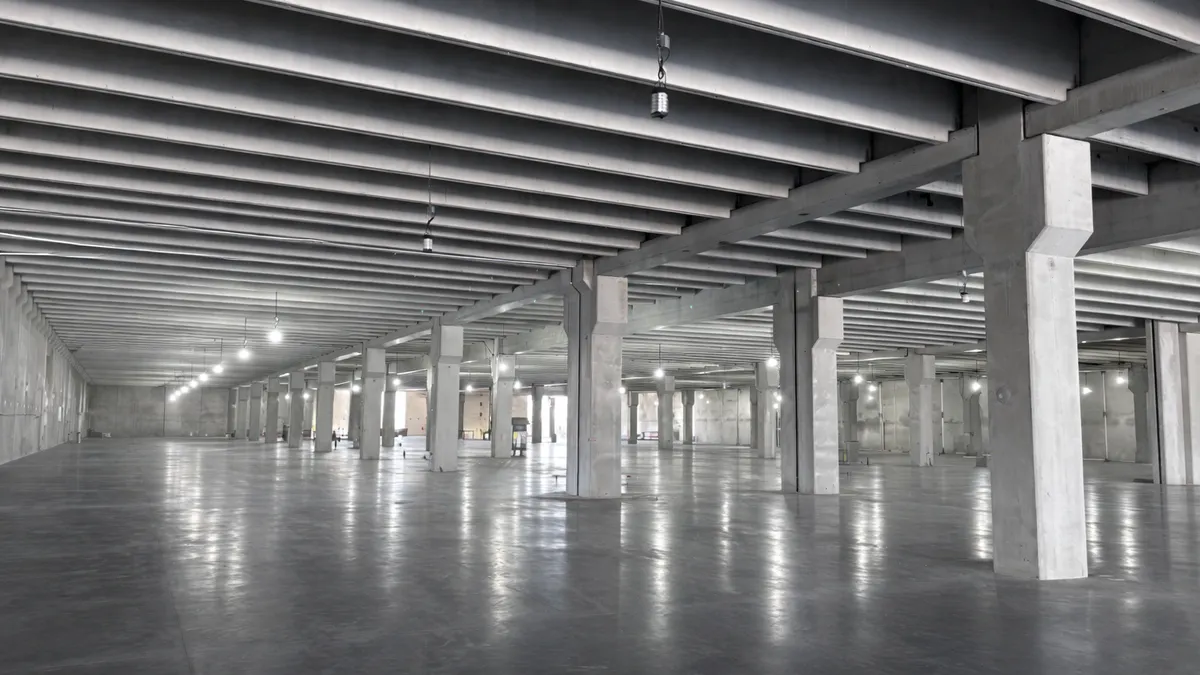

Data center projects are moving faster than traditional construction methods were designed to support.
As AI adoption accelerates demand for computing capacity, owners and developers are under pressure to bring facilities online faster. At the same time, projects are becoming larger and more complex, with greater power requirements, tighter coordination between trades and increasing demands around performance, reliability and scalability.
Together, these pressures are exposing the limitations of conventional construction methods and forcing the industry to rethink how data centers are delivered.
Where traditional construction methods fall short
Data center projects move fast, but speed is only part of the challenge. Construction timelines are tightly tied to equipment installation, commissioning and operational readiness. Mechanical, electrical and IT infrastructure all have to come online in a highly coordinated sequence. If structural work slips, it can immediately affect downstream trades, equipment installation and startup schedules.
Data centers also place unusually high demands on coordination and performance. Temperature, humidity, airflow, vibration, equipment supports, penetrations, service access and long-term adaptability all have to work together to protect reliability and operational continuity.
Project teams also have to account for the reality that IT infrastructure will continue evolving long after construction is complete. That places added pressure on teams to resolve tolerances, sequencing, trade coordination and MEP and IT integration early. Those requirements leave less room for field variability and late-stage coordination issues, particularly on projects operating under compressed schedules.
As coordination demands increase and project schedules compress, owners, developers and construction teams looking for a better way to build are finding that prefabrication is the solution.
Why prefabrication is gaining momentum
Prefabrication offers a solution to the highly compressed schedules data center projects demand. A large data center build typically takes 18 to 30 months, from concept to commissioning. Prefabricated concrete can accelerate construction timelines by two to four months compared to traditional methods. Some manufacturers have demonstrated the ability to construct and erect a data center 30 to 40 percent faster.
Compressed construction schedules also create significant financial advantages. Shorter timelines reduce labor and overhead costs. For owners and developers, accelerating delivery also speeds the path to revenue generation and bringing critical computing capacity online.
Moving more work offsite
By shifting major portions of construction into controlled manufacturing environments, project teams can manufacture structural systems, enclosure panels and other assemblies while site work and foundations move forward in parallel. By the time the components arrive on site, much of the coordination work has already taken place. This approach reduces delays caused by labor shortages, site congestion and weather that often impact large-scale construction projects.
Prefabrication also creates a more controlled and predictable construction process.
For developers and contractors, schedule certainty has become nearly as important as speed itself. On traditional field-built projects, a late concrete pour, weather disruption or material delivery issue can quickly push multiple trades out of sequence. Recovering those schedules becomes increasingly difficult as coordination complexity grows. Prefabrication reduces that risk by allowing more coordination work to happen before materials arrive on site.
Structural systems can be erected faster, allowing mechanical, electrical and IT infrastructure teams to mobilize sooner. On projects where operational readiness directly affects revenue generation, shaving even a few months off the schedule can have a significant business impact.
Early alignment and efficient design
Prefabrication delivers the greatest value when paired with design for manufacturing, logistics and assembly (DfMLA).
DfMLA brings manufacturers, architects, engineers and contractors together earlier in the design process to coordinate how systems will be designed, manufactured, transported and installed.
Instead of treating fabrication and installation as downstream construction activities, they are integrated into the project from the beginning.
Structural systems can be designed around manufacturing realities, transportation limitations and installation sequencing before fabrication begins. On large-scale data center projects where crane utilization, trade coordination and site logistics directly affect schedules, those decisions can significantly influence project execution.
For manufacturers like Clark Pacific, this approach improves coordination between manufacturing and field operations while supporting faster installation and earlier access for interior trades once the structure and enclosure are in place.
Building for the future
Data centers are rarely static facilities. Evolving capacity requirements, equipment changes and shifting infrastructure demands make long-term adaptability important.
When prefabricated systems are planned through a DfMLA approach, teams can account for future modifications, equipment upgrades and expansions. For owners, this flexibility makes long-term upgrades less disruptive and easier to execute without significant structural changes or prolonged downtime.
As demand for AI infrastructure and hyperscale facilities continues to grow, prefabrication is no longer an alternative construction method. It is a strategic approach and competitive advantage in delivering complex, schedule-sensitive projects faster.