Another tariff announcement from Washington may force general contractors to revise their contract terms.
President Donald Trump announced plans to impose a 50% tariff on many Canadian imports beginning Aug. 19. The proposed duties will apply to all covered goods, regardless of whether they originate under the U.S.-Mexico-Canada agreement, according to a July 20 fact sheet from the White House.
The announcement adds yet another tariff calculation general contractors will need to be aware of, Trent Cotney, partner and construction team leader at law firm Adams & Reese, told Construction Dive.
“The greatest implication is additional cost and uncertainty,” Cotney said. “Contractors often price work months before purchasing materials. A 50% tariff can quickly make existing estimates obsolete and increase the risk of disputes over who bears the additional cost.”
The latest tariff action, which Trump imposed after alleging Canada’s trade practices discriminated against the U.S., will influence how contractors approach new work, said Jason Adams, partner at Cox, Castle & Nicholson. The biggest impact, according to Adams, is the “uncertainty the situation creates.”
“Constantly fluctuating material pricing prohibits a contractor’s ability to confidently bid fixed-price work,” Adams told Construction Dive. “Consider a materials escalation and change in law clause in every agreement in an attempt to share the risk of an unforeseen escalation in material prices.”
Cotney advised general contractors to immediately review existing agreements to determine whether “tariff, change-in law, force majeure or change-order provisions” could provide relief. Cotney also said firms should obtain updated supplier quotes and confirm how long pricing would remain valid. He added that firms should provide written notice as soon as a potential cost or schedule impact becomes apparent.
Impact on materials
Cement was the clearest area of concern when it came to the new tariffs, according to both attorneys.
“Increased cement costs could affect highways, infrastructure, industrial facilities, multifamily developments and large commercial projects,” Cotney said. “Contractors should review the applicable tariff classifications before assuming that every Canadian construction product is covered.”
Adams said firms should track concrete and cement prices, which could be similarly impacted.
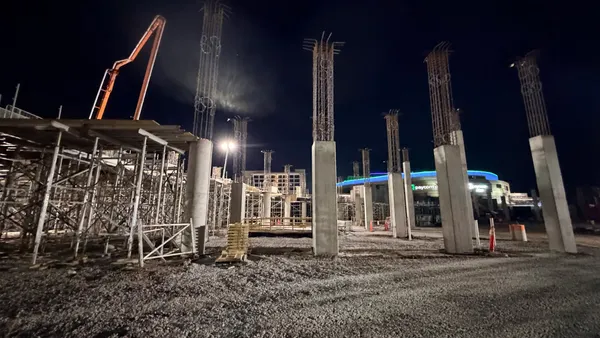
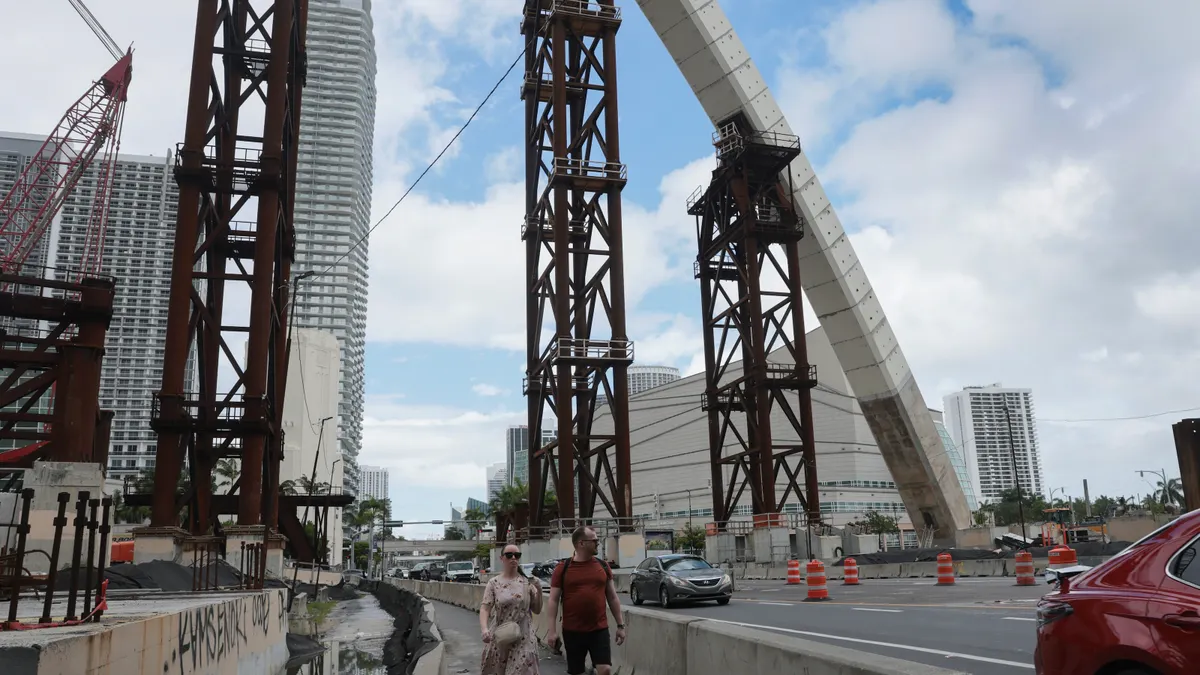
“The tariff imposes a 50% tariff on cement, so that appears to be the biggest concern,” Adams said. “This will impact concrete-intensive projects such as highways, bridges and foundations.”
Though importers initially pay the boosted tariff price, Cotney said impacts generally do not stop there. Instead, those price hikes generally show up elsewhere in the supply chain long-term.
“The importer initially pays the tariff to the federal government,” Cotney said. “Economically, however, some or all of that cost will likely move through the supply chain to distributors, contractors, owners and ultimately consumers or taxpayers.”
On public projects, for example, taxpayers will likely bear the increase through higher bids or change orders, Cotney said. On private projects, owners may face higher bids, reduced scope, delayed starts or claims for additional compensation, he added.
For fixed-price contracts, contractors may have little choice but to stomach the added expense, said Adams. Future projects, on the other hand, will likely reflect those higher bid costs.
Steel, aluminum and copper products, already subject to Section 232 tariffs, are excluded from this particular tariff action, said Cotney. Other materials such as minerals, energy products, potash and certain fish products are also exempt.
Another round of price pressure
The tariff announcement hits contractors after recent Producer Price Index analyses warned that construction material costs were likely to keep rising after a brief respite in June.
Construction input prices fell 1.1% month over month in June, largely due to lower oil prices, according to an Associated Builders and Contractors analysis. Despite the drop, Anirban Basu, ABC chief economist, said at the time that ongoing tariffs and escalations in the Iran War would push construction input costs higher in the months ahead.
Cotney said contractors should not treat the announcement as the final word until Customs and Border Protection issues implementing instructions. Since implementation is scheduled for Aug. 19, the scope or timing could still change through negotiations, he added.
“The larger issue is cumulative tariff exposure,” Cotney said. “[Contractors] are dealing with overlapping tariff programs, potential Canadian retaliation and rapidly changing product classifications. I expect more contractors to use shorter bid-validity periods and more detailed price-escalation and substitution clauses.”