Cory Sherman is the founder of Newnan, Georgia-based construction safety communication platform Safety Systems Management. Opinions are the author’s own.
For decades, construction safety has been built around a simple premise: protect workers from the hazards associated with their own trade.
Electricians focus on electrical hazards. Ironworkers concentrate on fall protection and rigging. Concrete crews manage silica exposure. Equipment operators work to prevent “struck-by” incidents.
Although these efforts remain essential, today’s construction projects have evolved in ways that make trade-specific safety programs only part of the equation. Increasingly, some of the most significant safety risks have emerged not within individual trades but in the spaces where multiple trades overlap.
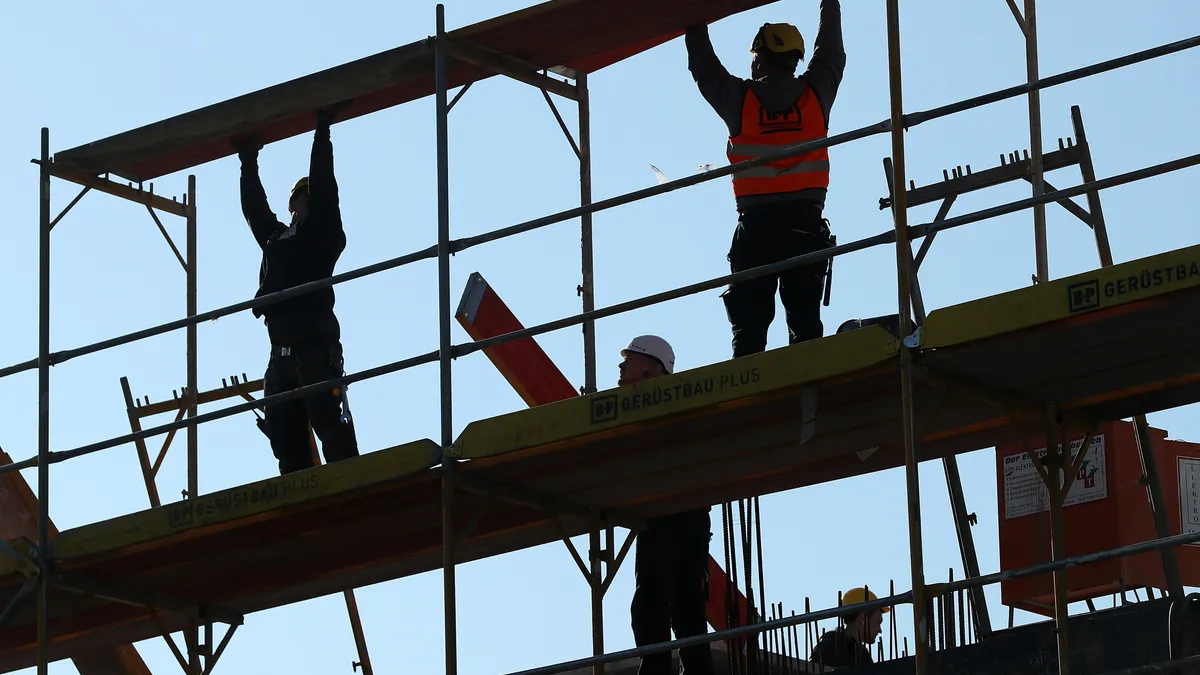
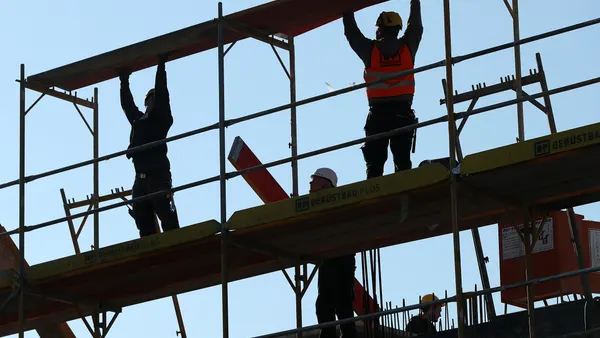
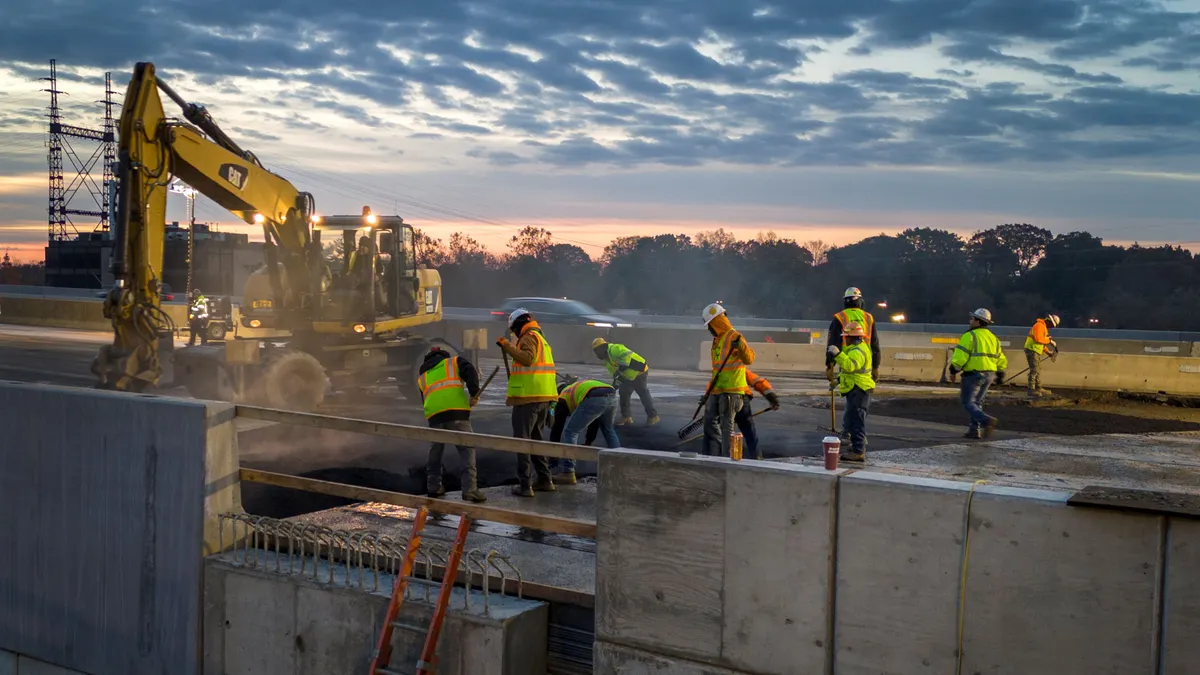
In addition to the traditional skills on which the industry relies, modern construction now requires expertise in choreography. A single work area may contain dozens of subcontractors, each one trying to achieve different objectives on different schedules. Hundreds of interactions may take place each day between crews that may have little knowledge of what another trade is doing just a few feet away.
Ultimately, the challenge has transformed from keeping each tradesperson safe to keeping everyone safe while all the trades work together. This new mindset has resulted in one of the most significant changes in construction safety and, unfortunately, one of the least discussed.
The rise of simultaneous work
Construction schedules continue to compress, and though owners want projects completed faster, labor shortages make it difficult to sequence work traditionally.
The result? A major increase in concurrent tasks.
This synchronized methodology makes perfect sense in terms of productivity. However, from a safety perspective, it gives rise to a new category of risk: hazards created by one trade can become a danger for everyone else. Consider the possible situations:
- An overhead lift operated by one subcontractor may pass above workers who are unaware of its movement.
- Temporary power installed by one crew may create tripping hazards for others.
- Material deliveries may block emergency exits or alter evacuation routes.
- Welding activities can introduce fire risks into areas where other crews are handling combustible materials.
None of these situations occurs because individual workers fail to follow the standard safety procedures of their trade; they occur due to the intersection of diverse construction activities that are, increasingly, being performed simultaneously.
The traditional approach has been for safety programs to be organized around individual employers. Each subcontractor conducts toolbox talks; each company performs inspections; each foreperson monitors his or her own crew; and each safety manager ensures compliance within that organization. While these systems remain beneficial, they were developed during an era when the trades generally worked in greater isolation.
Today’s jobsites require a much broader perspective. A plumbing contractor cannot fully evaluate today’s risks without understanding what the other crews are doing in the same vicinity. On a broader scale, the general contractor’s safety program must become the framework that connects the trades; it can no longer be viewed as a collection of individual subcontractor plans.
The safest projects increasingly view safety as a shared responsibility rather than a collection of independent responsibilities.
Tech can help, but it is not the solution
Digital project management tools, wearable technology, access control systems and electronic permits are improving coordination across many jobsites. Shared scheduling platforms allow contractors to anticipate conflicts before work begins, while digital inspections help identify overlapping hazards. And real-time communication tools can quickly notify workers about changing conditions or emergencies.
Still, technology on its own will not adequately address the challenge of trade coordination; the underlying issue remains organizational. Every trade must understand that its responsibility extends beyond protecting its own employees. While workers must recognize how their activities affect neighboring crews, superintendents must think beyond production schedules.
And project managers should ideally view coordination as a prevailing safety function, not just a scheduling function.
Technology can help support that mindset. It cannot replace it; traditional safety metrics must remain at the forefront. The most critical metrics include recordable incident rates; lost-time injuries; near misses; inspection findings; and training completion.
Safety’s future is collaborative
As projects become larger, schedules become tighter and labor shortages continue, overlapping work activities are likely to become more prevalent. Consequently, the industry’s biggest safety opportunity may no longer lie in improving individual trade practices, many of which are already highly developed. Instead, it lies in improving how those trades work together.
Construction has always depended on teamwork to complete projects successfully; safety is beginning to demand the same approach. The next evolution in construction safety will not simply involve better PPE, stronger regulations or more sophisticated technology. It will require stronger coordination, clearer communication and greater awareness of how every decision made by one trade affects everyone else on the jobsite.