Lance Mazzariello is a union carpenter and vice president of Specialty Services of New England. Opinions are the author’s own.
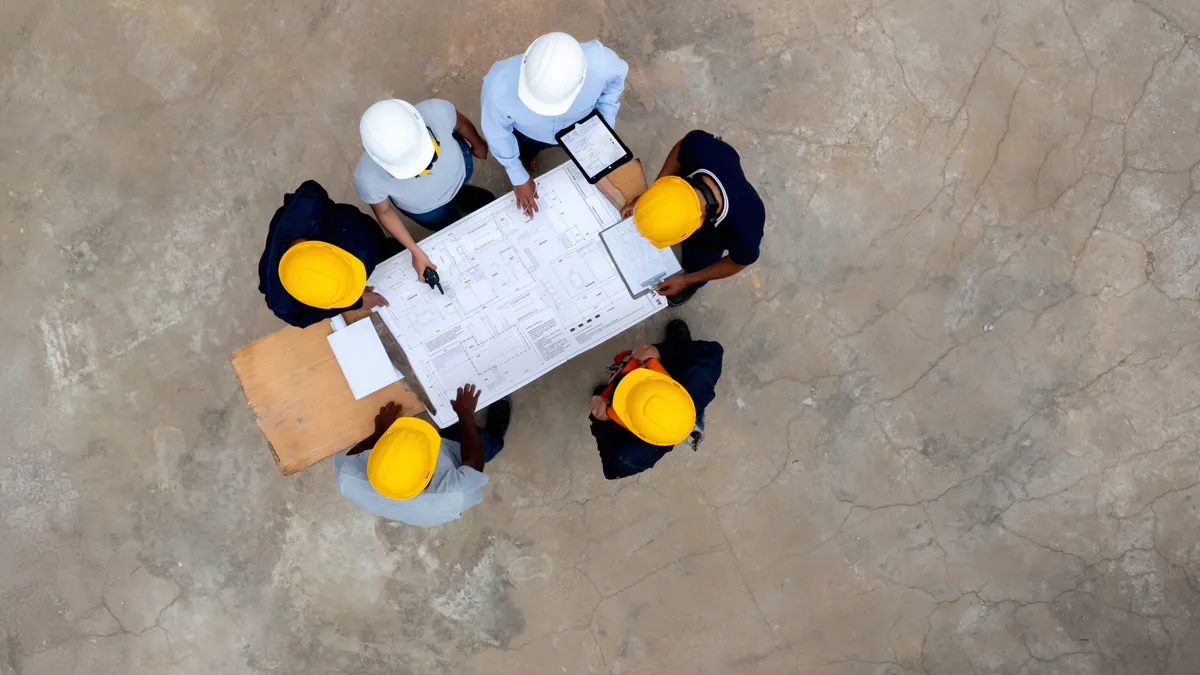
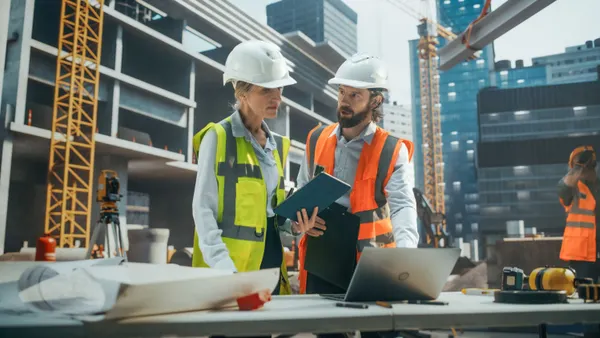
There is a moment familiar to anyone who has spent time on a construction site. A younger tradesperson studies a drawing on a tablet. The dimensions are correct, the detail is clear, everything appears to work. An experienced journeyman looks at the same drawing, looks at the wall, and says, “That’s not going to work.”
Most of the time, he’s right. How did he know?
That question has been on my mind as construction races toward a technological future. I lead operations in union commercial construction in greater Boston, and, like most of our industry, we’re adopting technologies meant to solve problems that have plagued us for decades: inefficient planning, poor communication, labor shortages, rework, scheduling and stagnant productivity.
Artificial intelligence is entering estimating and project management. BIM identifies conflicts before materials arrive. Reality capture documents entire jobsites.
We need these technologies. But I worry we’re overlooking a related problem: Who will have enough construction knowledge to know when the technology is wrong?
Knowledge and experience from apprenticeships
Construction depends heavily on tacit knowledge, the kind accumulated through experience that is difficult to capture in a manual or teach in a classroom. It’s the carpenter who knows something is wrong before reaching for a tape measure, the foreman who sees that a sequence will create problems for three other trades, the installer who knows a detail works on paper but will fail in the field.

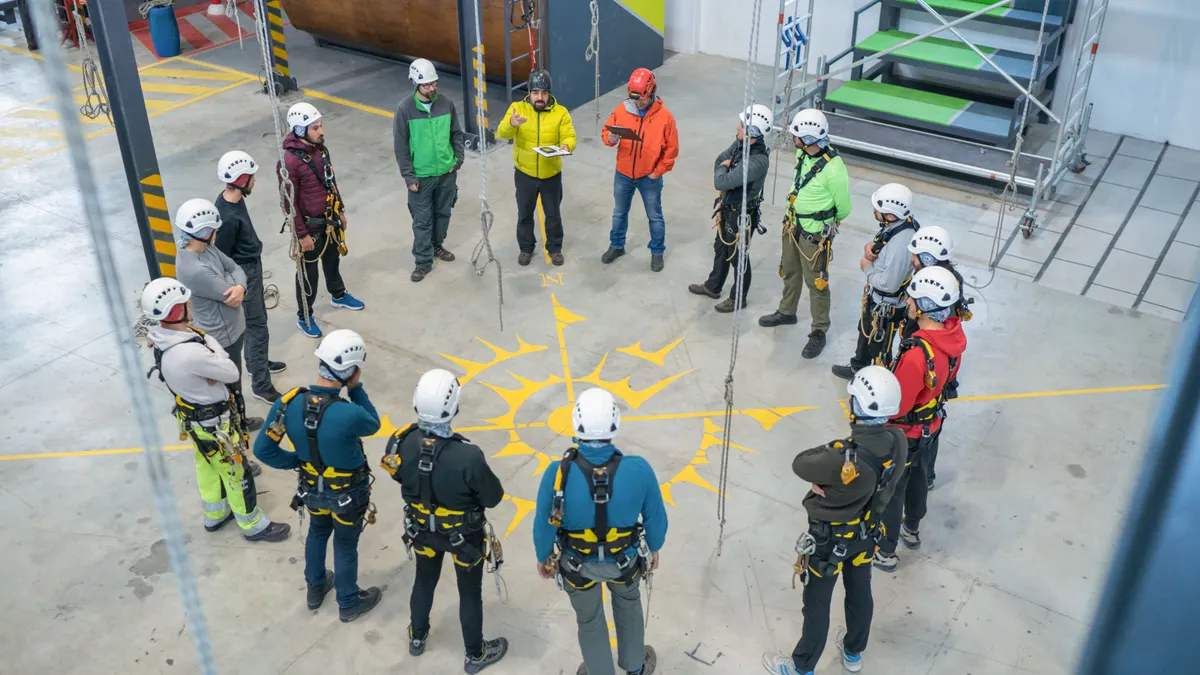
That knowledge takes years to acquire. For generations, the building trades developed an effective technology for transferring it: apprenticeship.
In that sense, artificial intelligence and apprenticeship are attempting to solve versions of the same problem. Both are systems for capturing, transferring and applying knowledge. One can distribute information across an organization almost instantly. The other transfers judgment from one generation of workers to the next. The construction industry of the future will need both.
The union construction model isn’t perfect. Work rules can be rigid and jurisdictional boundaries can complicate simple decisions. But organized labor has also built something we rarely account for when debating the cost of union construction: institutional infrastructure for producing skilled tradespeople.
Across greater Boston, joint union-employer apprenticeships combine classroom instruction with thousands of hours of supervised field experience, graduating more than 1,000 workers annually across the carpenters, electricians, pipefitters, laborers, sheet metal workers, plumbers, ironworkers and finishing trades.
Massachusetts now wants to register 100,000 new apprentices statewide by 2036. Research from the Illinois Economic Policy Institute has found that union apprentices receive substantial training and can achieve career earnings comparable to four-year college graduates without taking on the same student debt.
That infrastructure may become more valuable, not less, as technology transforms construction.
Recruiting needs a shot in the arm
Simply creating more pathways into the trades won’t solve what we commonly call the construction labor shortage. We should reconsider what that phrase actually means.
I meet plenty of people interested in the trades. What has changed is the economic proposition we’re offering them. A construction wage that looks attractive on paper looks different through a windshield at 4:30 a.m.
Consider what we ask: own a dependable vehicle and pay for fuel and insurance; drive to wherever the next project is; survive Boston traffic to be at a gang box on time; work outside in heat, cold and rain; accept that remote work is impossible; and absorb overtime, layoffs and physical wear most office workers never experience.
The hourly wage doesn’t compensate for every hour the career actually consumes.
The labor shortage may partly reflect a growing gap between what employers can afford to pay and what workers require to accept the job. Workers calculate whether the wage justifies what the career demands of their bodies, families and time. Contractors face the other side: higher wages and benefits become higher construction costs, which eventually reach someone deciding whether a project still pencils out.
Labor can’t simply get cheaper. Skilled people have alternatives. It can’t simply get more expensive either.
That leaves a variable we haven’t attacked aggressively enough: productivity.
Tech to boost productivity
Massachusetts has said the state needs to both grow the construction workforce and increase construction productivity. That’s where technology should enter the story, not to eliminate the expensive journeyman, but to make them extraordinarily productive.
Give a skilled foreman better information before the shift starts. Eliminate hours spent hunting for materials. Catch coordination problems before crews are standing around waiting for answers. Prefabricate what doesn’t need to be built in the field. Stop wasting expensive human expertise on problems machines can increasingly solve.
There is a warning here. The Economic Policy Institute has documented a widening national gap between productivity and compensation for a typical worker over recent decades. If construction allows technology to boost output without workers sharing in those gains, we risk reproducing the same disconnect other industries are still struggling to address.
There’s also a paradox. The more powerful these technologies become, the more valuable genuine expertise becomes alongside them.
Software can flag a conflict. Someone still has to know how to resolve it. AI can summarize a specification. Someone still has to know whether the answer makes sense. A robotic layout system can put a point exactly where the model says. Someone still needs the experience to recognize when the model is wrong.
There are signs the industry understands the stakes. The Lowe’s Foundation recently launched the Building Futures Skilled Trades Coalition, bringing together major companies around a goal of preparing one million people for skilled-trades careers by 2035. That kind of investment in a problem the industry has underfunded for years is worth welcoming.
But training more people to enter a career doesn’t fix a career people are calculating their way out of. Tuition, tools and classroom seats matter, but so do wages, benefits and working conditions.
Otherwise, we risk building a larger pipeline into a career workers may eventually decide is no longer worth its demands.
Marry the apprentice with the AI
The future of construction shouldn’t force a choice between apprenticeship and automation, or organized labor and technological progress. We should marry them.
Contractors should treat technology not primarily as a way to cut headcount, but as a way to increase the economic output of increasingly valuable skilled workers and share those gains with the people producing them.
Because beneath all the software, economics and workforce policy lies a remarkably simple problem: Someone still has to know how to build.