Mike Bellaman is the president and CEO of Associated Builders and Contractors. Opinions are the author’s own.
We’ve all heard of multitasking. But new research suggests multiskilling may be the real path forward for construction.
With a massive labor shortage and headwinds that include rising materials costs, economic uncertainty and high interest rates, it’s critical that the construction industry continues to modernize and adapt to keep building the construction projects America needs.
One workforce strategy already in use across the industry, and now supported by new national field evidence, is multiskilling.
A recently released series of studies on multiskilling in the construction industry demonstrates the opportunities it creates for the worker.

Produced by the Simplar Foundation in collaboration with faculty from the University of Kansas, the University of North Carolina at Charlotte and Arizona State University, it is the largest ever national dataset on multiskilling labor strategies and performance outcomes. It shows the benefits for everyone: workers, employers, project owners and, ultimately, taxpayers.
The basics of multiskilling
So, what is multiskilling?
Multiskilled workers acquire skills in multiple crafts which they then can use on the jobsite. In the research, the typical observed worker used about three distinct skills, and some workers used as many as six in one day.
Multiskilling does not mean that every worker performs every task. It does not mean eliminating specialization, disregarding craft expertise or assigning work without considering safety, competence, licensing or quality.
It means that trained, credentialed and qualified workers can perform adjacent or complementary work when the project, task combination and work sequence support it.
Examples of multiskilling observed by the study’s research team included:
- A crew of concrete finishers who built and stripped forms, tied rebar, welded anchor bolts and operated various types of heavy equipment.
- A crew of insulators who applied paint coatings and later mixed and applied epoxy flooring materials.
- A crew of sheet metal workers who also erected scaffolds, insulated pipes and performed pipefitting activities.
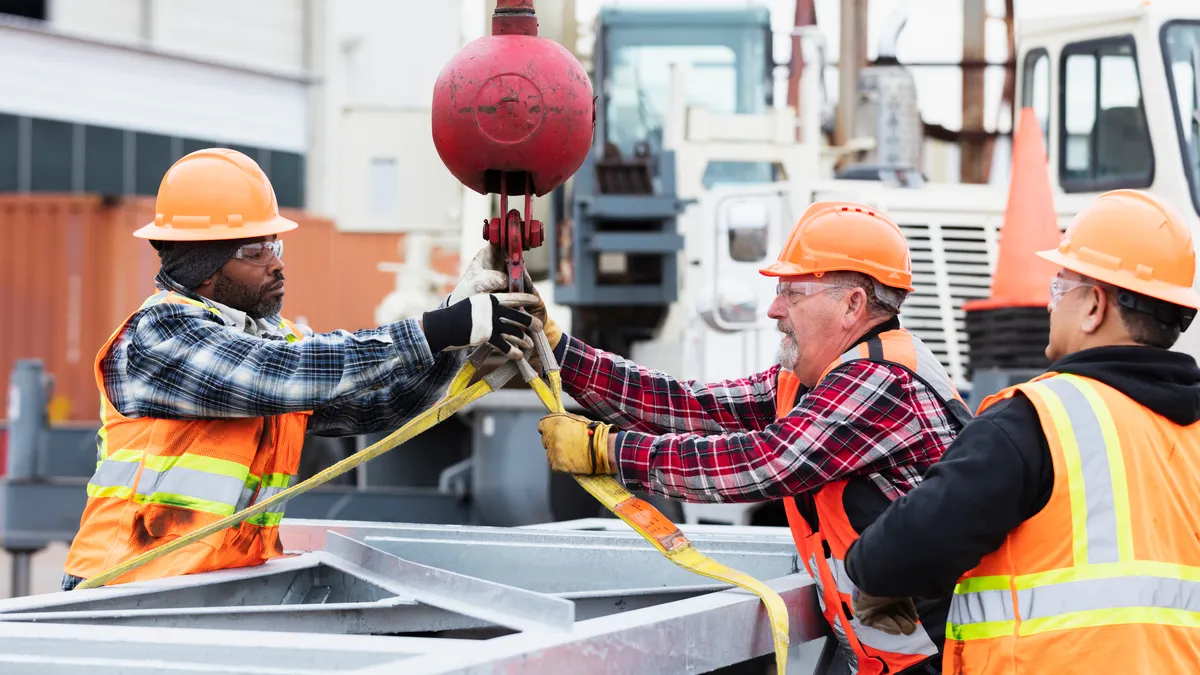
- A heavy civil crew whose workers interchangeably performed rigging, crane lifts, welding and pile-driving activities.
Multiskilling results
Overall, the most important findings show the significant value multiskilling can create for the worker: growing skillsets, finding more fulfillment, earning more and having more opportunities. Workers also enjoy broader career paths and leadership opportunities. They gain the potential to work on more types of projects and benefit from longer project assignments.
This also has substantial return on investment for the jobsite. The research showed that multiskilling increased the share of crew time spent on directly advancing construction work by 39%. That means less idle time and faster completion of the job.
The opportunity may be even greater when contractors and owners plan with multiskilled capability in mind, identifying scopes, sequencing and trade hand-offs where qualified workers with complimentary skills can keep work moving and reduce unnecessary waiting.
It’s also no coincidence that industry leaders in health and safety performance are investing in multiskilling. Across approximately 33.2 million work hours, the participating contractors reported above-average safety performance, with average Total Recordable Incident Rates well below industry average and no reported fatalities.
Using fewer workers and crews in a tight work area also reduces congestion and coordination pressure, which can lead to safety performance improvements.
The new research series demonstrates that multiskilling can deliver benefits for the entire construction industry, including greater opportunity for workers, greater flexibility for contractors and owners, and greater capacity to build the highways, hospitals, schools and energy infrastructure America needs.