Fluor characterized its core business as healthy on an Aug. 7 second-quarter earnings call, with demand strengthening across power, mining, nuclear fuels, life sciences and refining. Customers are approving work sooner than Fluor anticipated.
“We didn’t expect some of these awards until the back half of the year,” CEO Jim Breuer said during the company’s call. “So it’s a positive outcome that our clients are accelerating these decisions.”
As a result, the company reported $6.1 billion in new awards, up $1.8 billion from the same period a year earlier.
Nevertheless, legacy infrastructure work weighed on results. Fluor recorded an additional $44 million in cost growth on the Gordie Howe International Bridge due to foreign currency fluctuations, a subcontractor bankruptcy and client-driven changes.
The latest awards offer evidence for the rebound Fluor predicted after first-quarter bookings dropped sharply. Breuer said the second-quarter numbers support a full-year book-to-bill ratio well above one, with additional opportunities advancing in LNG, copper, rare-earth magnets and data centers.
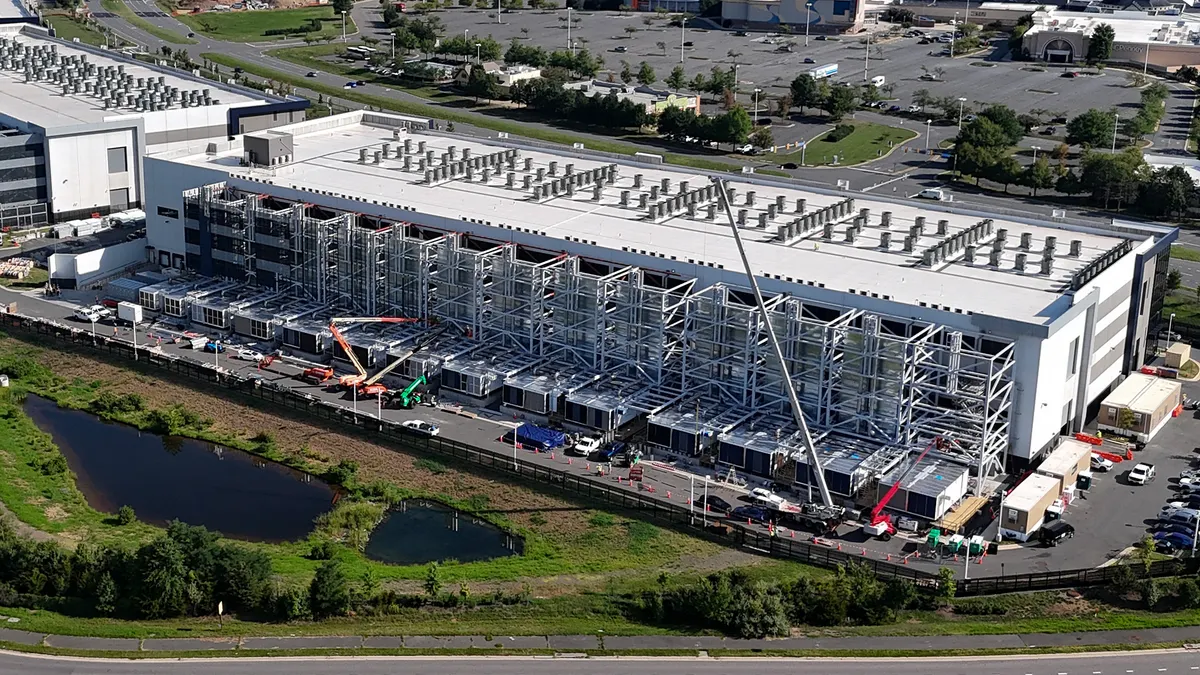
Power represents Fluor’s preferred route into the data center construction boom, Breuer said. Electricity demand continues to build because of data centers, industrial expansion and broader electrification. Fluor is now performing front-end work for several gas-fired generation projects and expects those efforts to produce meaningful EPC awards in the first half of 2027.
“We see power to be the best play for us in the whole data center ecosystem,” Breuer said. “We made some great progress in recent months.”
Breuer said the contractor remains more selective about constructing data centers themselves because many potential jobs do not fit its preferred project profile.
“Power, number one,” Breuer said. “Data centers, number two.”
Mining provides another significant runway. Fluor is already conducting studies on nearly $30 billion of potential mining and metals awards over the next 18 months, including copper, fertilizer, aluminum and steel projects across several regions. Strong commodity prices support demand, Breuer said, although clients continue to scrutinize capital efficiency, permitting requirements, escalation and supply chain disruption. Most of the prospective mining work would be reimbursable, limiting Fluor’s risk.
Additionally, executives noted Middle East hostilities had not disrupted work already in the backlog or directly affected guidance. Fluor also reported stronger domestic front-end refinery activity that could become EPC work in 2027 and 2028 if projects advance.
Breuer said profitability on incoming work is also improving as the company negotiates selectively and pursues projects where clients recognize its value.
“It’s an encouraging trend,” Breuer said.
The payoff will take time. CFO John Regan said new multiyear awards are extending backlog duration, with peak execution anticipated in late 2027 and early 2028. Most of the work supporting Fluor’s second-half 2026 outlook already sits in its backlog, he added.
By the numbers
The Irving, Texas-based contractor reported $4.33 billion in revenue, up 8.8% from $3.98 billion in the prior-year period.
Net income attributable to Fluor totaled $114 million, down from $2.46 billion a year earlier, when a $3.2 billion pretax mark-to-market gain on the company’s NuScale investment inflated results.
Despite the new wins, Fluor’s backlog dropped to $26.9 billion, a 4.7% decrease from Q2 2025.