
If someone told Trey Travis five years ago he’d be walking the floor of a supercomputing show, he wouldn’t have believed them.
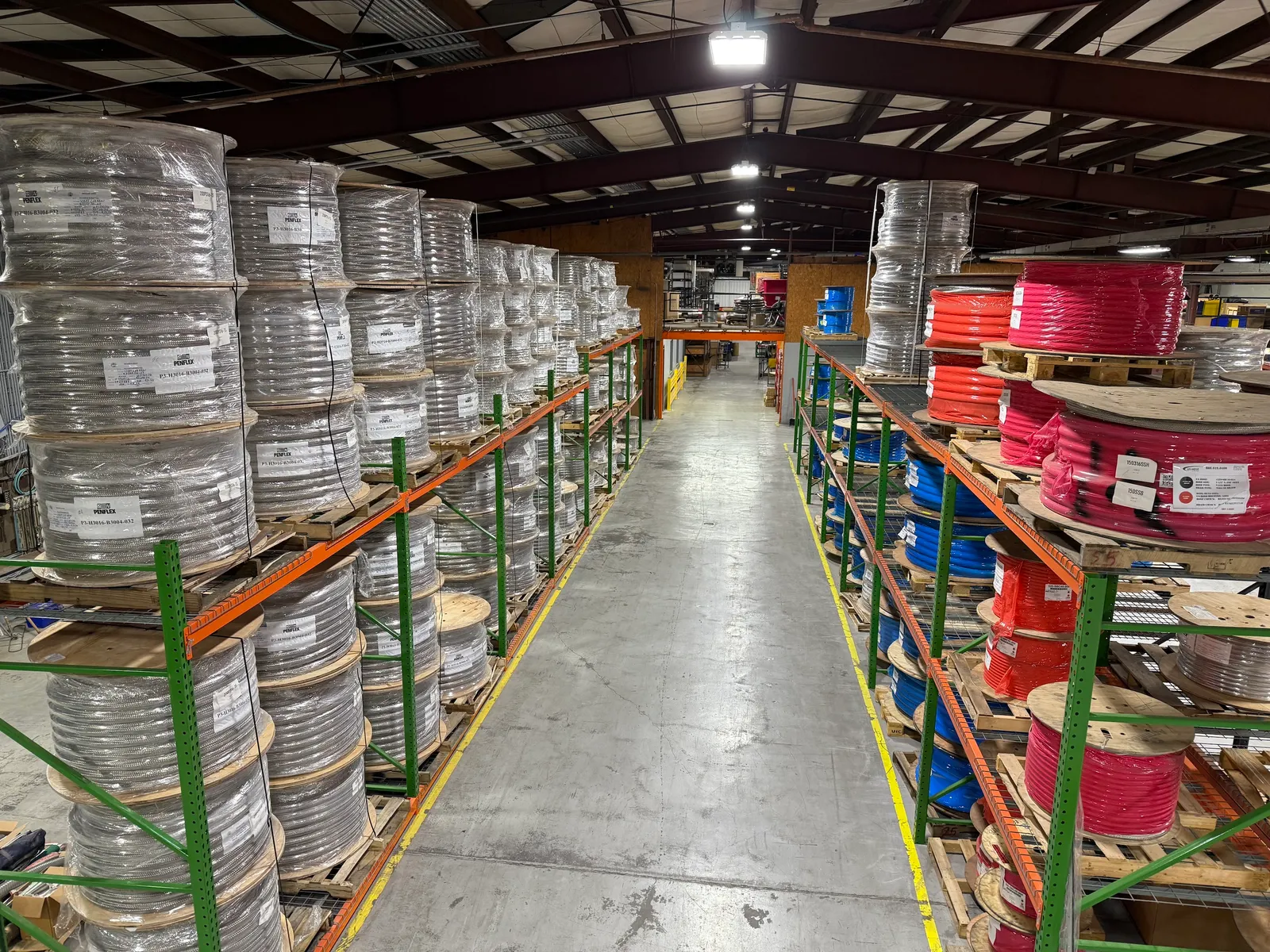
Georgia-based Southeastern Hose, where Travis is VP of operations, manufactures corrugated metal hoses and traditionally serves customers in industries such as steel and petrochemicals. But the hoses have another purpose: providing cooling and exhaust for data centers.
As the adoption of artificial intelligence spurred an acceleration in data center construction, orders for his hoses started to trickle in, turning into a deluge last year with another swell of growth since January.
“It's not that the dam opened,” Travis said. “They just took the dam out of the river and it's flowing like crazy.”
Southeastern Hose is among the myriad manufacturers, large and small, seizing on a growing business opportunity with data centers. This comes as other manufacturing industries, such as wood, coal, petroleum, and food and beverage, are contracting.
Conversations with several companies, alongside public reports from many more, show exponential surges in business and double-digit or more increases in revenue as data center construction continues. Some companies are going as far as to establish new business units dedicated to data center customers.
Spending on data center construction has tripled over the last three years, and occupancy rates remain near record highs for third-party leased data centers, according to Goldman Sachs Research published last August.
Travis said his revenue increased around 25% last year. This year, his business is on track to potentially grow 40%, with about two-thirds of revenue stemming directly from the data center vertical.
While manufacturers are reaping financial benefits, they’re not immune to challenges. Expanding capacity to increase supply and meet demand requires significant capital expenditures, said Bill Pellino, national leader of BDO's manufacturing practice.
“From a cash flow perspective, that can really put pressure on a manufacturer,” he said.
In addition, manufacturers are navigating this amid a tight labor market and rising energy costs, while having to make multiyear business decisions. And no one knows exactly how long the increasingly controversial data center and AI boom will last.
Entering and growing the data center vertical
Darrell West, senior fellow in the Center for Technology Innovation at the Brookings Institution, described AI and data centers as “a boon for American manufacturing,” with the construction boom increasing demand in several sectors. Among the most notable is the semiconductor industry, with chipmakers seeing double-digit or more increases in sales.
For example, Texas Instruments grew Q1 revenue 19% year over year, with data center and industrial demand driving the spike. Intel reported a 22% YOY increase in its data center and AI business unit in the most recent quarter.
In addition, Chipmaker Marvell’s data center revenue grew 21% YOY and 9% over the previous quarter, with the data center market making up about 75% of its business in the latest quarter. Micron’s core data center business unit reached $5.7 billion in revenue, up from $2.4 billion the previous quarter.
It’s not just semiconductor companies witnessing higher demand.
For Siemens, the data center boom pre-dated AI and started with cloud computing around 2020 and 2021, said Barry Powell, president of Siemens electrical products in North America. The company manufactures switchboards to protect electrical circuits and break down power from utility feeds to individual racks.
With AI, demand for Siemens products has only ticked up further. Chip manufacturers are producing new generations of chips every six to nine months to support faster processing and longer context windows for AI models. Each chip consumes far more power than the previous generation, Powell said, creating “huge demand” for energy and electrification products.
In the company’s most recent quarter, orders rose to a record high, mainly due to the electrical products business and larger contracts with data center customers in the U.S. To keep pace, Siemens and other manufacturers are in “a race to ramp up capacity,” Powell said.
Hyperscalers want fast times to market and have standardized their designs to make that happen. In turn, Siemens standardized its manufacturing processes, building dedicated factories to take on high-volume, low-mix electrical equipment. Meanwhile, other factories serve Siemens’ non-data-center verticals, with lower volume and higher mix.
Many of Siemens’ customers are locking in two- to three-year contracts with commitments to dedicated volume over multiple years.
“That allows us to go make these investments that are incredibly expensive with a shared amount of risk,” Powell said. “This is not a fly-by-night thing we think is going to slow down in the next year or two.”
In March, Siemens invested $165 million to expand its manufacturing facilities in North and South Carolina, and it opened a 500,000-square-foot, $190 million site in Fort Worth, Texas, to meet data center demand. Siemens also launched a training program with the latter facility. The company brought in workers from jobs like retail or food delivery and trained them on manufacturing skills.
Multimillion-dollar investments are part of ABB’s plans as well. The electrical manufacturer announced last year it would invest an additional $110 million in the U.S., including a new production line in Mississippi for data center circuit breakers and increased capacity in North Carolina and Virginia to support data centers and other customers.
ABB provides electrical infrastructure that sits within or right outside of data centers, such as distribution equipment, switch gears, sensors and circuit breakers. Data centers have been a segment for ABB for more than a decade. Within the last 12 months, orders in the vertical have grown more than 200% – the highest of any segment, said Amanda Trumble, data center segment leader of the Americas.
Recently, electrical component manufacturer Eaton created a new business segment specifically focused on the data center market. Eaton invested $50 million last year into a new Virginia facility for power distribution technologies to help meet data center demand. Virginia is home to 35% of hyperscale data centers globally.
Likewise, steelmaker Nucor established a dedicated business unit called Nucor Data Systems to manage orders coming in from hyperscalers and developers. And Cleveland-Cliffs is exploring the sale of idle mills to potential buyers, which could include data center developers.
In another example of the many sectors involved, Corning in January signed a $6 billion agreement with Meta Platforms to expand manufacturing capabilities across its North Carolina facilities and supply Meta with optical fiber and cables.
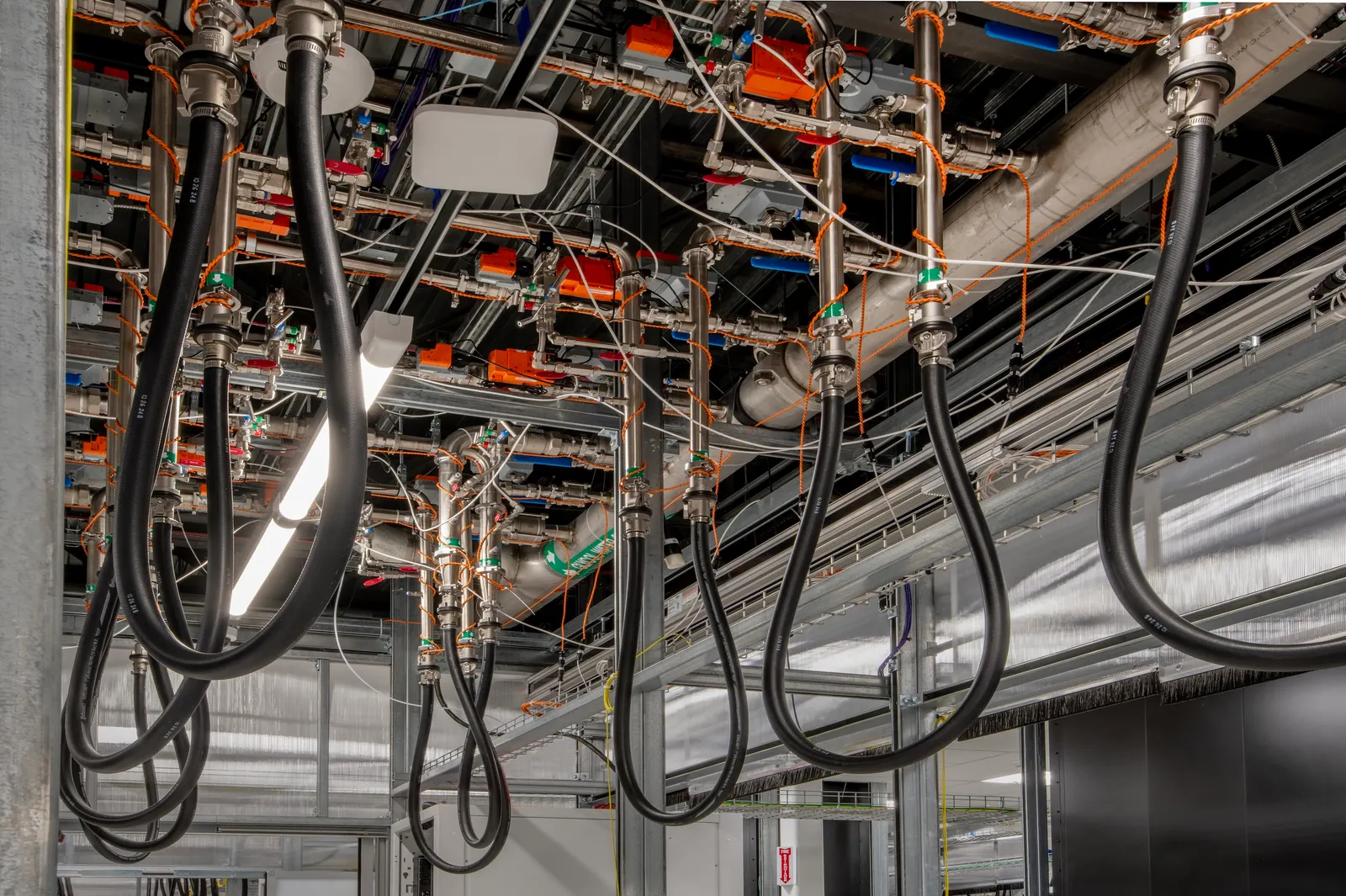
Thermal management and cooling are also critical for data centers, due to the heat chips generate.
As AI and GPUs become more advanced and energy intensive, “they run super hot,” said Ross Toepel, national project development manager at Krohne, which manufactures flowmeters. “Air cannot cool them fast enough.”
This means they need liquid cooling. Krohne’s devices measure the flow of water to the chip; cool water flows in, while warm water from the chip’s generated heat flows out and recirculates.
Krohne has historically served industries such as food and beverage, chemical, and oil and gas. But in March 2025, Toepel started looking into what opportunities might exist for the manufacturer in the data center vertical. His conclusion: “This is the biggest opportunity that our company will see … probably in the history of the rest of our lifetimes.”
Today, Toepel estimates the data center vertical makes up around 20% of its business.
“We're growing our business in a way that we haven't seen before, because we've never had access to this industry,” he said.
Some manufacturers are also developing products for data centers that combine multiple elements. Vertiv makes a “OneCore” product that combines power modules and chillers into one unit.
“Customers need partners who can deliver power, thermal management, and services as one integrated system,” Anand Sanghi, president of the Americas for Vertiv, said in an email.
In March, Vertiv announced a $50 million expansion investment in Ohio to increase production capacity by about 45% for liquid cooling and chilled water systems. The manufacturer reported Q1 net sales up 30% YOY with “strong data center demand” contributing to revenue growth.
BDO’s Pellino said many manufacturers are using AI to predict business. This creates a loop in which data centers fuel AI for business planning, which is then used to manufacture products for data centers.
The quick pace has also led to “some very strategic M&A to get the capabilities in-house that you may not otherwise have,” Pellino said.
All in the last year, Eaton acquired Boyd’s thermal business for $9.5 billion. The purchase enabled Eaton, which previously only offered air cooling, to enter the liquid cooling market.
Samsung Electronics inked a deal to acquire Germany-based FläktGroup for about $1.7 billion. The latter is a heating and cooling systems provider, bolstering Samsung’s ventilation and air conditioning business for data centers. Nucor acquired Southwest Data Products, a manufacturer and installer of data center infrastructure, for $115 million.
Long-term growth, near-term challenges
With the clear promise of growth and financial benefits, businesses that aren’t yet supplying data centers are examining how they can get into the vertical, Pellino said. For example, a company that’s already making chillers or heat exchangers can focus on supplying those components to data centers.
Pellino advised manufacturers to treat data centers like any other vertical: Assess the life cycle of the sector, what percentage of the total business should occupy the vertical, the opportunity cost of the decision and how innovation could change the relevance of their product. For example, if a company manufactures cooling towers, the advancement of self-cooling chips could render that manufacturer obsolete for data centers.
“They need to go in with the strategy on how this fits into their business rather than looking at it as a short-term opportunity to gain revenue,” he said.
Southeastern Hose projects sustained demand for the next four to five years. It recently completed a 40,000-square-foot expansion on a manufacturing facility, which was initially intended for the build-up it saw during the pandemic through 2024. Now the manufacturer is looking at additional facilities.
The challenge with rapid capacity expansions, is finding sufficient talent to staff the plant. Travis said he’s doubled his workforce over the last four years, adding hires from the leadership team to the shop floor. The manufacturer has been around for 40 years “so we’re well known” in the local community, he said. The company hires through word of mouth and partnerships with nearby schools.
Future Form, a Nevada-based manufacturer of doors, frames, cabinets, server racks and other components for data centers, hasn’t had to significantly scale up its workforce because it has invested in automation and smart manufacturing.
The manufacturer entered the data center vertical a decade ago, but orders were small overall, said Brian Delnevo, director of supply chain. Over the last five years, “we've seen an astronomical uptick in volume of orders,” he said. “It’s been going gangbusters.”
The company tripled the square footage of its warehouse and manufacturing space over the last two years. It also added a 3D printer to produce smaller parts and pieces primarily for the data center vertical. Delnevo said the printer, which came online in April, will allow Future Form to produce products at a much faster rate and “drastically reduce pricing for customers.”
Delnevo said Future Form works directly with mills to source cold-rolled steel. It secures the amount of material needed one to two years out. It mostly sources its steel domestically and tries to “steer clear of importing as much as possible,” Delnevo said.
Tariffs on metals have raised the price of data center construction, West of Brookings said. Any materials passing through the Strait of Hormuz could create delays or disruptions down the supply chain.
Powell of Siemens noted higher prices in key elements. For example, copper prices are at record highs, according to the International Energy Agency. Prices for silver, which goes in contacts for electrical equipment, are averaging double what they were last year, per J.P. Morgan.
In addition, “the lead time for this whole industry has gone up tremendously,” Powell said, adding that low-voltage equipment has lead times around nine months, and medium-voltage is around one year.
The firms that spoke to Manufacturing Dive in recent weeks said they haven’t faced supply constraints for their materials, but chip manufacturers such as Micron and Broadcom have noted supply constraints creating a gap between supply and demand.
A report from Omdia said high-bandwidth memory used in data centers is sold out through the end of the year. Producers are prioritizing AI infrastructure over consumer electronics or industrial needs because margins for high-bandwidth memory are much higher – around 60% – compared to commodity DRAM, which is around 20%. For manufacturers, “there is no economic incentive to reverse course” the report stated, which leaves PC and smartphone manufacturers struggling for supply.
Pressure on manufacturing and the unknown future
At the same time, the data center boom could also complicate situations for manufacturers that aren’t involved in the vertical.
Any time demand begins to outpace supply for components, “manufacturers should expect to see their costs rising,” Pellino said.
Plus, data centers “are sucking up all the electrician talent,” West said, noting that a manufacturing employer in need of electricians for infrastructure development, construction or building projects will have “a hard time finding” the talent. The Bureau of Labor Statistics predicts 81,000 openings for electricians each year through 2034.
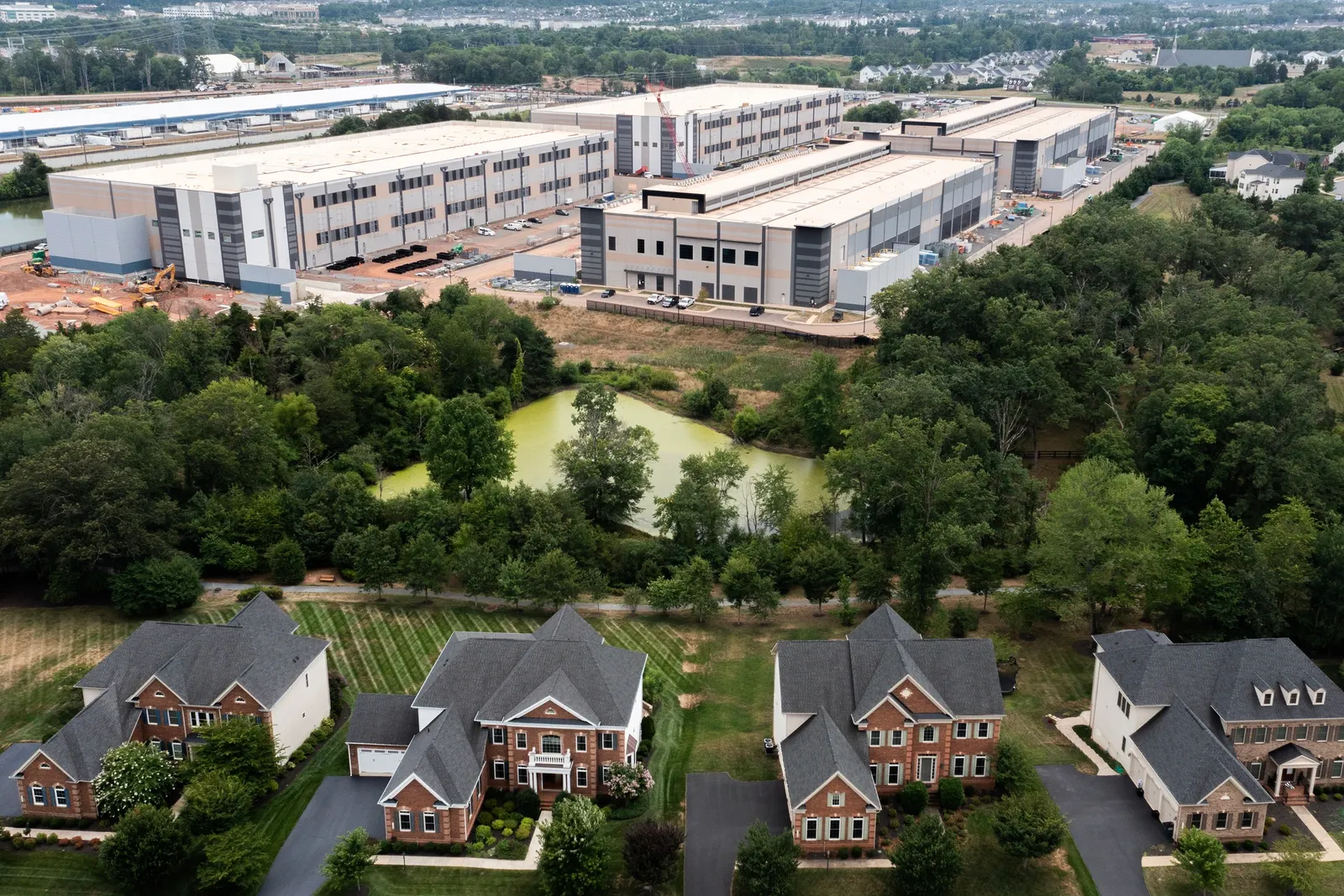
With data centers consuming immense power and significant water resources, industrial electricity rates are up year over year in nearly every region of the U.S. except the West Coast, Alaska and Hawai’i.
Strain on the grid could worsen as Goldman Sachs Research projects global power demand from data centers will rise 50% by next year and 165% by 2030. West said local water rates have increased in some areas, impacting both residents and other manufacturers pulling the same streams of water supply, with shortages possible in drought-prone areas.
Some communities and lawmakers have also started to push back against hyperscale projects and data center construction. If resistance grows, data center construction could slow with ripple effects to the manufacturers supporting that vertical.
Additionally, manufacturers that focus too much on the data center market may run the risk of alienating their long-term customer base.
“They don't want to screw over all of their existing customers because of the new data center demands. That would probably be a risky business proposition,” West said.
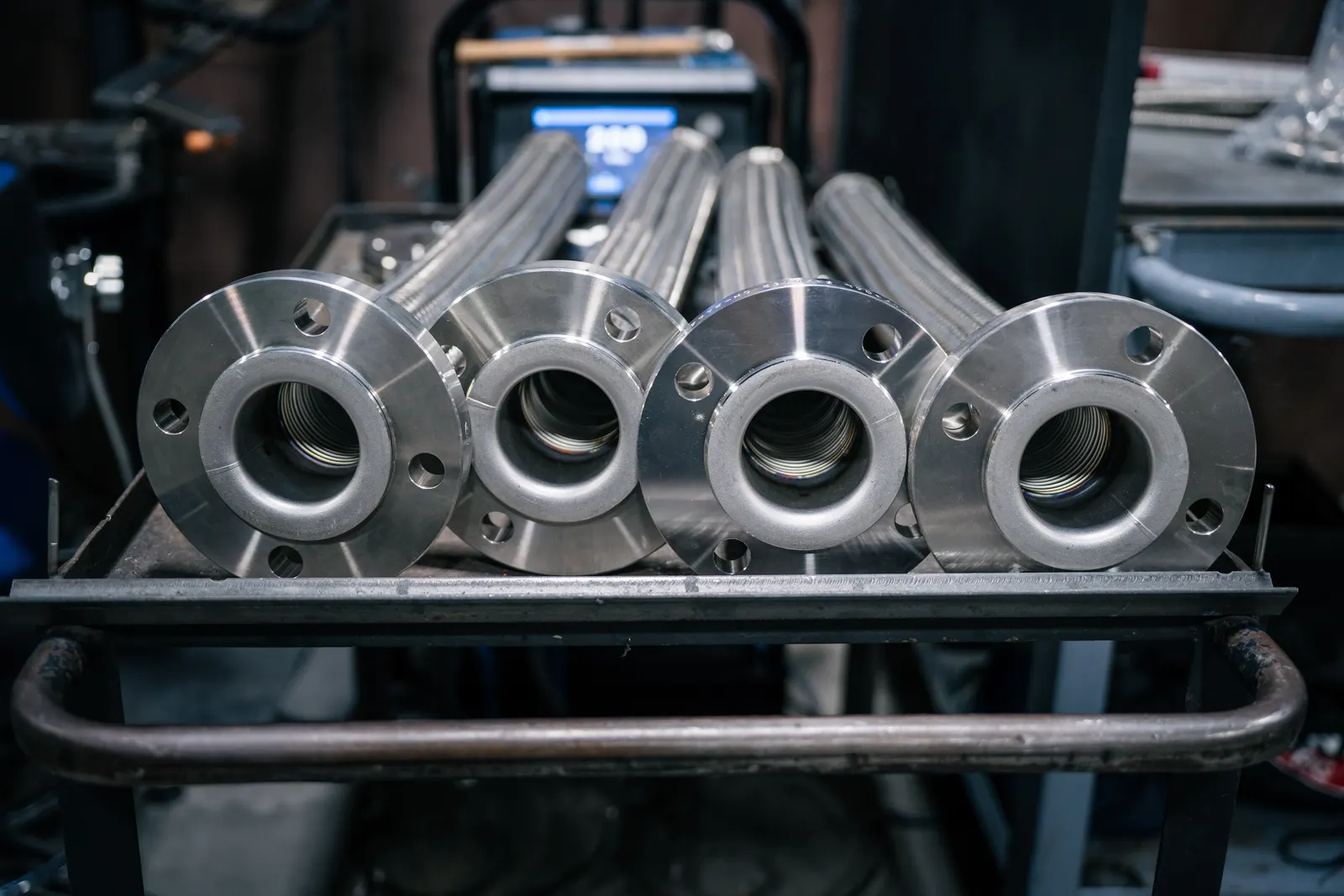
Travis said Southeastern Hose is doing its best to still accommodate industries like steel, oil, petrochemicals and HVAC. But data center customers are “willing to pay whatever they need to pay” to be first in line for components, he said. The manufacturer has had conversations with long-time customers explaining the changing market and greater workload for the metal hose industry.
No one truly knows how long data center demand may last. Siemens anticipates the fast pace of growth continuing through 2028 or 2029, at which point the market will still grow but at a slower pace. Powell estimated a rate of 6-8% growth, versus the 15-20% growth he’s observing today.
A recession or continued geopolitical conflict could also push data center construction off course. And If the AI bubble were to burst sooner than anticipated, it would create “a huge problem for all the manufacturers who were assuming a certain level of demand over a number of years,” West said.
Toepel said if demand does dry up, Krohne can quickly pivot to the wastewater industry, which uses the same technology. Travis said his product is consumable and will eventually need to be replaced in existing data centers, giving him some guarantee of business. He predicts a plateau around 2030.
ABB’s Trumble sees a long-term strategy from data centers. Even if AI growth stalls or slows, she said, data centers still serve as the backbone for the internet and the cloud.
“There's no way that that requirement is going away.”