Dive Brief:
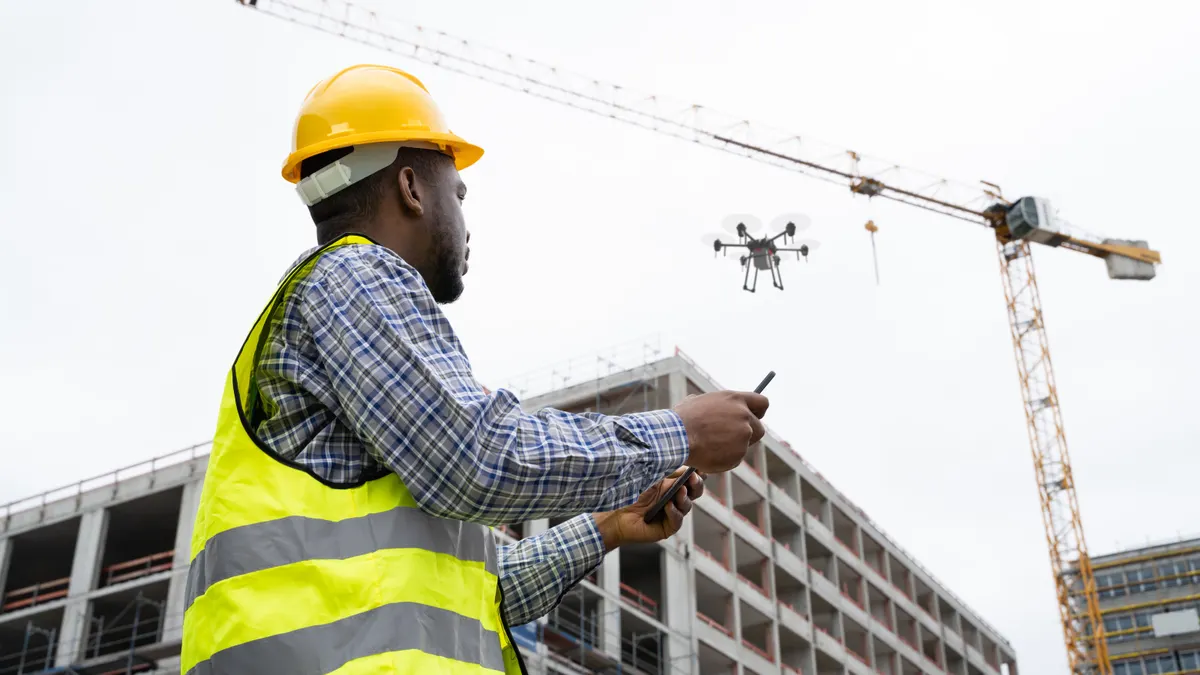
- Practically all primary drones being flown on U.S. construction sites originate from a single Chinese manufacturer, according to a survey from Associated Builders and Contractors.
- Of respondents who use the tech, 97% said the primary drone of operation on their projects was manufactured by China-based DJI. Drones from Autel Robotics, also based in China, were the second most-cited primary tech in the survey.
- “This highlights a potential big hurdle for contractors: If the FCC or Congress were to ban the import or operation of commonly used Chinese drones for commercial contractor use, contractors would have minimal alternatives based on cost and function," Matt Abeles, ABC vice president of construction technology and innovation, said in an email to Construction Dive.
Dive Insight:
More than a third of ABC members — 36% — use drones on their jobsites, according to the results released Monday by ABC.
The survey, which took place in May, polled ABC members on how they used drones, where those drones came from and the level of investment into their drone programs. Of those companies that deploy the tech, approximately 81% of respondents used drones for site progress monitoring, and 50% used the tech for inspections, per the report.
Recent tariffs could present a tricky situation for contractors who rely on these drones. On Aug. 13, President Donald Trump imposed a 100% tariff on certain drones entering the U.S., Manufacturing Dive reported.
The tariffs, which will go into effect on Sept. 3, apply to drones that have a maximum takeoff weight greater than 55 pounds, alongside systems that feature thermal imaging capabilities, per Manufacturing Dive. This follows action against DJI specifically during Trump’s first administration in 2017, when the U.S. Army banned its soldiers from using the firm’s drones.
Despite those hurdles, for contractors who want to capture the advantages that come with drone use, the time is ripe to do so, Abeles said. He pointed to contech giant Procore’s $845 million proposal to acquire DroneDeploy last month as a bet that firms are increasingly adopting the tech.
“The contractors that focus on practical applications, build the right internal capabilities and integrate drone data into their operations will be best positioned to capture that opportunity,” Abeles said.
The low investment overhead that respondents reported also demonstrates the accessibility of drones, Abeles added. Per the report, about six in 10 respondents said they spend between $1,000-$10,000 on drone hardware, the lowest dollar-range listed in the survey. Approximately 28% of respondents reported spending over $10,000, while another 10.2% declined to answer.
For those looking to get started with drones, Abeles advised identifying concrete use cases rather than purchasing a drone as the first step.
“Contractors should then build the appropriate capabilities around the technology, including training, staffing, regulatory compliance and integration with existing workflows,” Abeles said.