Dive Brief:
- Total construction spending in July dipped 0.5% month over month to a seasonally adjusted annual rate of $2.17 trillion, according to a U.S. Census Bureau report released Tuesday.
- Private nonresidential construction spending in July increased 0.4% month over month, according to the government data. Public construction expenditures, meanwhile, dipped 0.2% during that span.
- The monthly increase in nonresidential construction spending stemmed entirely from data center activity, according to an Associated Builders and Contractors analysis. Without data centers, nonresidential spending fell for the second straight month, hitting its lowest level since September 2023, said Anirban Basu, ABC chief economist.
Dive Insight:
The data center boom forges on in an otherwise soft construction market.
The artificial intelligence buildout has fueled demand for power projects, which help supply data centers’ electricity needs. But the growth has left contractors increasingly reliant on the viability of data center construction and the projects in support of the boom, said Basu.
“Nonresidential activity is even more concentrated given that the power category, which has been boosted by the electricity needs of data centers, has also grown substantially over the past year,” said Basu. “That upbeat outlook is increasingly dependent on a single sector.”

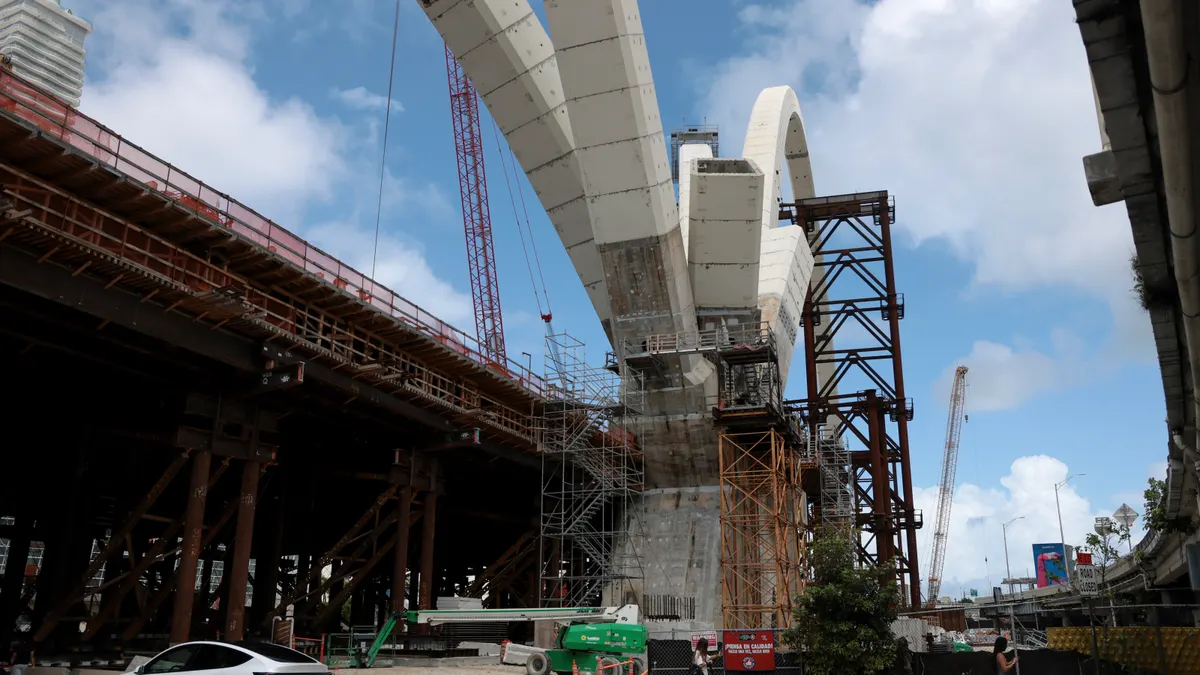
Uncertainty over federal infrastructure funding has also threatened momentum in highway construction, according to an Associated General Contractors of America analysis. The Infrastructure Investment and Jobs Act expires Sept. 30, and the looming deadline has contractors worried about a potential lapse in federal funds.
Spending on highway construction dipped 0.2% in July month over month, according to the Census Bureau data.
“Only three categories are propping up construction spending: data centers, power and highway projects,” said Ken Simonson, AGC chief economist. “Unfortunately, all of these segments face risks of cooling or shrinking due to worker shortages, political pushback, tariffs and a possible federal funding lapse for highway programs.”