Aditya Kambhammettu is construction manager and San Francisco lead for Amazon Web Services. Opinions are the author’s own.
With the data center construction market awash in cash, the bottleneck for these projects is not capital, land or even engineering talent — it is the increasingly contested path from site control to construction start, especially in high-demand regions.

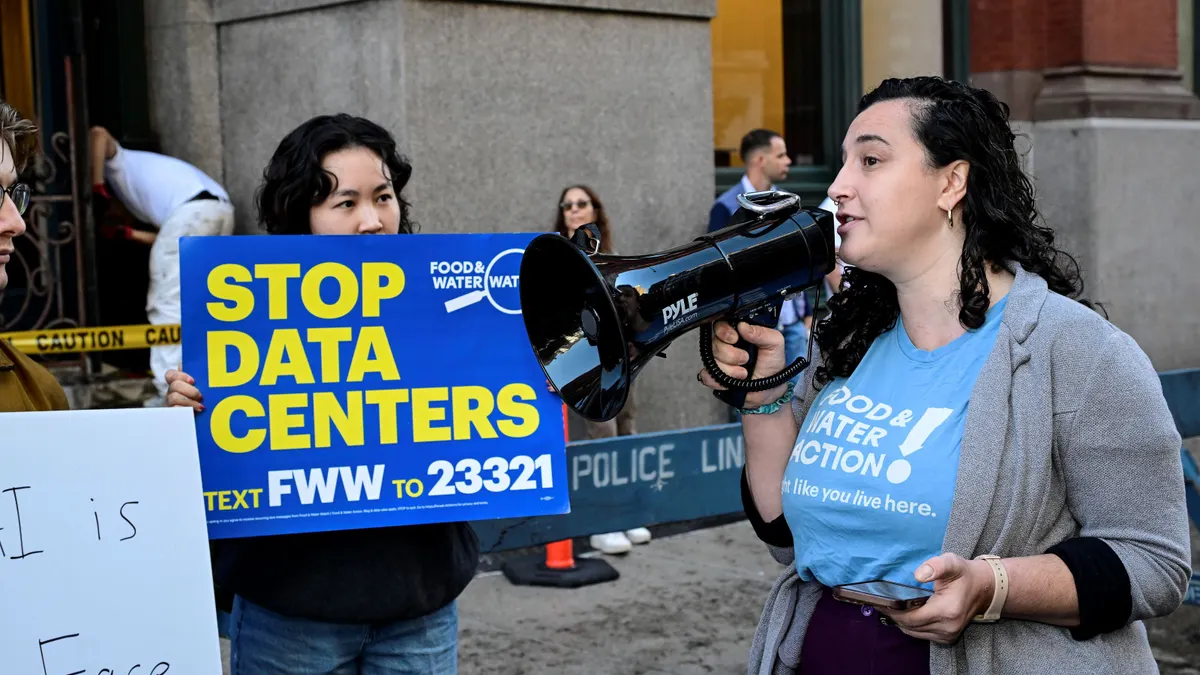
While much of the news in the sector to date has focused on the technical, workforce and financial dimensions of data center development, community support or opposition is increasingly determining whether a project breaks ground on schedule.
When opposition is present, these projects now require adaptive stakeholder strategies to maintain schedule and regulatory standing. From my standpoint inside the delivery organization — not from a consultant's or policy analyst's perspective — there’s an approach that actually works, based on what has been successful in the field.
How we got here
For years, data center site selection focused primarily on demand, land availability, grid capacity, fiber access and environmental compliance. Community opposition was often considered a manageable risk that could be addressed through standard public hearings and environmental review processes.
That assumption is growing more and more unreliable.
Across California, Virginia and parts of the Pacific Northwest, organized public opposition has delayed major projects, extended permitting timelines, triggered redesigns and altered schedules. In some jurisdictions, projects that appeared fully entitled on paper experienced significant delays before and during construction.
For hyperscale programs operating on aggressive deployment schedules, these delays create substantial financial ramifications. A single delayed data center delivery impacts revenue targets, customer commitments and even stock price.
Why communities are pushing back
Public pushback to data center development is no longer limited to isolated environmental concerns. Community opposition has become broader, more organized, and more technically informed.
In drought-sensitive regions like California, water consumption associated with advanced cooling systems and cooling towers often becomes an immediate point of concern. Nearby residents and advocacy groups increasingly question water usage as well as how hyperscale campuses will impact their electric and utility bills.
Fire hazards from lithium-ion battery storage systems can also spark anxiety. Residents and communities question how robust fire-safety systems and emergency response readiness are, including from in-house and local fire departments.
Noise is another recurring issue. Sound from racks, generators, rooftop exhausts and round-the-clock operations frequently generate opposition during permitting hearings, especially for projects located near residential zones.
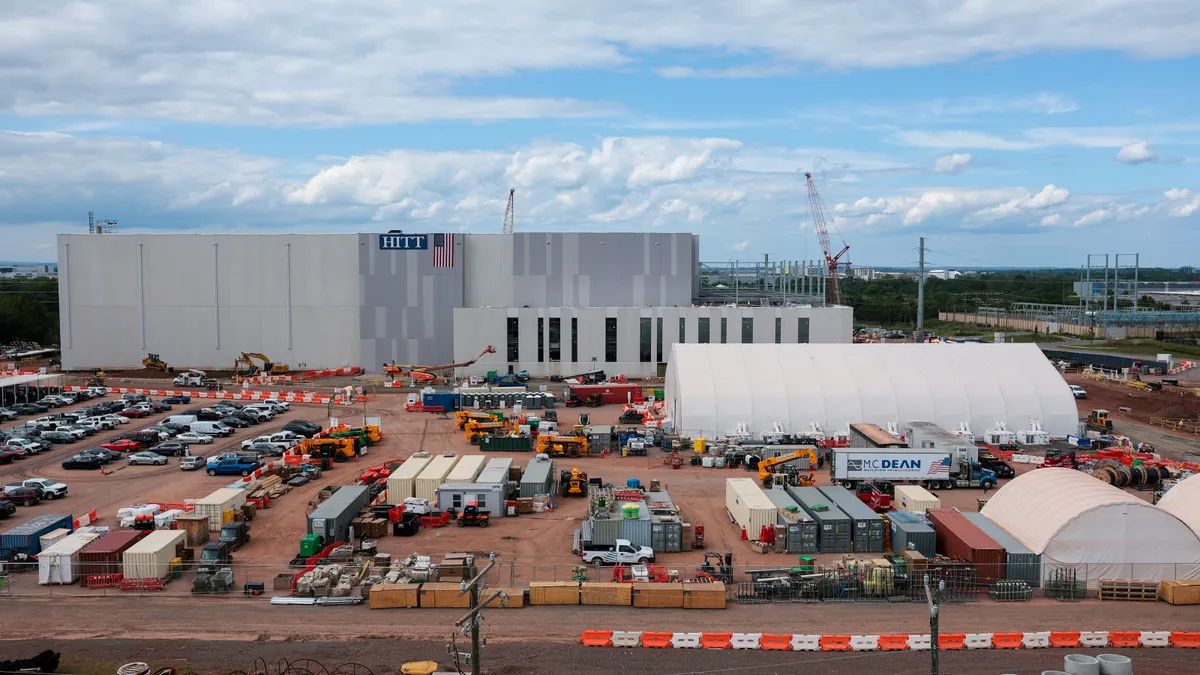
Construction impacts themselves can also become politically sensitive. Heavy haul traffic, road deterioration, parking issues and site preparation can generate friction with neighboring communities before vertical construction even begins.
Where traditional permitting assumptions break down
Many large-scale data center programs still approach permitting primarily as a technical compliance process. In practice, however, community opposition is now reshaping project timelines long after environmental and entitlement packages are approved.
In several California markets, projects approved through formal entitlement processes still encountered extended delays tied to community appeals, labor agreements, local union opposition and utility coordination revisions. Public pressure can intensify these delays.
For construction managers, these issues are no longer peripheral risks. They directly affect construction milestones, capital expenditure budgets, long-lead items sequencing, contractor mobilization and customer commitments.
A more proactive contractor approach
Projects that navigate opposition more successfully often begin stakeholder engagement earlier — before formal hearings and entitlement conflicts emerge.
This includes identifying organized opposition groups early in the development cycle, understanding local political dynamics and incorporating outreach programs into the timeline before public review begins.
In practice, a few relatively low-lift efforts can help garner community support. These include:
- Community outreach programs.
- Upgrading local fire department equipment, if needed.
- Revising traffic management plans.
- Providing proactive, transparent communication around water and power usage.
- Creating fact sheets identifying and addressing common concerns and construction timelines.
Coordination between owners, contractors, utilities, consultants and local officials also becomes more important in strained jurisdictions. Community pushback that remains unaddressed early on frequently results in schedule disruptions later, leading to cost and schedule overruns.
Fortunately, progressive general contractors have begun to recognize that community outreach cannot remain solely an owner issue. More and more, construction project teams need to participate directly in stakeholder communication because many objections ultimately affect construction execution, logistics and operational sequencing.
If communities can’t interact directly with the teams doing the actual work, it becomes harder to build trust and support for the project. That’s why owners need contractors on their community outreach teams.
Global data center investment is expected to exceed hundreds of billions of dollars over the next several years, driven largely by cloud expansion and AI infrastructure demand. Delivering that capacity on schedule will depend not only on engineering execution and capital deployment, but also on maintaining public confidence throughout the project lifecycle.
For construction and development teams, the challenge is no longer simply obtaining project approval. It is maintaining enough community and political goodwill to keep projects moving once approval is obtained. Contractors must be part of that effort.
Clarification: A previous version of this story mentioned a specific project.