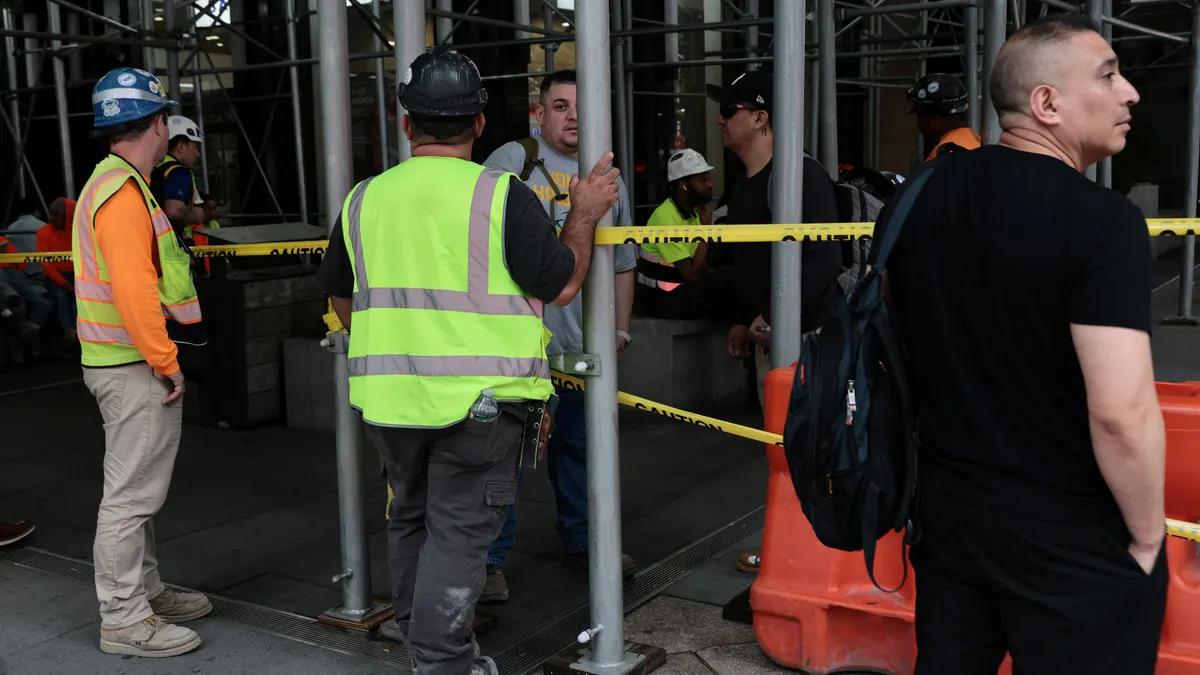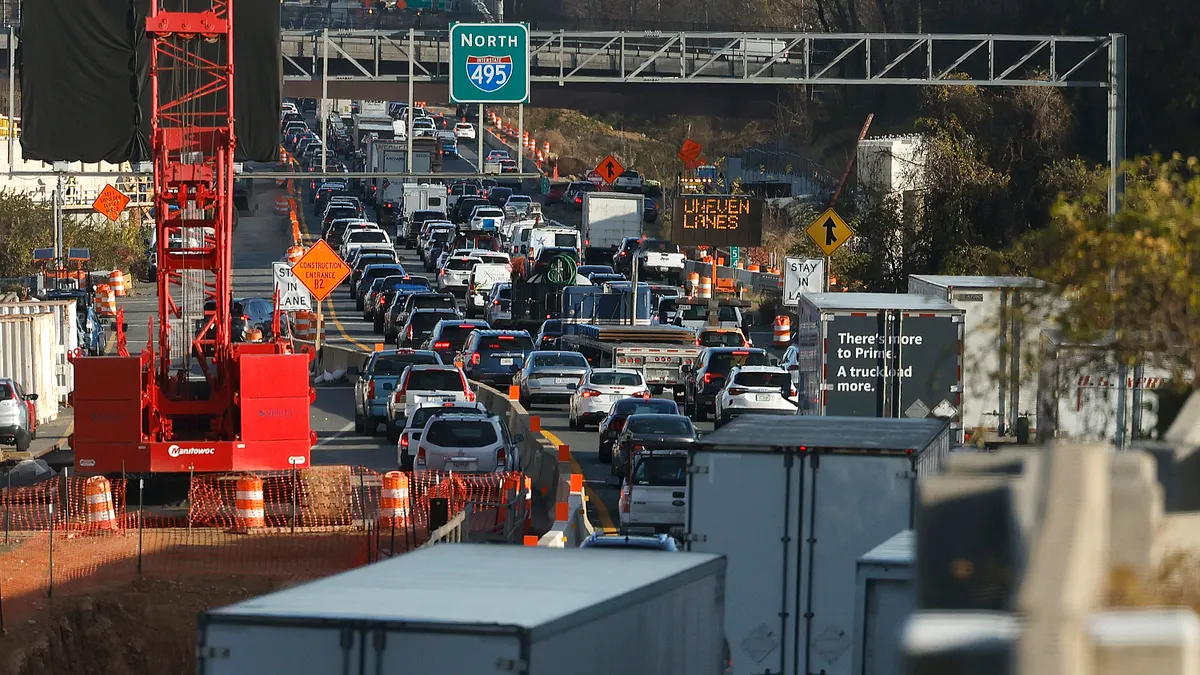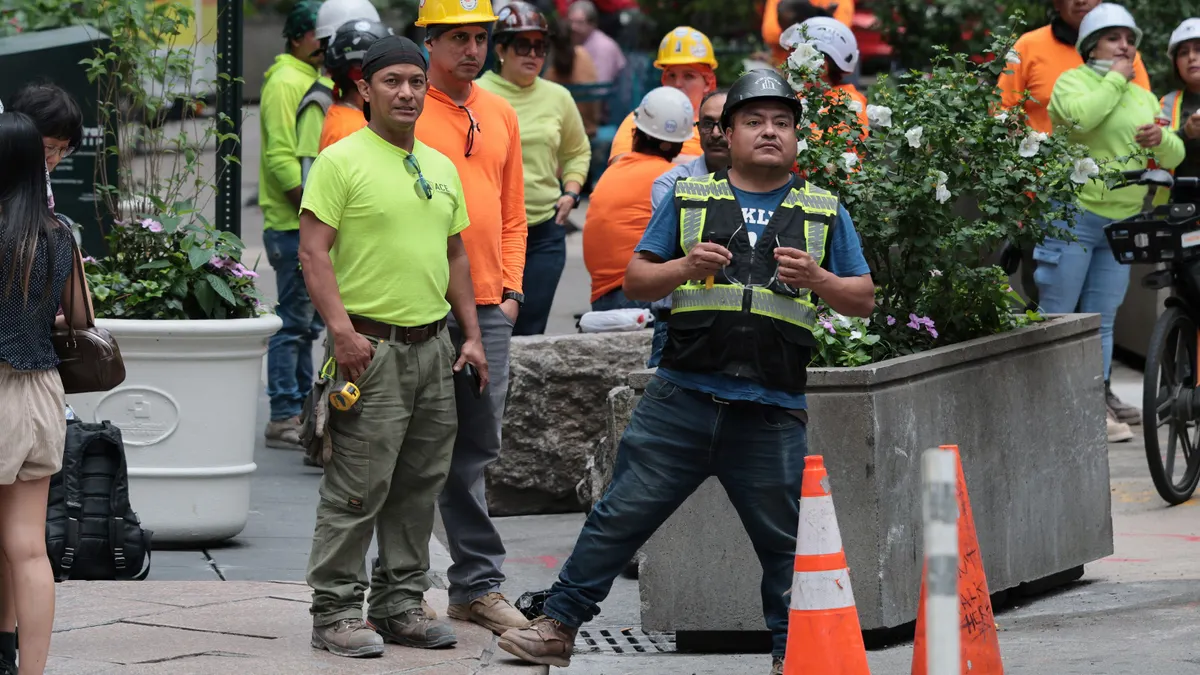


Easily identified, high-energy hazards account for a majority of serious injuries in construction.
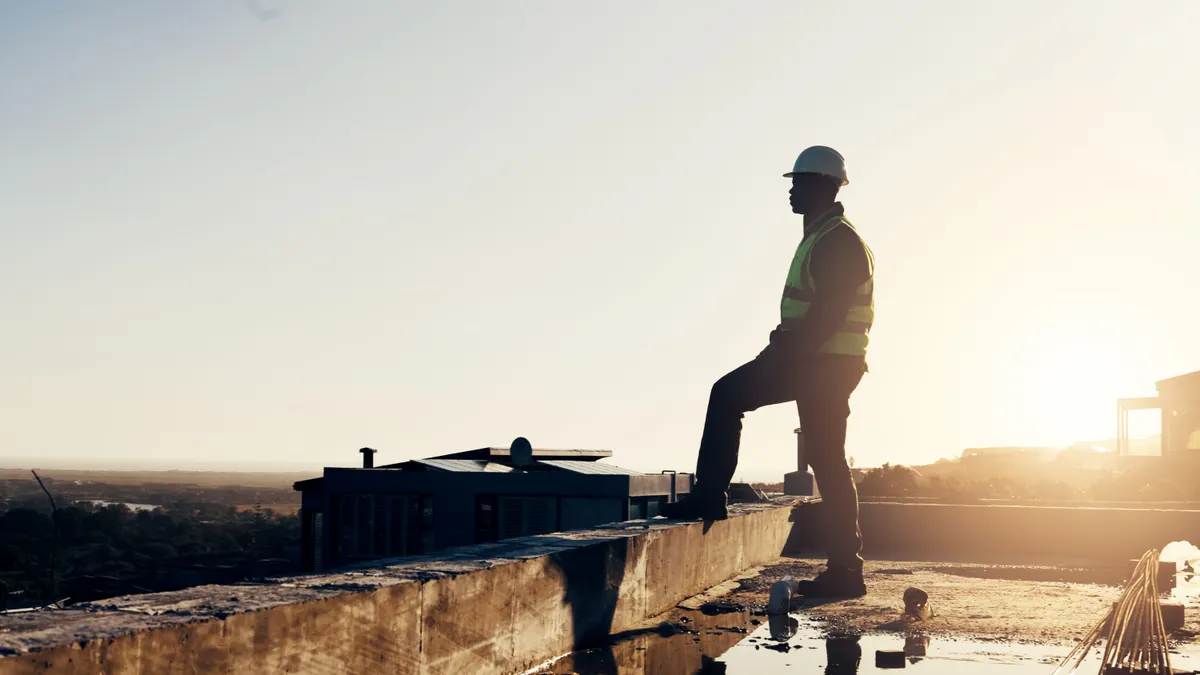
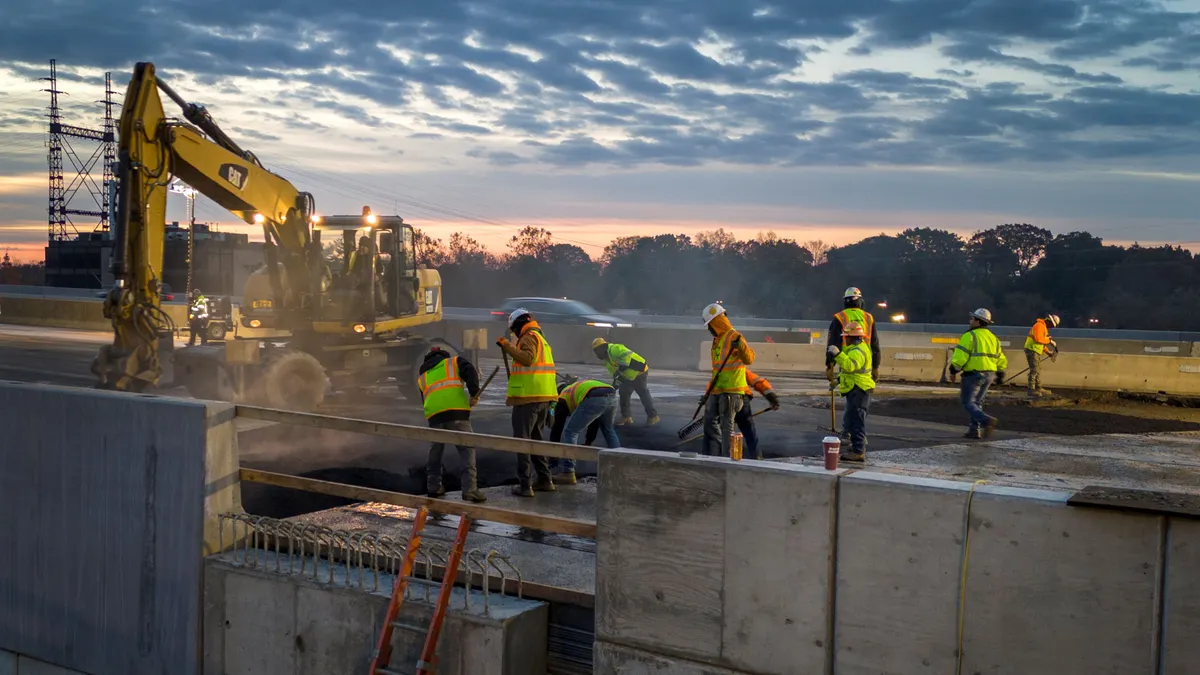
Those dangers — like working at heights, near a fast moving vehicle or by a piece of machinery — cause the most recordable incidents on jobsites, despite them being the most readily-identifiable risks.
That’s according to Dallas-based contractor consulting firm ISN, which released its sixth annual Serious Injury & Fatality Insights report in February. The firm’s analysis found that nearly 90% of serious injury cases in the last three years were attributable to gravity, motion and mechanical hazards.
Today, contractors have more tools than ever to record, analyze and draw conclusions from their own safety data. With the advent of artificial intelligence, those options have only grown. However, that doesn’t mean AI can dictate safety policies or that human safety experts aren’t integral at jobsites.
Here, Construction Dive talks with Adam Logan, executive vice president of application and data at ISN, about using AI to analyze safety, how to ensure the data is best used and the importance of expertise.
The following has been edited for brevity and clarity.
CONSTRUCTION DIVE: Broadly speaking, what does it look like to use AI to scan safety datasets?
Adam Logan: I feel like you can’t escape AI regardless of what industry you're in or what your personal activities are these days. There’s obviously varying ways that we approach that at ISN.
We think about it from three lenses.
Number one, what can we use AI to help make our customer's lives better? Is it better insights, faster turnaround of processes, unique experiences using our products?

Second, what can we use it for internally? The things that AI and machine learning are good at parsing massive amounts of data, finding and identifying patterns, surfacing insights. So leveraging that with our domain expertise and dealing with contractor management risk and health, safety and procurement aspects is important to us.
Then of course we use it as, “Hey, what can I use AI for my everyday activities?” I think with the construction industry especially, there's a lot of data out there that can likely be leveraged by those organizations that have access to those data sets. How can I do what I want to do, but maybe reduce the risk along the way to, to help my organization? That's how we approach it.
How should contractors think about using AI tools to study their own data?
Well, I would start with maybe the non-fun parts, which are data readiness, data governance and security.
Think about these construction organizations. This is proprietary confidential data. How do you responsibly use AI to get the insights out of it? That’s something that we think about a lot.
It starts with using the enterprise versions of these large language models or other AI offerings that exist out in the world where your data stays within your realm. It stays on your side.
It also begins with having the data ready to be used. The more you invest in structuring your data in a cohesive, accessible format, the better outcome you're going to have.
And I would say AI models are great, but they don't know what your experts know within your organization. I went to an AI conference and I vividly remember one of the AI experts ended the session with, “Don't underestimate your domain expertise.”
I hear that a lot, where often it’s about an expert using AI analysis. How do you make the most of using it while still relying on that expertise?
The AI models can give you a lot, and they can be kind of surprising with what they find. But if you give it the context — there's a term called grounding where you say, “I only want your answers and your results to be in this realm of information” — you're going to get much better results.
Some of it may be things that you do once or twice, and then you just maintain. That goes back to data readiness. If you have all that in a good shape, in good form, and you know that underlying data is accurate, that’s important. Then, during the prompting, obviously spending time experimenting with prompts. You're not going to get what you want off the first prompt.
How is ISN using AI to analyze construction safety data?
We did a few things a little bit differently with our white paper this year.
We used AI to help us generate the information, because we're talking about a large data set of thousands of contractors’ data coming from OSHA 300 logs. We took the incident descriptions themselves, which are anonymized, and then we aggregated that information.
We've worked very closely with our health and safety team to provide context and grounding on what the serious injury or fatality is within a report.
I think that was an interesting aspect to try to understand: what are the hazards that are leading to a lot of these SIFs? And that's where we saw gravity, motion and mechanical energy were the sources that stood out.
Humans are very good at recognizing these high energy hazards, but how could we use a tool to be even better? Before the work.
That's kind of the concept: Once we recognize these hazards, then we need to work through the controls to see what's in place before we begin getting our tasks to try to limit the risk of those hazards as much as possible.