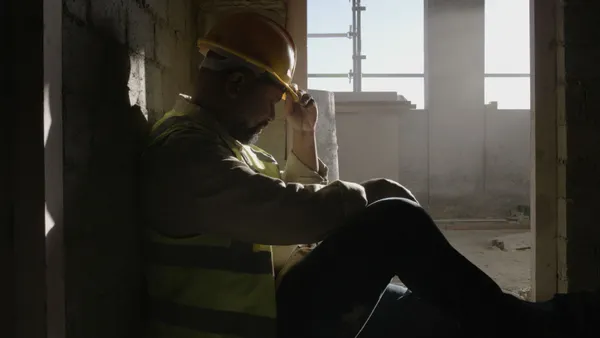

On September 11, 2026, ISEA announced the release of ANSI/ISEA Z89.1-2026, the first revision of the industrial head protection standard since 2014. Announcing it, ISEA President and CEO Cam Mackey cited nearly 700 worker fatalities involving head injuries in the last year.
Why the standard changed now
OSHA’s head protection rules cover falling objects, flying objects on construction sites and electrical exposure, and the types and classes in Z89.1 address those scenarios. None of them tested whether a helmet stays on the head when a worker slips or falls.
ISEA’s head protection product group says the market moved first. Customers asked for enhanced protection, and products arrived described in terms the standard did not define. Some manufacturers pointed to select clauses of EN 12492, the European mountaineering standard, to describe their helmets. The 2026 revision puts those features under standardized test methods and a single designation on the label.
Z89.1 has already tested for more than top impact. Type I and Type II were introduced in 1997, and Type II tests off-center impact and penetration. What the standard lacked was a retention effectiveness test. A chin strap was optional on every type, with strength requirements only where one was fitted.
What the “+” designation tests
The revision leaves Type I and Type II exactly as they were. It adds two optional designations, Type I+ and Type II+. Type II+ adds two requirements to Type II. Type I+ adds a third.
Both “+” types require a chin strap, and the strap has to meet minimum width, strength and elongation requirements. A strap alone does not earn the marking. Both also require a retention effectiveness test, which simulates pulling the helmet off a headform to confirm it stays in place in a fall.
Type I+ also adds front, rear and side impact protection to the top-impact Type I helmet. ISEA benchmarked select clauses of EN 12492 when writing that testing.
The revision also adds checks for “+” helmets worn in reverse. It renames the High Visibility marking to Enhanced Visibility, and visibility performance did not change. The rename clarifies that head protection sits outside ANSI/ISEA 107, which governs high visibility apparel.
One distinction worth getting right
Type I+ is a step up from Type I. It does not replace Type II.
The off-center impact testing differs between them, and Type II includes off-center penetration testing that Type I+ does not. A safety director comparing the two on the plus sign alone could reasonably conclude Type I+ is the higher designation. It isn’t. Type II and Type II+ impact testing is the more demanding of the two.
Hard hat vs. safety helmet: what the names mean under Z89.1
Z89.1 uses the word helmet. “Hard hat” and “safety helmet” appear only in a definitions footnote as industry terms, and neither names a type. Either term can describe a helmet of either type, so the words do not tell you the protection level.
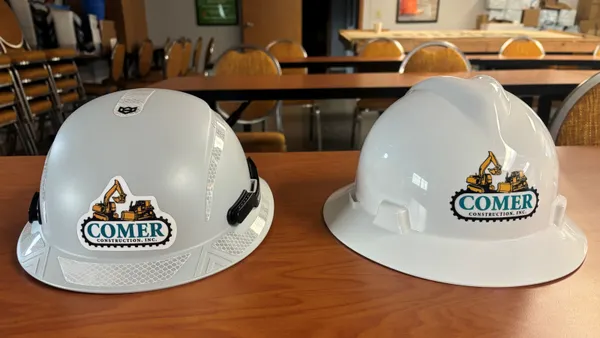
Full brim or cap style describes what a helmet looks like. The label inside the shell shows what it was tested to, including type, class and revision year.
What the standard still doesn’t answer
Z89.1-2026 tests linear impact, meaning direct blows. It acknowledges rotational energy in its foreword and sets no performance requirement for it.
ISEA’s product group says the obstacle is consensus. Several test methodologies are in use across companies globally, and the group wants a repeatable laboratory method before putting one in the standard. It has committed to keep investigating. STUDSON is researching rotational energy management and tracking that work.
What employers need to know now
ISEA describes the revision as standardizing features already widely available in head protection. For employers, the practical shift is smaller than it sounds. The “+” designation is optional. OSHA does not currently reference the 2026 revision, and publishing a standard does not update OSHA’s rules automatically. Current Type I and Type II helmets remain recognized by OSHA, and the employer decides based on a hazard assessment. What changed is that an assessment calling for tested retention now has a designation to point at.
Manufacturers cannot mark a helmet to the 2026 revision until it has been tested to it, and that testing takes time.
STUDSON started in action sports, where head protection is the difference between walking away and not. We built that thinking into helmets made for industrial requirements. The SHK-2 is designed, engineered and built to comply with ANSI/ISEA Z89.1-2026 Type II+ requirements. Our current ANSI-certified helmets are headed to COLTS Laboratories for testing to the 2026 revision, and we will update markings and documentation as the reports come back.