Dive Brief:
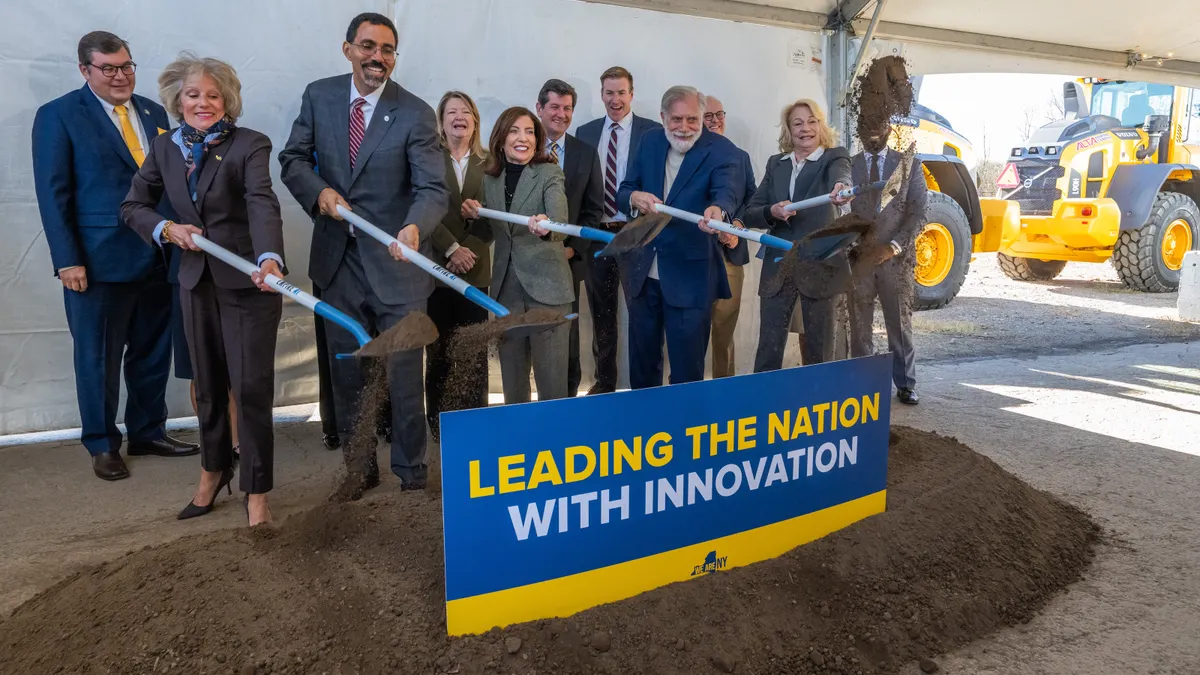
- Gilbane has broken ground on the Empire AI data center at the University at Buffalo, New York Gov. Kathy Hochul announced Nov. 19.
- The facility, which is exempt from New York’s statewide data center moratorium, will initially use up to five megawatts and has a $74.5 million construction budget, Roger Treichler, a senior project executive at Gilbane, told Construction Dive.
- Gilbane targets substantial completion for late 2027. The state expects construction to reach completion by early 2028, according to the news release.
Dive Insight:
The University at Buffalo plans to use heat from the new facility to warm campus buildings, according to the release.
The center will use clean hydropower and connect to the university’s Baker Chilled Water Plant, according to the governor’s announcement. A system of pipes, geothermal wells and advanced heat pump technology will allow the university to recover energy from high-performance computing infrastructure and redistribute it back to the campus, reducing overall energy consumption.
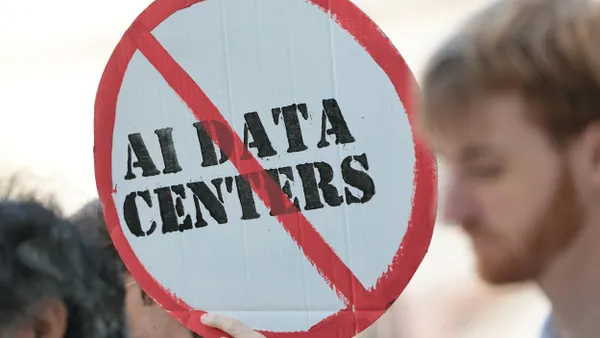
In July, Hochul paused certain state environmental permits for new data centers in order to study the effects on energy demand and water use. The executive order, however, exempts facilities primarily used for research or education and specifically names the Empire AI consortium.
The facility, which will house the Empire AI Gamma supercomputer, will add on to two earlier systems that already serve researchers, according to the release. The second system, a $40 million supercomputer in downtown Buffalo, has 11 times the AI training capacity of the first, which was launched in 2024, according to the state.
Finishing touches will continue on the site after substantial completion in 2027, said Treichler. Remaining work includes testing building systems and commissioning the facility before operations begin in 2028, he said.
“As construction manager, Gilbane is proud to help deliver a facility that will expand access to powerful computing resources, helping researchers tackle critical challenges in healthcare, climate science and other areas that impact our communities,” Treichler told Construction Dive. “The project also demonstrates how advanced technology construction and environmental stewardship can go hand in hand, with a plan that supports the University at Buffalo’s plans to capture and reuse heat across its North Campus.”