Dive Brief:
- Sixty percent of highway contractors experienced at least one crash involving a moving vehicle in a work zone during the past year, according to a new survey from the Associated General Contractors of America and software provider Heavy Construction Systems Specialists. About one-third reported five or more crashes.
- More than half of contractors said work zone crashes are a greater risk today than they were a year ago, with over 90% citing distracted driving as a major cause. Speeding, cellphone use and impaired driving were also identified as leading contributors.
- Contractors overwhelmingly backed stronger enforcement efforts, including increased police presence, stricter distracted driving laws and automated speed enforcement in highway work zones.
Dive Insight:
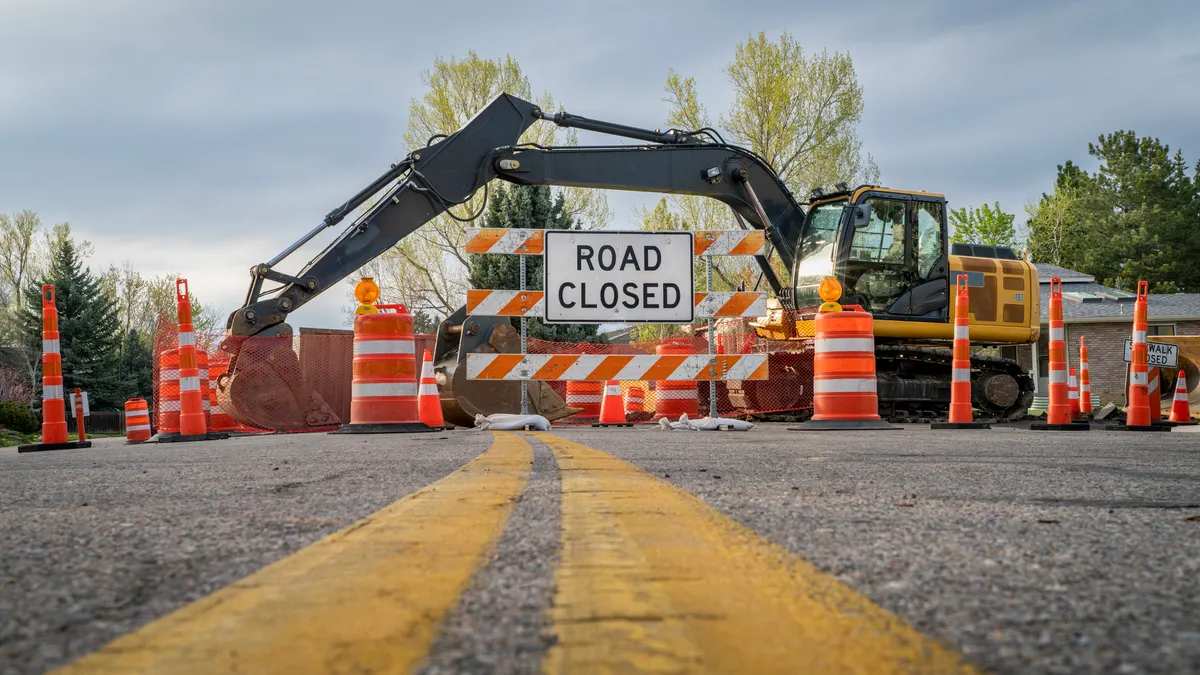
Highway contractors believe dangerous driver behavior continues to fuel crashes in work zones, delaying projects and putting both workers and motorists at risk as the busy summer construction season ramps up.
In fact, the annual survey from AGC and HCSS found that among contractors who experienced work zone crashes, 27% reported worker injuries, according to the release. At the same time, 59% reported injuries to drivers or passengers.
Fatalities also remain a persistent issue. Seven percent of respondents said construction workers were killed in one or more work zone crashes during the past year, while 22% reported deaths involving drivers or passengers.
“Every day, thousands of construction workers across the country work just feet away from speeding traffic,” Brian Turmail, vice president of association and industry image for AGC, said during a webinar detailing the survey. “These workers are relying on motorists to slow down, stay alert and pay attention in highway work zones.”
Macrina Wilkins, director of market insights for AGC, said one of the survey’s most notable findings was the growing perception among contractors that work zone risks are worsening, even as some fatality numbers have improved compared with prior years.
“On one hand, we’re seeing some figures improve," Wilkins said. "We’re seeing fewer contractors report fatalities this year than in prior years. But fatalities aren’t the only issue. There are also injuries, there are delays, there are other things.”
The survey found growing frustration among contractors over current enforcement efforts. Thirty-seven percent said penalties for moving violations in work zones should be more severe, while another 39% said existing penalties are not enforced enough. Only 29% believe current enforcement efforts are helping deter unsafe driving behavior.
“Work zone safety is not just a construction industry issue. It’s a public safety issue,” said Steve McGough, president and CEO of HCSS, during the webinar. “Zero injuries and zero fatalities are the only acceptable outcome.”
Nighttime work zones are becoming a growing concern as well. One-third of contractors said nighttime crashes have become more frequent over the past year, with distracted driving, speeding and impaired driving identified as the primary causes.
The survey also highlighted rising costs tied to work zone safety investments. More than one-third of contractors said higher material prices have affected their ability to purchase barriers, signage and other safety equipment. At the same time, contractors are increasingly using truck-mounted attenuators, enhanced warning systems and additional visibility tools to improve safety conditions.
Heather Agee, chief strategy officer at Kansas City, Missouri-based IBC Traffic, a work zone safety company, said contractors and traffic control crews are already following extensive safety protocols, but driver behavior remains the industry’s biggest challenge.
“Work zone safety cannot rest solely on the shoulders of the workers inside of the cones,” Agee said during the webinar. “People are not getting home to their families and that is unacceptable.”