
The construction industry has spent the past decade investing billions of dollars in digital tools. Yet, general contractors are still facing a persistent bottleneck on the jobsite: getting trade contractors to actually use these platforms.
Trade crews and specialty contractors are the people closest to the work as it unfolds. They know immediately when material deliveries are delayed, which handoffs are at risk and whether upcoming commitments can realistically be met. Without their real-time input, project schedules are little more than educated guesses.
It's surprising how many planning processes are still run on paper. Field teams will often push back when new technology platforms are introduced. But there are valid reasons behind their skepticism.
The flaw of office-first software
For years, jobsite technology has been engineered primarily for office-based teams, project executives and VDC managers. When rolled out to the field, these tools can often feel like administrative homework. Leads and superintendents are asked to enter granular data into complex dropdown menus so headquarters and owners can track progress, but they receive little to no immediate value in return.
Worse, traditional software often fractures the very collaboration that projects are dependent on. When a pull planning session devolves into eight leads huddled around a laptop while a project engineer types, engagement plummets. Collaborative planning requires active and visual engagement: mapping workflows across trades, exposing hidden constraints and making clear, public commitments to one another. When technology gets in the way of that dialogue, communication breaks down.
What drives field buy-in?
Trade contractors do not reject technology — they reject unnecessary friction. To achieve real trade adoption, platforms must meet three practical criteria:
- Familiar workflows over radical disruption: Tools must align with the planning processes field crews are already using, like pull planning, rather than forcing crews to abandon what's working for them.
- Immediate two-way value: If a lead or superintendent inputs commitment updates or identifies a blocker, the system should provide them with clear, actionable visibility into upstream and downstream progress.
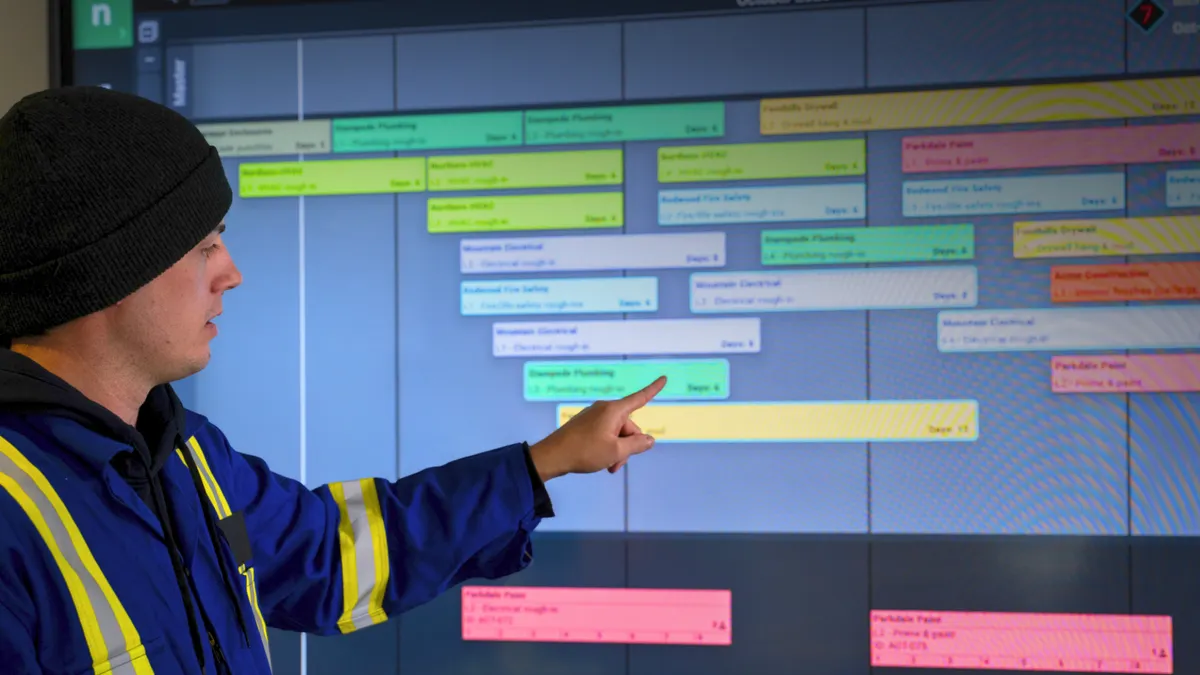
- Tactile, visual collaboration: Large-format, interactive digital workspaces are essential. They replace the crowded laptop screen, allowing leads to stand side by side, move digital cards and resolve handoff clashes just as naturally as they would with paper-based processes.
From sticky notes to high-impact planning
This visual-first approach is why solutions like Nialli™ Visual Planner are seeing rapid traction in the field. By digitizing the tactile experience of a physical planning board, field teams maintain the dynamic, collaborative energy of a whiteboard session while eliminating the administrative headache of manually transcribing sticky notes into scheduling software.
As one field user put it: "I was very skeptical at first — we've had a lot of technology implementations go sideways over the years. However, by the end of the session, it became apparent this was even easier than using Post-its. I never want to have to go back to writing everything out by hand!"
By extension, management and project owners also benefit. Unlike with paper-based approaches, information is automatically captured. Advanced reporting on project progression metrics like Percent Plan Complete (PPC) and reasons for variance can be extracted at the individual project level or across a portfolio. This data can be fed back to the teams responsible for preconstruction, driving continuous improvement for future projects.
The long-term ROI of field-first adoption
As digital transformation in construction has taken place, field adoption has sometimes been seen as a problem that requires overhauling how trades work, rather than designing solutions around what already works for them — giving trades tools that feel natural, collaborative and immediately useful.
When digital platforms respect the reality of the jobsite trailer, trade buy-in follows organically. By turning daily planning into an engaging, visual routine rather than an administrative burden, general contractors gain far more than reliable schedules. They also gain the continuous operational insights needed to build smarter, project after project.