
Risk management within construction has always been a moving target. Costs fluctuate, materials arrive late and safety incidents disrupt progress. Contracts contain loopholes that only become evident when problems arise. Traditional risk management relies on experience, intuition and reactive problem-solving. While that approach worked in the past, today's projects operate under tighter margins, compressed timelines and more stringent regulations.
Today, AI is transforming risk mitigation in construction, spanning cost prediction, safety enhancements, supply chain stability and quality control. Construction leaders that leverage these tools will not just reduce risk; they will redefine how projects are planned, executed and completed.
Predictive Analytics: Reducing Cost and Schedule Risks
Cost overruns and schedule delays remain persistent challenges in construction. Traditional forecasting relies on historical trends, manual calculations and subjective assessments. AI-driven predictive analytics offers a more accurate alternative.
Machine learning models process historical project data, supplier reliability scores, labor productivity rates and environmental conditions to identify risk patterns that signal potential delays. Supply chain bottlenecks, labor shortages or sudden weather changes become more predictable, allowing project managers to adjust before setbacks occur. AI continuously refines its predictions as new data flows in, creating an adaptive risk management system.
AI-driven cost oversight improves financial accuracy. Algorithms scan procurement records, subcontractor bids and invoices for inconsistencies. By flagging discrepancies early, AI prevents budget overruns before they escalate. When combined with real-time financial tracking, construction firms gain better visibility into spending trends, helping them course-correct before costs spiral out of control.
AI-Driven Safety Enhancements: Preventing Accidents Before They Happen
Traditional safety measures rely on training programs, manual inspections and compliance checks. AI introduces a proactive approach by detecting risks in real time and predicting safety threats before they escalate.
Computer vision plays a key role in AI-driven safety monitoring. AI-powered cameras analyze live video feeds from job sites, identifying unsafe behaviors such as workers operating without protective gear or moving through restricted areas. When a risk is detected, automated alerts notify safety managers immediately.
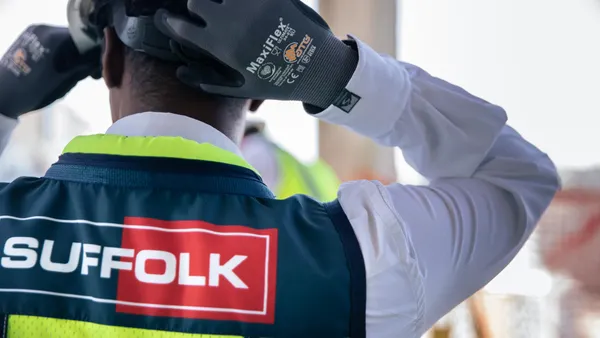
Wearable technology further strengthens jobsite safety. Smart helmets and vests equipped with biometric sensors track worker fatigue, heart rate and environmental conditions. When a risk threshold is met, supervisors receive real-time alerts, reducing the likelihood of accidents caused by human error.
AI-Powered Quality Control: Reducing Rework and Structural Failures
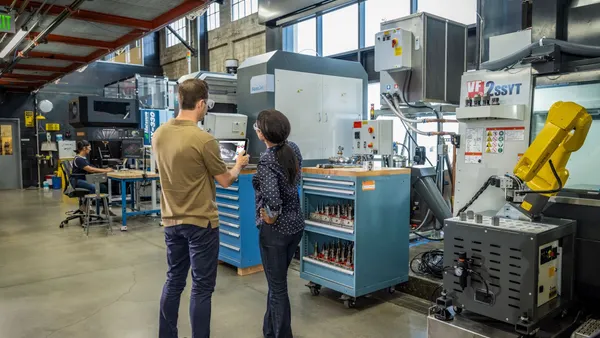
Defects in construction lead to costly rework, project delays and structural failures. AI strengthens quality assurance by automating inspections and identifying inconsistencies before they cause larger problems.
Computer vision and deep learning algorithms analyze images and videos from job sites. AI-powered drones and robotics scan buildings for defects not always visible to the human eye, detecting cracks, misalignments and improper installations early.
AI enhances quality control through Building Information Modeling (BIM). AI-enabled BIM platforms compare design blueprints with actual construction progress. Any deviations trigger automated alerts, allowing teams to correct mistakes before they escalate.
Strengthening Supply Chain and Labor Risk Management
Supply chain disruptions and labor shortages create significant project risks. AI-driven procurement systems analyze market trends, supplier performance, and geopolitical factors to predict material shortages and price volatility. These systems recommend alternative suppliers and optimize order timing before disruptions occur.
Labor shortages add another layer of complexity. AI-enhanced workforce analytics platforms assess skill availability, predict future labor gaps, and recommend hiring strategies. AI-powered robotics handle repetitive tasks, allowing human workers to focus on higher-value responsibilities.
Transforming Traditional Risk Management
AI is shifting construction risk management from reactive problem-solving to proactive decision-making. The most effective frameworks integrate AI with institutional knowledge, ensuring that digital insights align with on-the-ground realities.
Choosing the Right AI Solution for Construction
Finding the right AI-powered solution to incorporate into your technology stack is critical to mitigating risk.
Enter CMiC’s latest product offering, NEXUS.
Representing the first AI-powered construction ERP, NEXUS combines Natural Language Processing, construction intelligence, and agent-driven automation to deliver a next-generation construction management solution built for long-term performance.
NEXUS revolutionizes how construction teams interact with data, automate workflows and make critical business decisions. Powered by the large language models (LLMs), CMiC has built the foundation to support agentic workflows. With a modernized interface and enhanced system performance, NEXUS eliminates manual processes and frees teams to focus on high-value work.
Fundamentally, NEXUS reduces construction risk with AI, unified data and automation that provide real-time visibility, sharper decision-making, and elimination of manual errors across project and financial operations.
Accelerate your time-to-value with CMiC.