
Introduction
Accurate estimation is the foundation of every successful build. For many firms, the challenge lies in balancing the need for precision with the reality of limited internal resources. This is where construction takeoff services come into play. Construction takeoff services offer a way to outsource the technical grunt work of material counting so your team can focus on winning bids and managing the job site.
What are construction takeoff services?
At its core, a construction takeoff service acts as an external partner that handles the heavy lifting of material estimation. These specialized estimators dive into your blueprints, MEP plans and project documents to calculate how much of each material you’ll need to get the job done.
Which materials can you find takeoff services for?
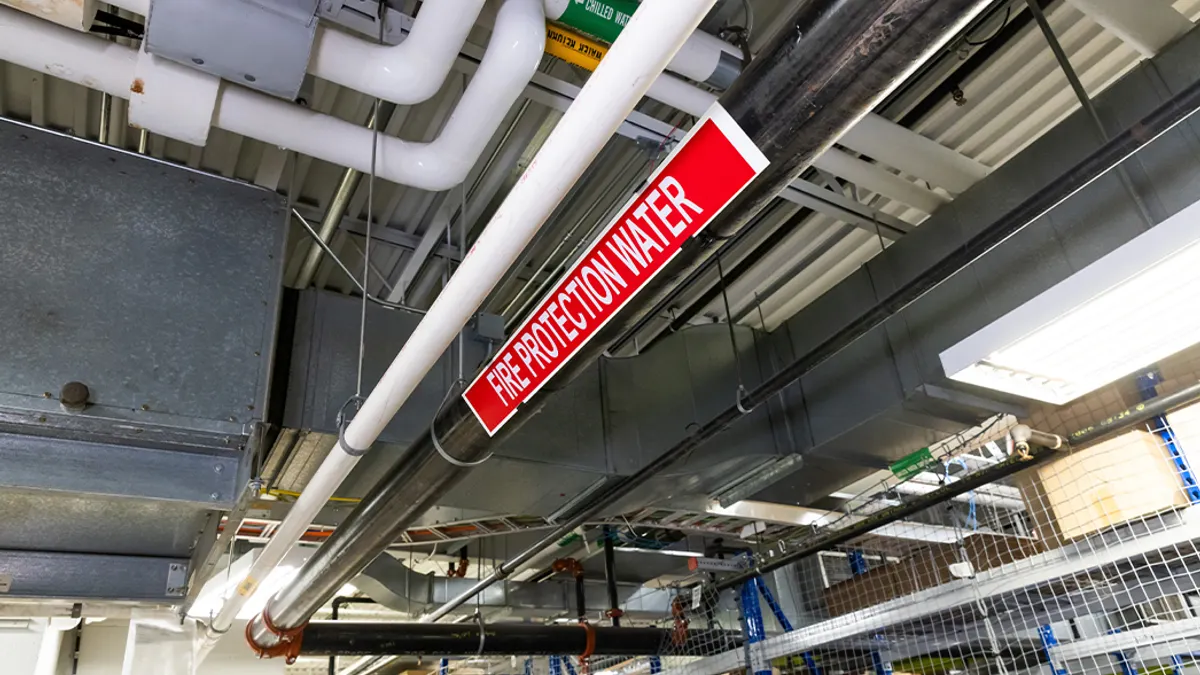
You can find takeoff services for virtually every material in a build. While full-service firms can estimate an entire project, many product suppliers offer complementary takeoffs as a value-add for their customers. This includes everything from structural basics like timber and concrete to specialized systems like cabling, plumbing, pipe marking and safety signage.
Outsourcing is particularly effective when you’re comfortable with the bulk of the project but hit a wall with specialized technical or legal requirements. For instance, a safety labeling expert doesn't just count the “Caution” signs; they ensure every placement meets strict regulatory compliance, protecting you from future liability.
Why would you choose to use a construction takeoff service?
In construction, a precise estimate is the line between a profitable, on-schedule build and a chaotic money pit. Because the stakes are so high, some pros are hesitant to let a third party touch their numbers. But for others, that external expertise is exactly what keeps the project on track.
Time is the primary driver. Whether a firm lacks a dedicated in-house estimator or its current team is buried under a backlog, takeoff services act as a vital relief valve. This allows teams to handle the familiar structural work while delegating complex niches like datacom equipment to specialized experts.
Even seasoned teams use these services as a “sanity check.” Comparing an internal estimate against a third-party report is one of the most effective ways to catch expensive oversights before the first shovel hits the ground.
What are some potential drawbacks?
The primary risk is a lack of context. An external provider might not fully grasp your specific site conditions or workflow, leading to inaccuracies. If they overestimate, your budget bleeds out through material waste. If they underestimate, you’re looking at project delays and “convenience” pricing for rush orders.
When using supplier-provided takeoffs, remember that the vendor's primary goal is to sell the product. This naturally creates a bias toward their own inventory, potentially ignoring cheaper or better-suited alternatives. In the worst cases, less scrupulous vendors might pad their estimates to boost their own margins at your expense. To avoid this, some suppliers will offer some kind of product buyback.
Balancing control and efficiency
Choosing between internal estimating and a takeoff service isn't an "all or nothing" decision. For many successful contractors, the best approach is a hybrid one: keep the core structural estimating in-house where you have the most control, but leverage external experts for specialized systems or high-volume periods.
By understanding the incentives of your providers and using third-party takeoffs as a strategic tool rather than a total replacement, you can protect your margins and keep your projects moving forward.