Charles Jacobi is an environmental analyst and Merrit Cowden is an environmental project manager at Raleigh, North Carolina-based engineering and land planning firm Kimley-Horn. Both are in the firm’s Fort Worth, Texas office. Opinions are the authors’ own.
On Nov. 17, 2025, the Environmental Protection Agency and U.S. Army Corps of Engineers announced a proposed rule on a common-sense definition of “waters of the United States” under the Clean Water Act.

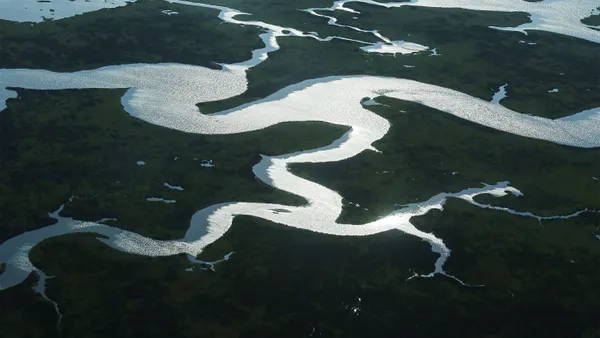
Generally, the proposed ruling aims to define and clarify the scope of federal jurisdiction over Clean Water Act permitting, which in past years has been unclear. According to an EPA fact sheet, the proposed rule would ensure federal jurisdiction is focused on “relatively permanent, standing or continuously flowing bodies of water.”
That language is in lockstep with the U.S. Supreme Court’s landmark 2023 decision in Sackett v. EPA, which restricted federal jurisdiction under the Clean Water Act by ruling waters of the U.S. are limited to “relatively permanent bodies of water” and wetlands that have a "continuous surface connection” to those waters.
Doubling down on Sackett
The terms “relatively permanent” and “continuous surface connection” are at the heart of the matter.

The proposed rule would explicitly double down on the original intent of the Sackett decision: Relatively permanent bodies of water are those that exist, at the very least, during the “wet season.” The timing and duration of the “wet season” varies by geographic region due to a multitude of hydrologic, environmental and topographic factors — but the term is meant to describe the extended periods of predictable hydrology occurring within a region.
In short, a body of water that does not exhibit relative permanence during the wet season for a particular geographic region would likely not be considered jurisdictional. This applies to tributaries, pools, lakes and ponds. For example, an ephemeral stream that only shows signs of continuous flow for one month out of the year in a geographic region with an estimated three-month wet season would not likely be considered jurisdictional. Any wetlands, pools, or ponds that may connect to the ephemeral stream would also likely be considered non-jurisdictional.
The rule would also require wetlands to meet a new, two-part test: beyond existing during the wet season, a covered body of water would also need to abut other jurisdictional waters. Before the Sackett decision, wetlands could be considered jurisdictional if they had a “significant nexus” to jurisdictional waters. At that time, a significant nexus analysis would be used to assess the flow characteristics and functions of the “relative reach” of a stream to determine if they had a substantial effect on the chemical, physical or biological integrity of jurisdictional waters.
Considering how broad this pre-Sackett language was, centering jurisdictional scope around relative permanence and surface water connection to jurisdictional waters is an attempt to streamline analyses for consultants, landowners, public agencies and other stakeholders.
Significant exclusions for ditches
The new rule also offers clarity on what is considered an “excluded ditch” and proposes significant changes to which ditches can be considered jurisdictional. The proposed new rule excludes from jurisdiction ditches that are constructed or excavated in dry land.
According to language published at the Federal Register, ditches that are constructed or excavated in dry land, even if they are connected to other jurisdictional waters, would not be considered jurisdictional under the proposed ruling.
This is a significant proposed change: ditches that are constructed or excavated within dry lands do not meet jurisdictional requirements even if they exhibit relatively permanent flow. As discussed above, relatively permanent flow of water is a typical benchmark for jurisdictional scope.
Additionally, groundwater has not historically been considered a jurisdictional water, and the new ruling reiterates this exclusion by adding “groundwater drained through subsurface drainage systems” to the groundwater definition. This language intends to exclude from jurisdiction subsurface drainage systems, including tile drains and french drains.
The road ahead
If the proposed ruling is codified — the public comment window closed Jan. 6 and a final rule is currently in development — the regulatory road ahead may provide more clarity for developers, consultants, landowners and other stakeholders. The language being released by the EPA and USACE appears to lessen the number of features that would fall under the jurisdiction of the Clean Water Act.
For the purpose of evaluating jurisdiction, the proposed rule provides little room for deviation from the benchmarks of relative permanence and continuous surface water connection that were originated by the Sackett decision.
Landowners and other stakeholders will have clarity on what defines a jurisdictional water feature and what parameters their practice needs to meet before areas are subject to jurisdiction under the Clean Water Act. Broadly, developers and consultants are projected to have greater clarity in determining which aquatic features may or may not be considered jurisdictional waters on potential project sites.