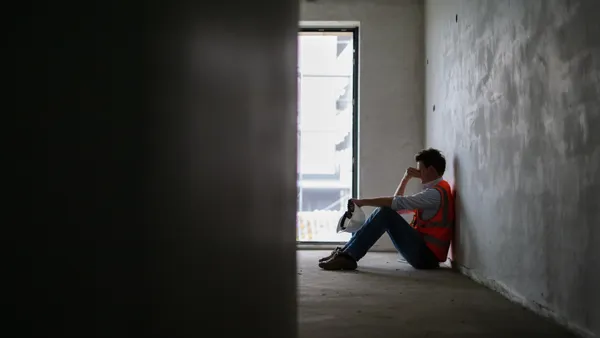
Tariff pressure on construction costs caused project stress to surge in November, according to the latest data from Cincinnati-based ConstructConnect.
The Project Stress Index, a measure of construction projects that have been delayed or abandoned, jumped 19.9% from October to November. The increase pushes the benchmark about 25.7% above its 2021 baseline, said Devin Bell, associate economist at ConstructConnect.
“Tariffs have played a key role in defining abandonment activity across both the public and private sectors this year,” Bell told Construction Dive. “As companies deplete their pre-Liberation Day stockpiles months after initial tariffs took effect, rising construction costs are pushing some owners and developers toward project cancellations. This pressure is already visible in elevated private sector abandonments, and both sectors continue to run well above their historic averages.”
Abandonments spiked 41.1% in November, according to the report, marking one of the largest monthly jumps in the index this year. Projects placed on hold also increased significantly, up 16.5% in November. Bid date delays were the only indicator to improve, falling 2.9% after climbing in the prior month.

The public versus private split once again showed diverging pressures. Private projects placed on hold surged 252.6% compared to the same period last year. Meanwhile, public on-hold activity fell 19% year-over-year, according to the report.
Private project abandonments jumped 5.7% year-over-year in November, compared to a 3.2% drop in public abandonments.
“Both on-hold and abandonment activity increased substantially, pushing the index to its highest level since the spike in June,” Bell told Construction Dive. “Rising material and operational costs have intensified the economic uncertainty facing the construction industry, driving stress indicators upward.” Overall stress conditions now sit 9.9% higher than the same period in 2024, according to the report. Bell said those elevated costs and lingering economic uncertainty will challenge project viability heading into 2026.