Kiewit expects its nuclear construction work to accelerate into a billion-dollar business.
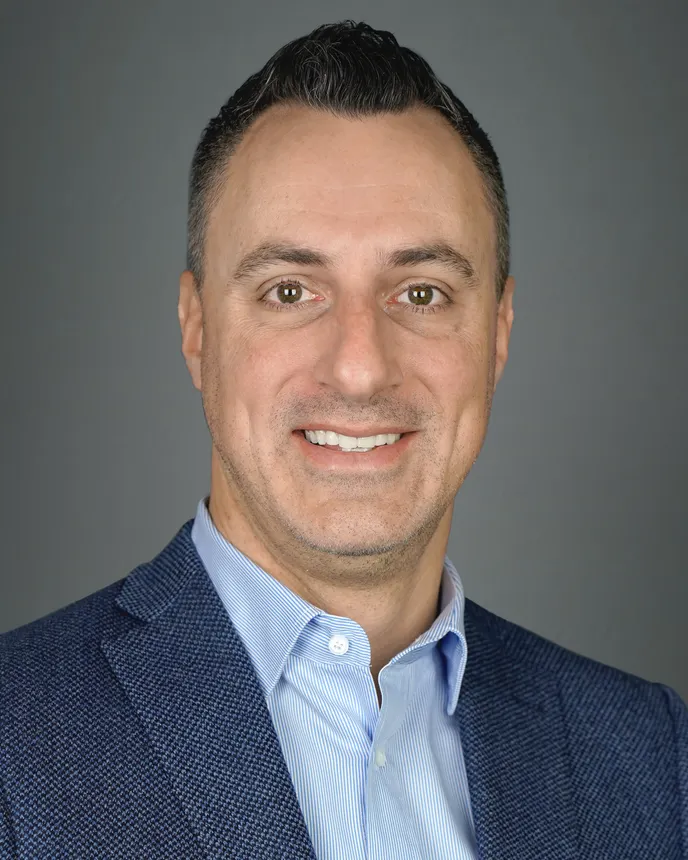
The Omaha, Nebraska-based general contractor’s nuclear revenue has roughly doubled year over year since 2022, Mike Rinehart, president of the firm’s nuclear solutions, told Construction Dive. The contractor now has more than 10 commercial nuclear projects underway, in addition to a dozen projects under Department of Energy programs, he said.
The growth stems from insatiable electricity demand from technology companies and the federal government.
For example, the DOE is offering loans up to $17.5 billion to utilities and other energy firms to support development of 10 nuclear reactors at five sites, according to a June 23 announcement. Earlier this year, the Nuclear Regulatory Commission issued its first commercial nuclear reactor construction permit in nearly 10 years to a subsidiary of TerraPower, the Bill Gates-backed nuclear reactor design and development engineering company.
Rinehart sees an opportunity to seize on that momentum.
Here, Rinehart talks with Construction Dive about the resurgence of nuclear construction, project execution and labor and supply chain headwinds.
Editor’s note: The following has been edited for brevity and clarity.
CONSTRUCTION DIVE: What is driving the interest in nuclear construction?
MIKE RINEHART: Our observation of the nuclear market is that it has obviously gained a lot of momentum. There’s a lot more interest in it. Today, it’s still the only carbon-free generating resource that will meet demand at scale.
Kiewit sees the nuclear business for us being a billion-dollar-a-year business or more easily. That’s the scale that we see it at.
It all ties into overall electrification demand, and AI and the data centers are obviously a big consumer of that. But we saw growth in interest, a growth in nuclear, even going back before the big hyperscaling boom.
It was even just with regular old electrification happening across the board, EVs and whatnot. And more importantly, the aging generating assets that are already operating in the country, so, a lot of the large generating coal assets and other fossil assets that are starting to approach their end of life.
A lot of renewables, although they have their place and they’re great, they don’t necessarily fill all of that baseline generation at scale.
Where is the biggest opportunity in nuclear construction right now?
It wouldn’t be fair for me to pick just one, small modular reactor projects, large reactors, DOE work. I think they all have their place.
If I can make a bad analogy, nuclear is like an automobile. Not all automobiles are created the same. You have large semi trucks, they serve a specific purpose. You have sports cars and race cars, they serve a very specific purpose. And I can make the same argument about all of the different nuclear technologies that are out there right now.
The large reactors very much have their place in our generating network. SMRs very much have their place, and even microreactors have a very strategic purpose.
It really comes down to what is the need and finding the right technology to suit that application.
What are the biggest challenges on these projects?
I think the construction challenges of most of these nuclear projects are more rooted in the organization of the overall program, being able to follow what we call the EPC playbook on execution.
It’s easy to say it’s a more complicated and complex regulatory environment, you have to go through NRC, and that certainly has some challenges. But I think some people use regulation as the scapegoat of why nuclear jobs go bad.
There are very large projects, there are very complex projects, and even the small jobs are still large, complex projects.
With that also comes what are considered first-of-a-kind technologies. Now, while there’s nuances and challenges that come with first-of-a-kind and how you go through engineering and how you go through the regulatory process, it’s not completely unheard of in other industries and other markets.
I think the biggest challenge for some of these big jobs is getting the right integration between engineering, procurement and construction with all of the stakeholders that are involved in the program.
That could be the regulators, that could be local authorities, that could be the utility unit.
Getting full integration and a truly seamless program to be able to manage the risk, quantify the risk and accurately report out on what’s happening on the job is the larger challenge in the industry right now.
How much of a concern is labor on these projects?
You read on LinkedIn how everyone’s talking about there’s going to be labor shortages, but the building trades have always pulled through.
We have a recurring building trades task force. I’m a part of it for our nuclear market. We communicate quarterly with all of the building trades at the national level. So, yes there is a lot of pressure on the building trades to be able to support all this work. At the same time, I think if you have a good plan and you make sure that you have all the right tools and support and the right benefits for your employees, the skilled labor will be there.
What equipment and material constraints are top of mind?
The nuclear industry has certain quality standards that are much more robust when it comes to safety-related components, especially to things that fall under NQA-1, the national consensus standard for quality assurance in the nuclear industry.
Regular supply chains are already being stressed for just basic commodities, whether it’s steel, pipe or electrical equipment, which is a huge one right now. Transformers, switchgear, those kinds of things are very difficult.
But the NQA-1 supply chain for safety-related components, these are things that are going to be usually within the nuclear island and the reactors. That right there, that market will not be able to support the demand that we see.
So, a lot of us tier one EPCs are planning on being capable of doing our own commercial grade dedication, where we could use commercial sources for that same material, but just run it through more engineering, labs and testing and a lot of oversight.
I think that’s going to be absolutely imperative for the market to go the way that we want, being able to support that ourselves.