Travis Irving is the director of environmental health and safety for Charlotte, North Carolina-based Trifecta Services Company. Opinions are the author’s own.
I've been in demolition long enough to know that the worst day on any jobsite isn't the day someone stops work because something doesn't look right. The worst day is the one where someone saw a problem, stayed quiet and we all paid the price.
That's why at our company, everyone from the newest laborer to the project manager has stop-work authority. Not as a courtesy. Not as a suggestion. As a fundamental operating principle.
Some may think that’s a horrible idea, but here's what I've learned: Chaos doesn't come from empowering people to stop work. It comes from creating a culture where they're afraid to, even if they see something that looks off.
The reality
Let me be clear: I know errors will happen. Fatigue, distractions and simple oversights are inevitable in any workplace, no matter how skilled the team. In demolition, we're often working in buildings that are compromised, poorly documented or decades old. We're dealing with utilities that vary wildly from structure to structure, with labels that have faded or were never accurate to begin with. We operate heavy equipment in tight spaces under pressure to stay on schedule.
We could pretend that perfection is achievable if people just try harder. We could blame an individual worker for not identifying utility disconnects correctly and expect them never to make that mistake again. But that ignores reality. Even experienced workers can miss something when they're tired, when conditions change or when they're under pressure to keep moving.
A leader’s reaction matters
Every time something goes wrong, leadership faces a choice: learn and improve or blame and punish. That choice determines whether your next incident gets reported and prevented or hidden and repeated.
Here's what I know about people: They achieve high levels of performance largely because of encouragement and reinforcement received from leaders, peers and subordinates. When someone feels supported, when they know their judgment is trusted, they bring their best to work. When they feel like they're one mistake away from being thrown under the bus, they bring their fear.
How you respond to failure matters more than almost anything else you do as a leader. Blame doesn't fix anything. It doesn't repair the equipment, it doesn't prevent the next incident and it doesn't make your team stronger. While incidents themselves can often be prevented, how leaders respond when they occur is absolutely critical to whether you build a culture of safety or a culture of silence.
Blanket stop-work authority makes jobs safer
Culture determines whether workers feel empowered to prevent errors or pressured to hide them. When only supervisors have the authority to stop work, you're essentially telling everyone else that their judgment doesn't matter. You're saying, "I trust you to operate a 50-ton excavator, but I don't trust you to recognize when something's unsafe."
That makes no sense.
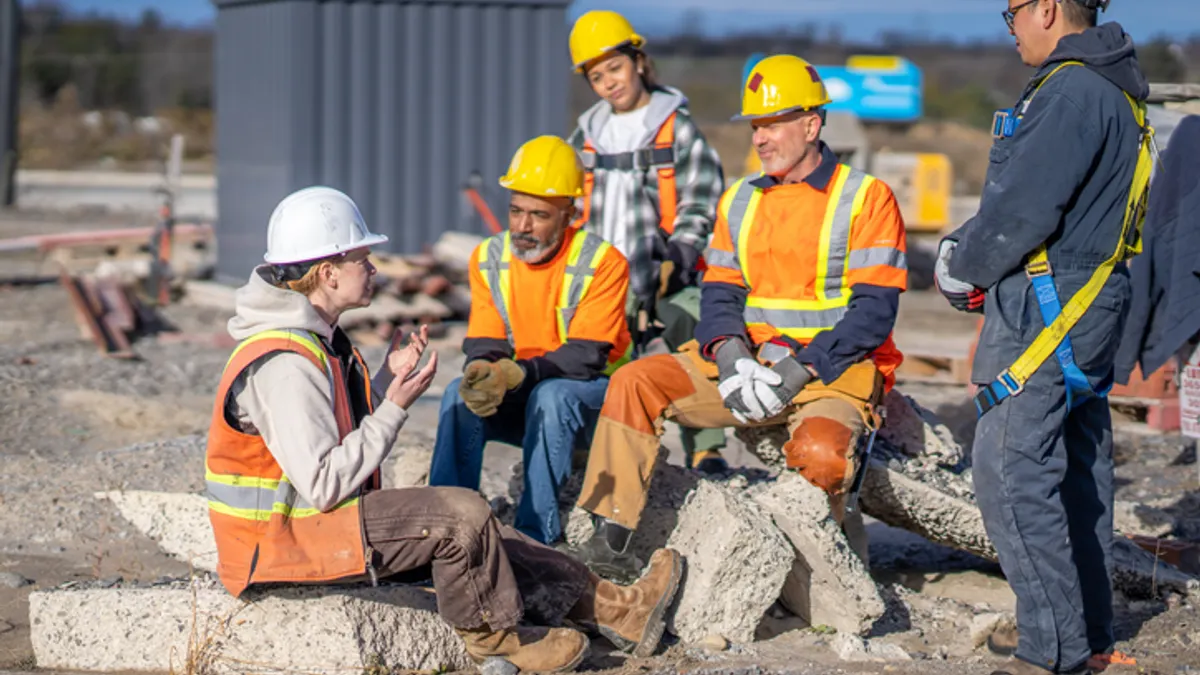
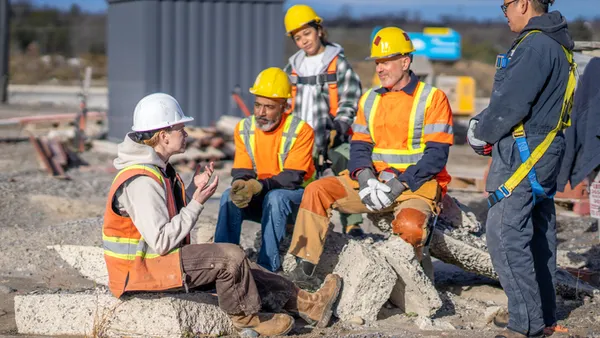
The truth is that no one person at our company knows everything — not workers, not supervisors, not management. The operator in the cab has a view that the ground crew doesn't. The laborer who just entered a space might notice something the foreman walked past three times. Safety can't be the responsibility of one person or one role. It has to be everyone's responsibility, backed by everyone's authority.
The enemy of learning
There's a phrase I come back to often: The enemy of learning is knowing. When we assume we already have the answers, we stop listening. We stop seeing what's actually in front of us.
I've seen this play out too many times. A supervisor who's done a certain type of demo 100 times stops asking questions. A crew that's been working together for years stops double-checking each other. Management assumes that because we haven't had an incident in months, our systems must be working perfectly.
Stop-work authority disrupts that complacency. When someone calls a stop, it forces all of us, regardless of experience or position, to pause and look again. To question our assumptions. To consider that maybe we missed something or that conditions have changed in a way we didn't anticipate.
Sometimes the person who stops work is wrong. Sometimes it's a false alarm. And you know what? That's perfectly fine. I would rather stop work a dozen times unnecessarily than miss the one time it really mattered.
What it means in practice
Giving everyone stop-work authority isn't just about safety meetings and posters. It's about what happens when a new hire raises their hand on day three and says, "This doesn't seem right." Do you listen? Do you investigate? Or do you dismiss them because they're new?
It's about what happens when someone stops a job and it turns out they were being overly cautious. Do you thank them for looking out for the crew and use it as a learning opportunity? Or do you make them feel embarrassed for slowing things down? Those moments define your culture more than any policy ever will.
I'm not going to tell you that stop-work authority solves everything. We still make mistakes. But we learn from them, we talk about them openly and work to create an environment where errors don’t cause catastrophic events. And when something does go wrong, we focus our energy on understanding what happened and preventing it next time, not on finding someone to blame.
If you're in construction leadership and you haven't empowered your entire team with stop-work authority, I'd challenge you to ask yourself why. What are you afraid of? What's the worst that could happen if you trusted your people's judgment?
Because I can tell you the worst that will happen when you don't.