Award: Water infrastructure
Value: $721 million total
Location: Austin and Fort Worth, Texas
Client: Texas DOT; City of Fort Worth
A global infrastructure firm will be making significant improvements to existing water plants in the fast-growing cities of Austin and Fort Worth, Texas, according to a news release.
Ferrovial, the Amsterdam-headquartered civil engineering company, will build two major water facilities in Austin and Fort Worth. Through its construction subsidiary Webber, the company won contracts totaling about $721 million, according to a news release. The wins are another major boost to the firm’s U.S. portfolio, which already posted significant growth to close the first nine months of 2025.
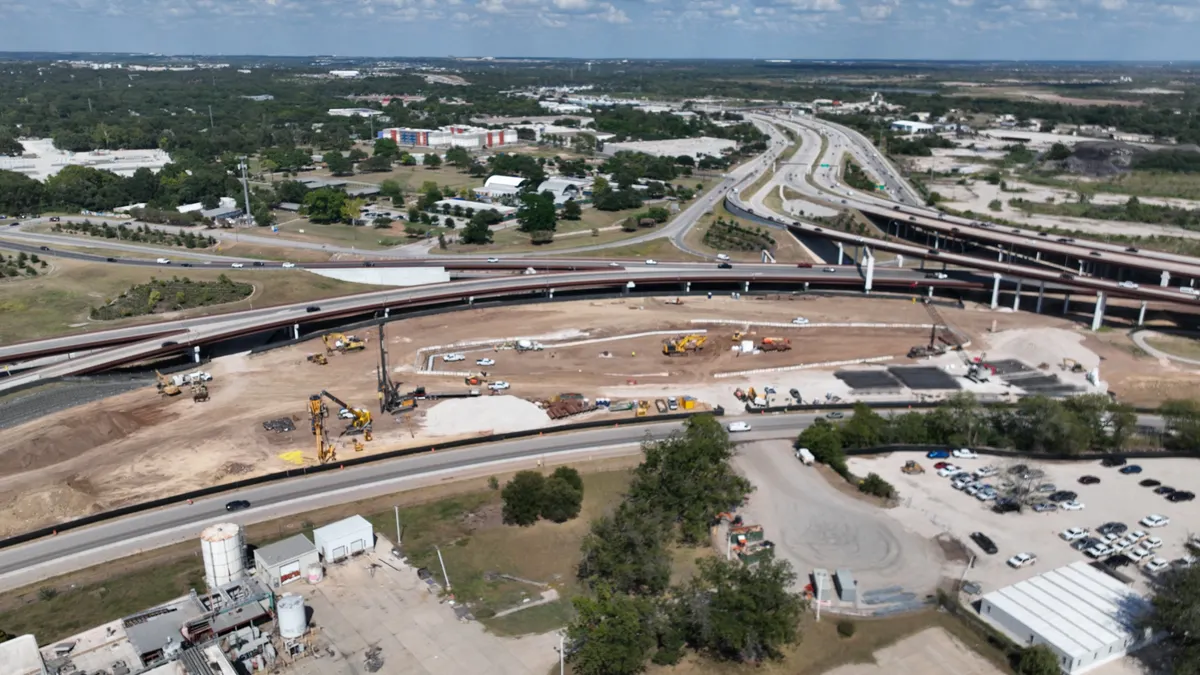
In Austin, the Texas DOT tapped Webber to build a 105-foot-deep pump station tied to the I-35 Capital Express Central project, a reconstruction of the interstate through downtown Austin. The scope of work includes four concrete volute pumps capable of moving 260,000 gallons of stormwater per minute from new drainage tunnels along the corridor. Webber began construction on the $426 million job in July and is scheduled to finish in late 2028, according to the release.
In Fort Worth, the contractor won a $295 million contract to expand the Eagle Mountain Water Treatment Plant, one of the city’s drinking water facilities. The project will add 35 million gallons per day of potable water capacity, according to the release.
Work on the project includes new ozone generation and disinfection systems, flocculation and sedimentation basins, media biological filters and a membrane filtration building. Construction is underway and expected to complete in 2029, according to the contractor.
The wins extend Ferrovial’s lineup of U.S. water projects, a segment company leaders have pointed to as part of their broader growth strategy for infrastructure work. The firm plans to target highway, airport, energy and water system projects, Ferrovial Construction CEO Ignacio Gastón told Construction Dive last month.
Other major contractors have also highlighted water work as a strong source of backlog heading into 2026.
Jacobs CEO Bob Pragada recently told investors its water pipeline is up roughly 50%, and expects single-digit growth in the sector heading into 2026. AECOM CEO Troy Rudd also similarly signaled water-related work as one of the strongest drivers of future civil construction demand during the firm’s latest fiscal fourth quarter earnings call.