Contractors sensed growing momentum across the construction market after the Federal Reserve again lowered interest rates Wednesday, its third cut of 2025.
The central bank trimmed its benchmark rate by another 25 basis points, which extends a gradual easing cycle developers hope will relieve borrowing costs heading into 2026.
Although the slash strengthens confidence around long-planned projects, industry leaders emphasized the small reduction in short-term rates still is not enough to unlock a surge of new nonresidential groundbreakings.
In other words, the cut continues the right trend for contractors, but still will not materially reshape feasibility, said Granger Hassmann, regional president of Gulf States at Adolfson & Peterson, a Minneapolis-based general contractor.
“The recent rate cuts by the Fed are good news, but I don’t see this cut moving the needle very much,” Hassmann told Construction Dive. “It is clearly a step in the right direction, especially if this trend continues over the next couple of months.”
For projects already deep in planning, the Fed’s cut adds another nudge, but not enough to break ground immediately, said Scott Lyons, commercial core market leader at DPR Construction, a Redwood City, California-based general contractor. Construction planning activity slipped 1.1% in November, though still sits about 36% higher year-to-date compared to the same period last year.
“We think it will be another psychological boost that will continue momentum for those projects in the planning phase,” Lyons told Construction Dive. “In the same breath, we don’t believe it will trigger getting a shovel in the ground just yet for those projects.”
Financing conditions remain tight, especially for commercial asset types still working through oversupply, said Lyons.
“Lenders are going to continue to insist on signed tenants or legitimate demand for other project types, so we have an oversupply challenge in the commercial real estate space until more absorption happens in the office and R&D space,” said Lyons. “We think lenders are going to hold tight.”
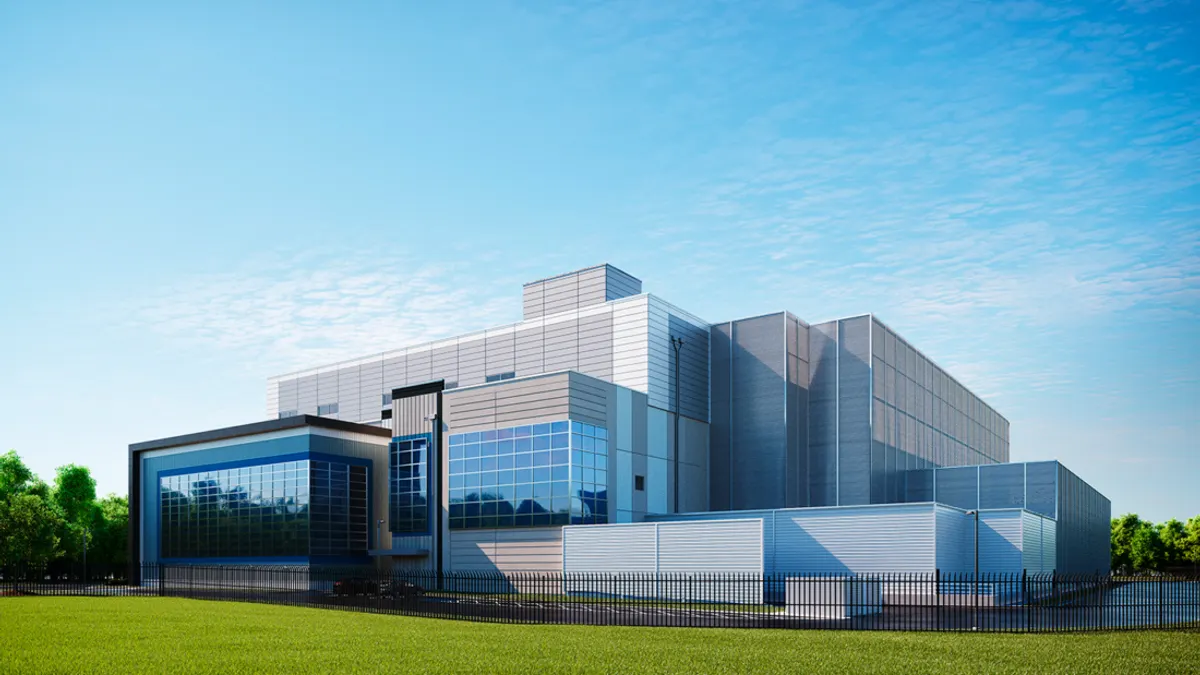
Capital market executives echoed that caution, noting long-term rates, not short-term cuts, will ultimately determine how quickly construction activity rebounds. Groundbreakings popped 21.1% in October, according to the latest report from Dodge Construction Network, largely due to high-value megaproject activity, predominantly data centers. Without those high-tech buildings, many of which are being financed with debt, growth appeared more moderate.
“The debt markets are currently extremely liquid throughout the capital stack,” said Dan Levitt, executive vice president of capital markets at Ryan Cos., a Minneapolis-based construction firm. “A small rate cut marginally reduces the cost of construction, and obviously, owners of real estate on short-term loans save a little on debt service.”
But without movement in the 10-year Treasury yield, which serves as a benchmark for long-term borrowing costs, construction starts will not meaningfully shift, Levitt said.
“There is very little correlation at this point between a small rate cut by the Fed and the 10-year Treasury,” Levitt told Construction Dive. “In other words, a small rate cut by the Fed is unlikely to substantively stimulate nonresidential construction starts.”
Nevertheless, several sectors — including red-hot data centers and healthcare builds — will remain active regardless of rate changes, said Jason Gabrick, regional senior vice president of operations at Ryan Cos.
“Some emerging market sectors continue to remain almost rate-proof due to robust demand and effective capitalization strategies,” Gabrick told Construction Dive. “We continue to see solid activity in data centers, life sciences, medical technology and healthcare projects, regardless of changes in interest rates.”
Looking ahead
Another problem lower rates can’t solve is the worker shortage, which will remain a primary constraint on construction activity, said Lyons. Construction job openings were at “extraordinarily low” levels in October, along with a sharp drop in hiring, according to the most recent data from the U.S. Bureau of Labor Statistics.
“Across the country, there are more projects that people want to build than there are people to build them,” said Lyons. “Our industry is taking steps to address that shortage, but we believe it will take a generation to build out the skilled labor workforce to meet demand.”
Still, contractors say the stage is being set for a stronger 2026. All three confidence metrics for sales, profit margins and staffing indicate growth expectations over the next six months, according to Associated Builders and Contractors.
“Even amid economic turbulence, construction labor and material pricing, as well as inflation, have remained relatively predictable,” said Gabrick. “As time has passed since the enactment of tariffs, our trade partners and vendors have been able to provide more assurance of the impacts. This is contrary to the challenges the industry faced during the pandemic, as pricing was extremely volatile.”