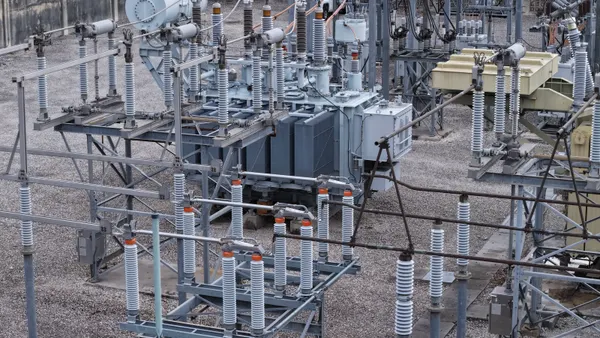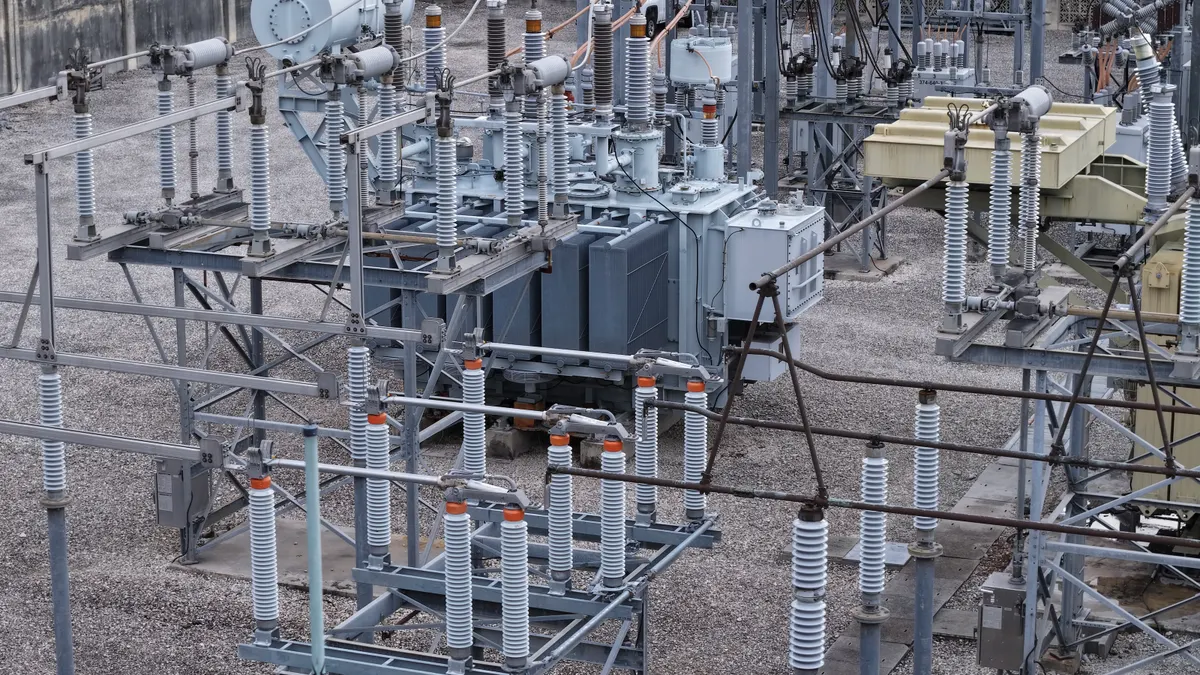
Access to reliable power is increasingly becoming the holy grail developers chase in the race to build data centers.
Tech companies over the past year have poured massive investments into data center construction. Demand for the facilities have propped up construction activity as a whole, and will likely continue to do so.
But skyrocketing demand alone is not enough for construction crews to break ground on these builds. Savvy developers are now increasingly turning their attention to power needs before shovels hit the ground.
Here, Tom Harper and Jodi Harper, data center leaders at Gallagher, a Chicago-based insurance, risk management and consulting firm, talk with Construction Dive about power constraints on data center development and new risks emerging on these construction sites.
This interview has been edited for brevity and clarity.
CONSTRUCTION DIVE: What’s the biggest change you’re seeing on the ground in how data centers are being built today compared to even a year ago?
TOM HARPER: The most prominent change is that power is now driving design decisions much earlier than before.

We’re seeing sites engineered around power availability and resiliency first, with building layout, phasing and even cooling strategies adjusted to match what can realistically be delivered. There’s also more modularity, both in construction sequencing and electrical infrastructure, to allow projects to come online in phases rather than waiting for full utility buildout.
JODI HARPER: Design is now driven by power density and speed-to-power first. Power availability is impacting site locations. Emerging technologies are also influencing how buildings are being designed around what might come next versus what’s being deployed today.
Are lenders now requiring power certainty before moving forward?
TOM HARPER: Power certainty has become foundational to financing. Lenders and equity partners increasingly want executed power purchase agreements, or at least firm interconnection commitments, before capital is fully committed or deployed. Without that visibility, projects face higher financing costs or stalled closings, because power risk is now seen as a fundamental viability issue rather than an operational detail to solve later.
When developers pursue alternatives such as onsite generation or nuclear, how does that impact construction timelines and risk across contractors and partners?
TOM HARPER: Alternative power solutions and “bring your own capacity” can add complexity and lengthen timelines, especially on the front end of project development. They introduce new regulatory, permitting and interface risks that must be carefully allocated among EPCs, equipment suppliers and developers or owners.
From an insurance and risk perspective, these projects require much clearer delineation of responsibility, because traditional construction risk assumptions don’t always apply to newer generation technologies, whether due to scope or specific product and installation knowledge and experience.

JODI HARPER: Pursuing alternative power sources certainly shifts risk and delay into the early stages of the project. Nuclear alone requires extensive feasibility studies, interconnection analysis, fuel sourcing considerations and regulatory approvals.
Where are the biggest vulnerabilities that emerge during construction?
TOM HARPER: Fire remains a top concern, particularly as power density increases and systems are energized earlier in the build. We’re also seeing elevated risk around water, both from aggressive cooling strategies and weather‑driven flooding events.
In our experience, the quality and speed of build have not been an issue, but site selection filtering for catastrophe losses has been largely overridden by the need to build quickly. Risk engineering on the facility itself to mitigate potential catastrophe losses appears the preferred path.
Finally, supply chain risks are still frontrunning as the most severe risk associated with the efficient deployment of capital in the data center construction space.
When does power availability become a dealbreaker for where a data center can be built?
TOM HARPER: Undoubtedly, we’re already at that point in many markets.
If a site can’t demonstrate a credible path to sufficient power within a reasonable timeframe, it’s increasingly being ruled out entirely for this cycle of development. Developers and investors are prioritizing locations with clear utility alignment, transmission capacity or viable alternative power options, even if that means higher upfront costs or less traditional geographies.
The second layer to consider is local community and political acceptance of potential projects as it regards permitting, tax incentives and reinvestment by data center developers into the communities they wish to build.