Dive Brief:
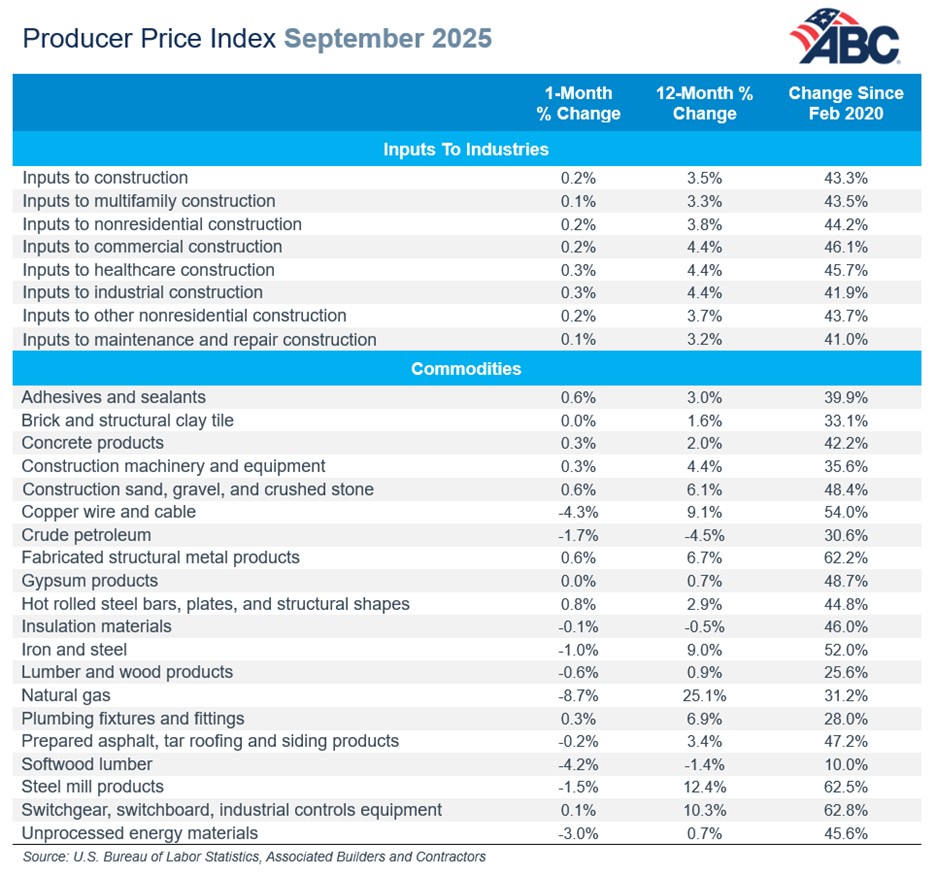
- Construction input prices ticked up 0.2% in September, driven largely by key materials such as iron and steel, according to an Associated Builders and Contractors analysis of U.S. Bureau of Labor Statistics’ Producer Price Index data.
- Input costs sit 3.5% higher than a year ago for overall construction and 3.8% higher for nonresidential work, according to ABC.
- “Construction input prices rose for the fifth straight month in September,” said Anirban Basu, ABC chief economist, in the release. “While that represents the longest streak of monthly increases since the first half of 2022, those increases are relatively modest. Materials prices have risen at a 3.2% annualized rate since April, a rate that is faster than ideal but nowhere near the escalation that occurred in 2021 and 2022.”
Dive Insight:
The latest PPI data, which was pushed back due to the government shutdown, still shows cost pressures across major construction inputs, according to the Associated General Contractors of America.
That pattern is keeping procurement unpredictable for contractors across the board, said Macrina Wilkins, senior research analyst at AGC.
“Persistent input-price pressure, even when the increases are modest, creates a stop and go rhythm in procurement and production instead of a steady flow contractors and suppliers need,” said Wilkins in the release. “These month-to-month swings make it harder for firms to plan confidently and protect already thin-margins.”
Several key materials posted significant year-over-year gains, according to the data. For example, steel mill products jumped 12.4% over the past 12 months, while switchgear, switchboard and industrial controls equipment increased 10.3% year-over-year, according to ABC. Copper wire and cable prices also jumped 9.1% over the past year.
“Unfortunately, it’s unclear how higher tariffs on key materials like iron and steel and aluminum and copper will affect prices over the next several months, and it’s noteworthy that commodities related to those materials have exhibited significant year-over-year price increases,” said Basu. “Despite the prospect of ongoing materials price escalation, contractors remain cautiously upbeat about their profit margins and sales over the next six months.”
On that positive note, energy categories were one of the few areas to offer relief in September, according to the data. Natural gas and unprocessed energy materials prices ticked down 8.7% and 3%, respectively, and crude petroleum prices dropped 1.7%.
But contractors remain caught between higher materials costs and softer bid prices, according to the AGC report. That mismatch adds pressure at a moment when several commercial construction segments show weakness.
“Contractors can manage modest cost increases, but they need a predictable environment to keep projects moving,” said AGC CEO Jeffrey Shoaf. “Greater clarity on tariff policy and progress on outstanding trade issues would help stabilize materials markets and give firms more confidence to plan for the work ahead.”